

When you pick up a prescription, you might see a label that says generic instead of the brand name you recognize. It’s cheaper-often 80% to 85% cheaper-but does it work the same? Millions of people take generic drugs every day, and most never question whether they’re getting the same result. But for some, switching from a brand-name drug to a generic triggers anxiety: Is this going to work? Will I feel worse? Could this hurt me?
The truth isn’t as simple as yes or no. Clinical studies over the last 30 years have looked at this question in every way possible-through lab tests, patient records, and real-world outcomes. The data doesn’t lie, but it’s layered. For most people, generics work just as well. For a small group, they don’t. And understanding why matters more than ever.
How the FDA Ensures Generics Work the Same
The U.S. Food and Drug Administration (FDA) doesn’t just approve generics because they look similar. They require proof. Every generic drug must contain the exact same active ingredient, in the same strength, and delivered the same way-whether it’s a pill, injection, or inhaler. That’s pharmaceutical equivalence.
But that’s not enough. The real test is bioequivalence. This means the body absorbs the drug at the same rate and to the same extent as the brand-name version. To prove this, manufacturers run studies on 24 to 36 healthy volunteers. These are crossover trials: one group takes the brand, then the generic; another group does the reverse. Blood samples are taken over hours to measure how much of the drug enters the bloodstream and how long it stays there.
The FDA requires the 90% confidence interval for the ratio of the generic to brand-name drug’s absorption to fall between 80% and 125%. That’s not a wide margin-it’s tight. It means the generic can’t be too slow or too fast in getting into your system. If it’s outside that range, the FDA rejects it. This standard has been in place since the 1984 Hatch-Waxman Act and is backed by over 2,000 studies reviewed by the FDA since 1996.
Dr. Sarah Ibrahim from the FDA says it plainly: “Generic drugs have the same active ingredients, dosage form, strength, route of administration, safety, effectiveness, stability, and quality.” And the numbers back it up. In 2023, generics made up 90% of all prescriptions filled in the U.S.-but only 23% of total drug spending. That’s over $377 billion saved every year, according to the Congressional Budget Office.
What Large-Scale Studies Say About Real-World Outcomes
Lab tests are one thing. Real people living with chronic conditions are another. A landmark 2020 study in Scientific Reports looked at nearly all insured Austrians between 2007 and 2012 who took 17 different medications for chronic conditions like high blood pressure, diabetes, and thyroid disease. The researchers didn’t just compare blood levels-they tracked deaths, heart attacks, and hospitalizations.
The results were striking. For 10 of the 17 drugs, patients on generics had fewer deaths. For 11 of them, there were fewer major cardiovascular events. After adjusting for age, income, and other factors, the five-year survival rate for those on generics was 82.7%, compared to 79.8% for those on brand-name drugs. That’s not a small difference-it’s a 3.5% increase in survival.
Another massive analysis in 2019 by R.J. Desai in PLoS ONE looked at 3.5 million patients across two U.S. databases. It focused on common drugs: amlodipine for high blood pressure, glipizide for diabetes, alendronate for osteoporosis, and escitalopram and sertraline for depression. The study found no difference in outcomes between generics and brands. In fact, for amlodipine and its combination with benazepril, patients on generics had slightly lower risk of heart attacks and strokes.
Even in hypertension-a condition where small changes in drug levels can matter-a 2022 JAMA Internal Medicine study of 1.2 million patients found no difference in hospitalization rates between generic and brand-name ACE inhibitors.
The Exceptions: When Generics Might Not Work the Same
So why do some patients swear their generic doesn’t work? And why do doctors sometimes hesitate to switch patients on certain drugs?
The answer lies in drugs with a narrow therapeutic index. These are medications where the difference between a helpful dose and a dangerous one is very small. Think anticoagulants like warfarin, anti-seizure drugs like phenytoin and levetiracetam, thyroid hormone like levothyroxine, and some immunosuppressants.
In 2023, a study in Epilepsia found that switching between different generic versions of levetiracetam led to an 18% higher chance of seizure recurrence. Patients weren’t switching from brand to generic-they were switching from one generic to another. That’s critical. The problem isn’t always brand vs. generic. It’s generic vs. generic.
Similarly, a 2013 study by L. Gallelli documented cases where patients on generic levofloxacin (Ranbaxy®) had persistent infections, but switched to the brand-name Tavanic® and improved within days. In another case, a patient with hypothyroidism tried three different generic versions of levothyroxine. Only one kept her thyroid levels stable. The others caused fatigue, weight gain, and brain fog.
Why does this happen? It’s not about the active ingredient. It’s about the inactive ones-the fillers, coatings, and binders. These don’t treat the disease, but they can affect how the drug dissolves in the stomach. For a drug like levothyroxine, even a tiny delay in absorption can throw off hormone levels. For epilepsy, a slight drop in blood concentration can trigger a seizure.
The FDA acknowledges this. That’s why some drugs are rated “B” in the Orange Book-not “A.” A “B” rating means there’s a known or possible difference in effectiveness. Pharmacists can’t substitute these without the doctor’s okay.

What Patients Are Saying: Real Stories Behind the Data
Behind every statistic is a person. A 68-year-old man on generic amlodipine says he feels fine. A 42-year-old woman on generic levothyroxine says she’s had three different bottles from three different pharmacies-and only one made her feel normal. She’s now stuck buying the same brand-name version, even though it costs $120 a month instead of $12.
Online forums are full of these stories. On Reddit’s r/pharmacy, users report switching between generics for thyroid meds and getting wildly different results. One wrote: “I went from Synthroid to a generic, then to another generic, then back to Synthroid. My TSH went from 2.1 to 8.9 and back to 1.9. The only thing that changed was the pill.”
Pharmacists hear this all the time. A 2021 survey by the American Pharmacists Association found that 42% of pharmacists say patients worry about generic quality-even when the science says otherwise. But the same survey showed that 78% of 12,450 GoodRx users rated generics as “same effectiveness as brand at lower cost.”
Medicare beneficiaries in a 2021 survey reported similar results: 68% said they noticed no difference in effectiveness when switching to generics for heart meds. But 22% said they had minor side effects-dizziness, nausea, fatigue-that went away after a few weeks.
It’s not that generics are unreliable. It’s that for a small subset of people, consistency matters more than cost.
What Doctors and Pharmacists Need to Know
Most physicians trust generics. A 2020 study by the Generic Pharmaceutical Association found that 87% of doctors feel confident in their efficacy. But specialists-neurologists, endocrinologists, cardiologists-are more cautious. They’ve seen the exceptions.
Here’s what they do differently:
- For drugs with a narrow therapeutic index, they avoid switching unless absolutely necessary.
- If a switch happens, they monitor blood levels closely-TSH for thyroid, INR for warfarin, drug levels for epilepsy meds.
- They write “dispense as written” on prescriptions when they’re concerned about consistency.
- They educate patients: “If you feel different after switching, tell us. It’s not your fault.”
Pharmacists play a key role too. When a patient says, “This generic doesn’t work,” the best response isn’t “It’s the same.” It’s, “Let’s check your levels and see if we need to switch back.”
The FDA’s Orange Book is the official source for therapeutic equivalence ratings. It’s not widely known, but it’s essential. A-rated generics are interchangeable. B-rated ones aren’t. If you’re a patient, ask your pharmacist: “Is this A-rated?” If you’re a provider, check it before prescribing.
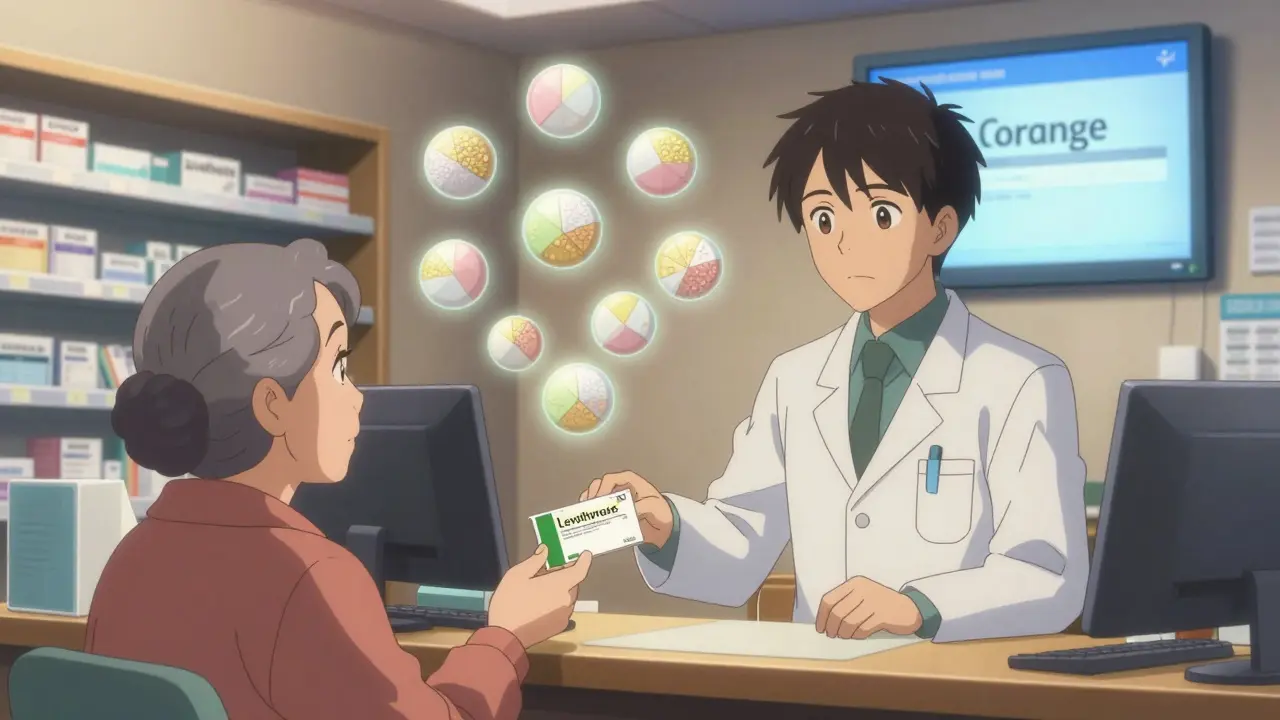
Why the Debate Still Exists-and What’s Changing
There’s a gap between science and perception. The science says generics are safe and effective for nearly everyone. But perception? Many people still believe brand-name means better. That’s partly because of marketing. It’s also because of real, documented cases where switching caused problems.
Manufacturers are also part of the story. In 2021, a recall of valsartan (a blood pressure drug) affected multiple generic brands due to cancer-causing impurities. That shook trust. It wasn’t about efficacy-it was about safety. But it made people wonder: if the ingredients can be contaminated, could the absorption be inconsistent too?
The FDA is responding. Its Generic Drug User Fee Amendments (GDUFA) III, running from 2023 to 2027, is investing $1.01 billion to improve oversight of complex generics-like inhalers, topical creams, and extended-release pills. By 2025, the FDA plans to require more in vivo testing for these drugs, not just lab data.
And the data keeps coming. New studies are refining what we know. The message is clear: generics are not a compromise. They’re a breakthrough. But they’re not one-size-fits-all.
What You Should Do
If you’re taking a generic drug and feel fine? Keep taking it. You’re saving money and getting the same treatment.
If you’re switching from brand to generic and feel worse? Don’t assume it’s in your head. Document your symptoms. Check your blood levels if possible. Talk to your doctor. You might need to switch back-or switch to a different generic.
If you’re on a drug with a narrow therapeutic index-like levothyroxine, warfarin, or an anti-seizure medication-ask your doctor to write “dispense as written” on your prescription. Stick with the same generic manufacturer if possible. Don’t let your pharmacy switch it without telling you.
If you’re a caregiver or parent managing a child’s epilepsy or thyroid condition? Be extra vigilant. Track symptoms, sleep, mood, energy. Small changes matter.
Generics aren’t perfect. But they’re not a gamble. They’re a proven, powerful tool-when used wisely.
Comments
Paul Mason
Look, I’ve been on generic blood pressure meds for 5 years. Same pill, same results. People act like generics are some kind of scam, but the FDA doesn’t just slap a label on anything. If it passed bioequivalence, it’s good to go. Stop overthinking it.
On January 7, 2026 AT 10:41
Elen Pihlap
I switched to generic levothyroxine and felt like a zombie for 3 weeks. My doctor said it’s all in my head, but I know better. I went back to Synthroid and suddenly I could breathe again. Why should I pay $120 a month when it’s ‘the same’? Because my body says otherwise.
On January 7, 2026 AT 19:42
Sai Ganesh
In India, generics are the only option for most people. We don’t have the luxury of brand-name drugs. But here’s the thing-many of us have been on them for decades without issue. The science is solid. The problem isn’t the drug, it’s the fear. People are scared of change, especially when it comes to health.
My uncle has been on generic warfarin for 12 years. His INR is stable. His doctor checks it every month. That’s the key-not the brand, but the monitoring.
On January 7, 2026 AT 21:06
steve rumsford
bro i took a generic version of sertraline and felt like my brain was wrapped in plastic wrap for two weeks. then i switched back to zoloft and boom-i could think again. i dont care what the studies say. my mental health isnt a lab experiment.
also why does every generic look like a different color? it’s like my pills are playing musical chairs.
On January 9, 2026 AT 02:18
Andrew N
The 2020 Austrian study had a selection bias. They only included insured patients who stayed on the same drug for five years. That’s not random. People who had bad reactions to generics probably switched back or dropped out. The data doesn’t capture that. Also, the 3.5% survival increase? That’s statistically significant but clinically negligible. Don’t oversell it.
On January 10, 2026 AT 16:04
Poppy Newman
Okay but what about the fillers?? 😳 Like, I didn’t even know generics had different binders and dyes. I thought it was just the active ingredient. So if I’m on levothyroxine and my pharmacy switches me to a different generic, I could be getting a whole new pill with different stuff inside?? That’s wild. I’m gonna ask my pharmacist next time 😅
On January 12, 2026 AT 10:28
Anthony Capunong
Why are we even having this conversation? In America, we pay 5x more for drugs than any other country. Generics save lives and money. If you can’t afford your meds, you die. End of story. Stop whining about a pill that looks different.
On January 13, 2026 AT 13:27
Ayodeji Williams
lol you all think this is new? in Nigeria we’ve been using generics since the 90s. some work some dont. but guess what? we dont have time to cry about it. we take what we get and pray. also why are you all so shocked that a pill made in China might not be the same as one made in Germany? 🤡
On January 14, 2026 AT 13:15
Kamlesh Chauhan
generic vs brand its all the same. why are you all making it a thing. i take generic everything. my blood pressure is fine. my thyroid is fine. my depression is fine. stop turning medicine into a drama show. someone needs to fix the internet
On January 15, 2026 AT 20:45