

When your body feels tired all the time, you’re losing weight without trying, or your mood swings out of nowhere, it’s easy to blame one thing-maybe stress, maybe diabetes. But what if it’s not just one condition? For nearly one in three people with diabetes, the real culprit might be something hiding in plain sight: a thyroid problem.
Why Diabetes and Thyroid Disease Keep Showing Up Together
Diabetes and thyroid disease aren’t just common-they’re deeply connected. Both are endocrine disorders, meaning they involve glands that produce hormones. The thyroid controls your metabolism, and insulin controls your blood sugar. When one is off, the other often follows. People with Type 1 diabetes are 5 to 10 times more likely to develop thyroid disease than the general population. Why? Because both are autoimmune. Your immune system mistakenly attacks your own body-in one case, the insulin-producing cells in the pancreas; in the other, the thyroid gland. This shared root means if you have one, you’re at higher risk for the other. Even Type 2 diabetes isn’t safe. Studies show 21.9% of people with thyroid dysfunction also have Type 2 diabetes, compared to just 16.96% in the general population. That’s not a coincidence. Thyroid hormones directly affect how your body uses insulin and processes glucose. Hypothyroidism slows down your metabolism by 25-30%, which makes insulin less effective and blood sugar harder to control. Hyperthyroidism does the opposite-speeding up glucose use so much that you risk sudden drops in blood sugar, even if you’re taking insulin.The Symptoms You Can’t Ignore
Here’s where things get tricky. The symptoms of thyroid disease and diabetes often look identical:- Fatigue-reported in 78% of people with both conditions
- Unexplained weight changes-up to 70% of coexisting cases
- Hair loss-42% of patients notice thinning
- Mood swings and depression-55% and 29% respectively
- Temperature sensitivity-feeling too cold or too hot when others don’t
How Thyroid Problems Change Your Diabetes Treatment
Your diabetes meds don’t work the same way if your thyroid is out of balance. If you have hyperthyroidism, your body burns through insulin faster. That means you might need up to 30% more insulin than usual to keep blood sugar stable. But if you don’t know your thyroid is overactive, you’ll just keep increasing your dose-and risk crashing later when the thyroid problem gets treated. If you have hypothyroidism, your body uses insulin more slowly. That means your insulin needs drop. One patient on DiabetesDaily.com shared: “After my hypothyroidism diagnosis, my insulin needs dropped by 30% overnight. I had three hypoglycemic episodes in a week before my doctor caught it.” Even your thyroid meds can be affected. If you have diabetic neuropathy and gastroparesis (delayed stomach emptying), your body absorbs levothyroxine 15-20% less effectively. That means your thyroid hormone levels might look fine on paper-but you’re still feeling awful because your body isn’t getting the full dose.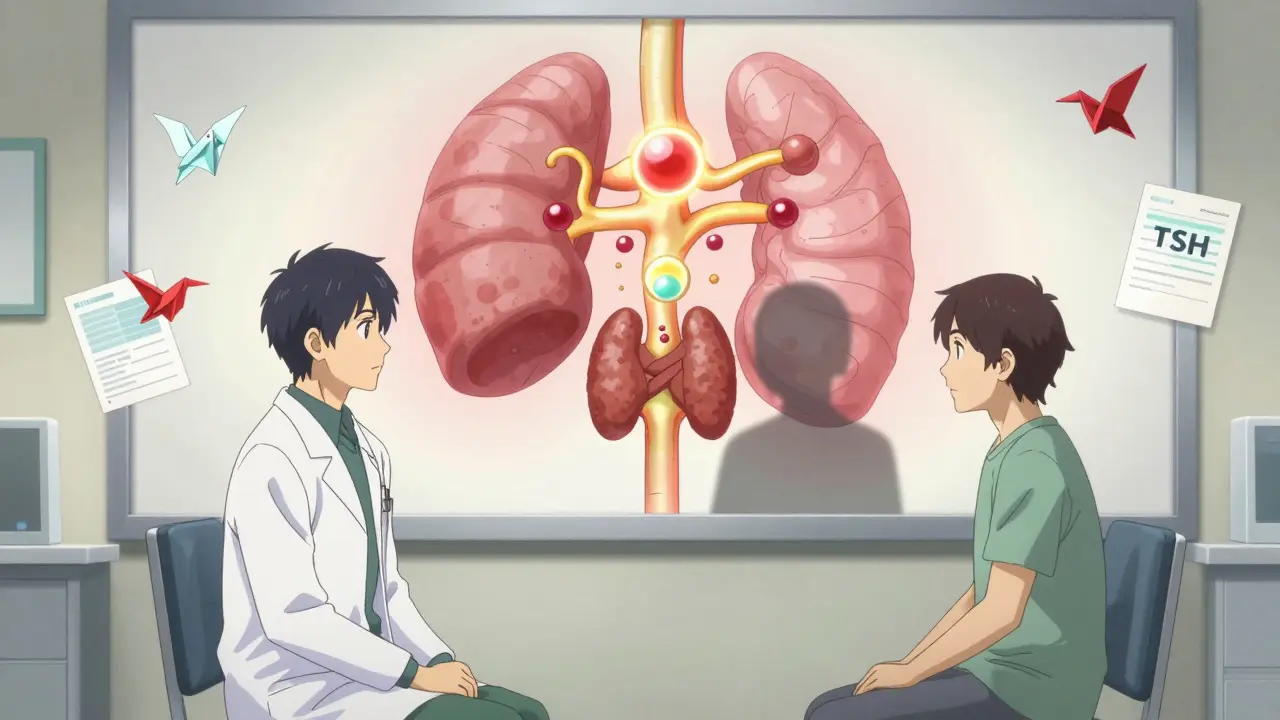
What Doctors Are Doing Differently Now
Back in the 2000s, thyroid testing for diabetics was rare. Today, guidelines have changed. The American Diabetes Association now recommends annual TSH testing for all Type 1 diabetics and high-risk Type 2 patients. That includes anyone with a family history of autoimmune disease, unexplained blood sugar swings, or symptoms that don’t fit typical diabetes patterns. But it’s not just about TSH. Experts now recommend thyroid antibody tests (like TPOAb and TgAb) at diagnosis. If those are positive, you’re at high risk for developing thyroid disease-even if your TSH is normal right now. This lets doctors monitor you closer before symptoms even appear. For patients with both conditions, testing frequency increases. The Tampa Bay Endocrine Institute recommends checking TSH every three months, not once a year. And if you’re on insulin or GLP-1 agonists, continuous glucose monitoring (CGM) is no longer optional-it’s essential. A 2022 JAMA study found CGM users with both conditions had 32% fewer hypoglycemic events and better time-in-range metrics than those using fingersticks.Lifestyle Changes That Help Both Conditions
Medications help-but lifestyle changes can make a bigger difference. A 2022 study published in PMC8787293 followed diabetic patients with thyroid dysfunction for six months on a Mediterranean diet. Results? HbA1c dropped by 0.8-1.2%, and TSH levels improved by 0.5-0.7 mIU/L. That’s not just better blood sugar-it’s better thyroid function. Why does this work? The Mediterranean diet is rich in antioxidants, omega-3s, and anti-inflammatory foods-all of which calm the immune system. Since both conditions are autoimmune at their core, reducing inflammation helps both the pancreas and the thyroid. Exercise matters too. Regular movement improves insulin sensitivity and helps regulate thyroid hormone conversion. But don’t overdo it. Too much intense cardio can stress the adrenal glands and worsen fatigue in hypothyroid patients. Aim for 30 minutes of walking, swimming, or light resistance training most days. Sleep and stress management are non-negotiable. Chronic stress raises cortisol, which interferes with both insulin and thyroid hormone function. Even 10 minutes of deep breathing daily can make a measurable difference.The Hidden Cost of Ignoring the Connection
Ignoring the link between diabetes and thyroid disease isn’t just risky-it’s expensive. Patients with both conditions spend an average of $4,872 more per year on healthcare than those with diabetes alone. Why? More hospital visits, more complications, more emergency care. Diabetic retinopathy risk jumps 37.2% in patients with untreated hypothyroidism. LDL cholesterol rises by 18-22 mg/dL. Triglycerides climb 25-30 mg/dL. That’s a direct path to heart disease. And it’s not just medical costs. A 2022 survey by the American Association of Clinical Endocrinologists found that 58% of patients with both conditions had at least one medication error because doctors mistook thyroid symptoms for diabetes complications. One in five required hospitalization.
What You Can Do Right Now
If you have diabetes and feel like something’s off-beyond your blood sugar-here’s your action plan:- Ask for a TSH test if you haven’t had one in the last year. Don’t wait for symptoms to get worse.
- Request thyroid antibodies (TPOAb, TgAb) if you have Type 1 diabetes or a family history of autoimmune disease.
- Start using a CGM if you’re not already. It’s the best way to catch hidden lows or highs caused by thyroid shifts.
- Track your symptoms in a journal: fatigue, weight, mood, temperature sensitivity, hair loss. Bring it to your next appointment.
- Adopt a Mediterranean-style diet-more vegetables, olive oil, fish, nuts, and less processed sugar and carbs.
- Don’t take thyroid meds with coffee, calcium, or iron supplements. These block absorption. Take levothyroxine on an empty stomach, at least 30-60 minutes before breakfast.
What’s Next for Treatment
Research is moving fast. The NIH-funded TRIAD study, launched in early 2023, is tracking 5,000 people with Type 1 diabetes and early thyroid antibodies to see if treating thyroid dysfunction early can slow or stop diabetes progression. Even more exciting: GLP-1 receptor agonists, commonly used for diabetes and weight loss, are showing unexpected benefits for the thyroid. A 2024 pilot study found they improved thyroid function in 63% of patients with subclinical hypothyroidism. New guidelines from the American Association of Clinical Endocrinologists, coming in October 2024, will finally give doctors clear algorithms for managing thyroid problems in Type 1, Type 2, and gestational diabetes. For the first time, care won’t be guesswork-it’ll be science.Bottom Line
Diabetes and thyroid disease aren’t separate problems. They’re two parts of the same puzzle. If you have one, you’re at higher risk for the other. Ignoring that link can lead to dangerous complications, medication errors, and unnecessary hospital visits. The good news? You don’t need to wait for your doctor to bring it up. Ask for the tests. Track your symptoms. Adjust your lifestyle. And remember-what helps your blood sugar often helps your thyroid too.Can hypothyroidism cause high blood sugar?
Yes. Hypothyroidism slows down your metabolism, which reduces how quickly your body uses glucose. This leads to insulin resistance and higher blood sugar levels. Studies show people with untreated hypothyroidism often have higher HbA1c readings-even if they’re following their diabetes diet and meds.
Can thyroid medication affect my insulin needs?
Absolutely. If you start taking levothyroxine for hypothyroidism, your body’s insulin sensitivity improves, and your insulin needs often drop by 15-25%. If you have hyperthyroidism and your treatment brings your thyroid levels back to normal, your insulin needs may go down by 20-30%. Always monitor your blood sugar closely when starting or adjusting thyroid meds.
Should I get tested for thyroid disease if I have Type 2 diabetes?
Yes-if you have risk factors. The American Diabetes Association recommends annual TSH testing for all Type 1 diabetics and Type 2 diabetics with autoimmune conditions, family history of thyroid disease, unexplained weight changes, fatigue, or abnormal cholesterol levels. Even if you don’t have symptoms, testing is worth it.
Why do I feel worse when I start thyroid medication?
It’s common, especially if you’re also diabetic. When thyroid hormone levels rise, your metabolism speeds up, which can cause temporary blood sugar drops or increased insulin sensitivity. You might feel shaky, sweaty, or dizzy-not because your meds are wrong, but because your insulin dose might need adjusting. Talk to your doctor before changing anything.
Can diet fix thyroid problems in diabetics?
Diet alone won’t cure thyroid disease, but it can significantly improve both conditions. The Mediterranean diet reduces inflammation, supports healthy hormone conversion, and improves insulin sensitivity. In studies, it lowered HbA1c by nearly 1% and improved TSH levels in just six months. It’s not a replacement for medication-but it’s the best support you can give your body.
Is there a link between thyroid disease and diabetic neuropathy?
Yes. Both conditions can damage nerves. Hypothyroidism causes fluid retention and swelling, which can compress nerves and worsen symptoms of diabetic neuropathy. It also slows down the repair of damaged nerves. If you have numbness, tingling, or pain in your hands or feet and your thyroid isn’t well-controlled, treating the thyroid may reduce your nerve pain.
Comments
Anjula Jyala
Stop treating this like two separate conditions. Autoimmune cross-talk is well-documented. TSH alone is meaningless without TPOAb and free T3. If your endo isn’t ordering antibodies at diagnosis you’re getting second-rate care. Period. Hypothyroidism isn’t just slowing metabolism-it’s blunting hepatic gluconeogenesis and worsening insulin resistance. Your HbA1c won’t budge until you fix the thyroid axis. And yes, levothyroxine absorption is garbage if you drink coffee within an hour. You’re not special. You’re just uninformed.
Stop blaming your diet. Your meds are broken because your labs are incomplete.
On January 27, 2026 AT 01:24
Kirstin Santiago
I’ve been managing both for 12 years and this article nails it. The fatigue? Real. The weight swings? Real. The way your body just feels… off even when your sugars are ‘fine’? That’s the thyroid whispering. I started tracking my symptoms in a simple notes app-temperature, mood, energy-and it literally saved me from a hospital trip. My doc thought I was overreacting until I showed her the pattern. Now I get TSH checked every 3 months. No more guessing.
Also, the Mediterranean diet? Changed everything. Not because it’s trendy-because it’s anti-inflammatory. Your body isn’t broken. It’s just screaming for balance.
On January 28, 2026 AT 12:57
Kathy McDaniel
OMG YES. I thought i was just getting older or stressed but nooo. I had 3 hypoglycemic episodes where i felt like i was gonna pass out but no shaking no sweat no nothing. My doc was like oh maybe you’re overmedicated. Then i mentioned the hoarse voice and the hair thinning and she was like ohhhhh. Thyroid. Levothyroxine fixed half my problems. Still working on the sugar thing but wow. Thank you for writing this. I feel less alone now 😊
On January 29, 2026 AT 00:39
Patrick Merrell
People in the US treat diabetes like a lifestyle choice and thyroid like a side effect. This is a systemic failure of medical education. We’re not talking about minor overlap. We’re talking about two autoimmune conditions sharing the same genetic vulnerability. If your immune system is attacking your pancreas, it’s already on a rampage. You don’t get to pick which organ gets spared. Stop acting like this is rare. It’s statistically inevitable for Type 1s. And yes, if you’re not on CGM you’re flying blind. You’re not brave. You’re reckless.
Also, stop taking thyroid meds with calcium. It’s not rocket science. 🤦♂️
On January 30, 2026 AT 22:13
Conor Flannelly
There’s a deeper layer here that rarely gets discussed: the emotional toll. When your body betrays you in two ways at once, it doesn’t just feel like illness-it feels like failure. Like you’re not doing enough. Like your willpower is the problem. But it’s not. It’s biology. It’s immune dysregulation. It’s the way our modern world-processed foods, chronic stress, environmental toxins-pushes genetically predisposed people over the edge.
What helps isn’t just better labs or more meds. It’s permission to rest. To grieve. To accept that some days, your body won’t cooperate. And that’s okay. Healing isn’t linear. It’s a spiral. You keep coming back to the same struggles, but with more wisdom each time.
On January 31, 2026 AT 22:59
Conor Murphy
Conor above nailed it. This isn’t just about hormones. It’s about being heard. I spent two years being told I was ‘just anxious’ until I finally found a functional endocrinologist who looked at my full panel. My TSH was ‘normal’ but my TPOAb was through the roof. That’s the red flag. That’s the warning sign. And yes, the Mediterranean diet helped-but not because it’s ‘healthy.’ Because it removed the triggers. No gluten, no sugar spikes, no inflammatory oils. My body finally stopped fighting itself.
And if you’re on GLP-1s? Watch your thyroid levels. They’re not just for weight loss. They’re modulating immune activity too. This is the future of care. We’re moving from symptom management to root cause healing.
On February 2, 2026 AT 07:50
Desaundrea Morton-Pusey
Ugh. Another one of these ‘you need to eat kale and cry into your journal’ posts. I have diabetes. I take my meds. I check my sugars. I don’t need a lecture on thyroid antibodies. If I had a thyroid problem my doctor would’ve told me. Stop scaring people with jargon. This is just fearmongering wrapped in a fancy study citation. I’m not paying for CGM because some blogger says so. My insurance won’t cover it. And I’m not changing my diet because some ‘expert’ thinks I should. I’m not a lab rat.
On February 2, 2026 AT 14:20
Kegan Powell
Desaundrea, I get it. You’re tired of being told what to do. I’ve been there. But here’s the thing-your doctor might not know this stuff either. Most of them were trained in the 2000s. They think TSH is enough. They don’t know about the 41% of diabetics with hidden hypoglycemia because of thyroid issues. This isn’t fear. It’s awareness. And awareness doesn’t mean you have to change everything tomorrow. Just ask for the test. Just track your fatigue for a week. Just write it down. You don’t have to be perfect. You just have to be curious.
And if you’re not ready for CGM? Start with a glucose meter and check your sugar when you feel off. You might be surprised what you find. No pressure. Just possibility. 💪
On February 3, 2026 AT 08:48