

Switching from a brand-name medication to its generic counterpart is usually a safe and cost-effective move. The active ingredient remains the same, so you expect the same result. But sometimes, that expectation doesn't hold true. You might feel slightly different-maybe more drowsy, maybe less effective pain relief-or perhaps nothing changes at all. While differences in inactive ingredients often get the blame, your genetics play a surprisingly large role in how your body processes any medication, generic or brand.
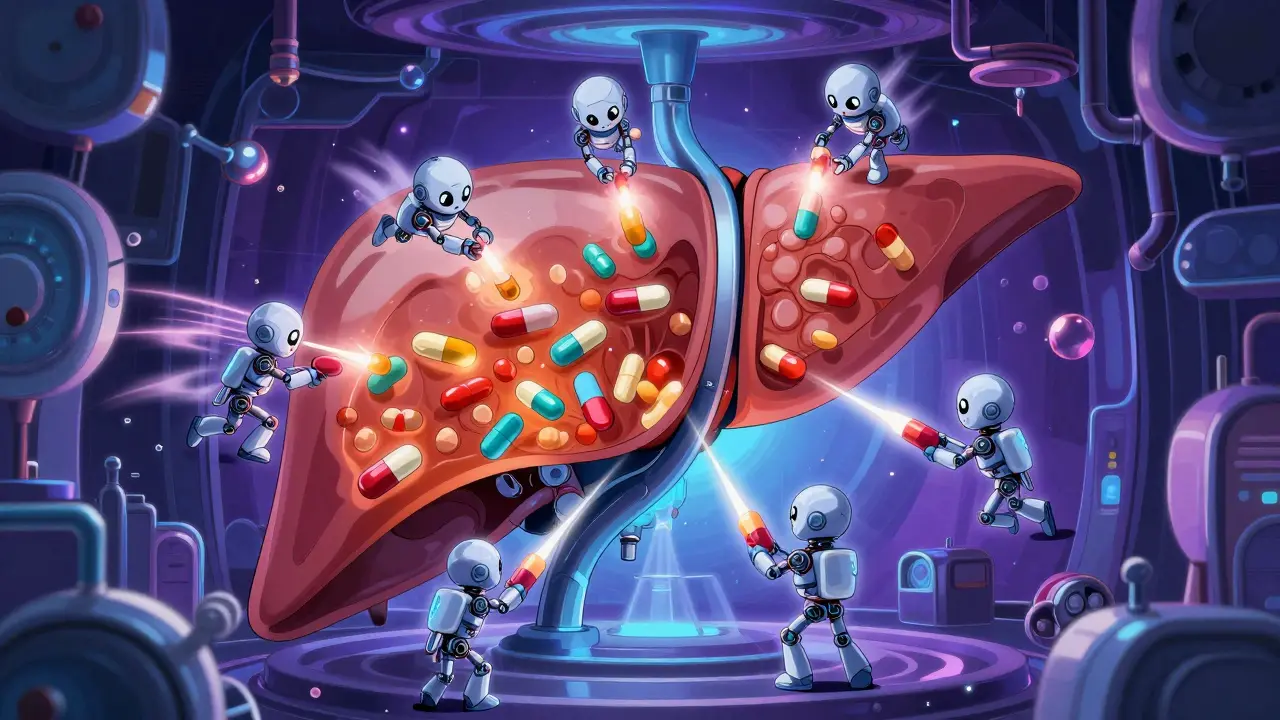
Your DNA acts as the instruction manual for your liver enzymes, which are responsible for breaking down most drugs. If your instructions say to work fast, you metabolize the drug quickly. If they say to work slow, the drug stays in your system longer. This biological reality means that pharmacogenetics-the study of how genes affect drug response-is just as relevant when taking generics as it is with branded pills. Understanding this connection can help you navigate side effects and dosage adjustments with confidence.
Why Genetics Matter More Than Brand vs. Generic
When people worry about generics, they often focus on bioequivalence-the legal requirement that a generic must deliver the same amount of active ingredient into your bloodstream as the brand name. This is a solid standard. However, bioequivalence assumes an "average" human body. It does not account for individual genetic variations.
Research indicates that genetic factors account for 20% to 95% of patient variability in response to individual drugs. That is a massive range. If you have a genetic variant that makes you a "poor metabolizer," even a perfectly manufactured generic might build up to toxic levels in your blood because your liver cannot break it down fast enough. Conversely, if you are an "ultra-rapid metabolizer," the drug might be cleared before it has time to work, regardless of whether it came from Pfizer or a local manufacturer.
The key takeaway is simple: your genes determine your baseline reaction. The brand label is secondary. If a drug causes issues for you, switching between brands and generics might offer slight relief due to different fillers or binders, but it will rarely solve a problem rooted in your DNA.
The Main Genetic Players: CYP2D6 and Beyond
To understand why you react differently to medications, we need to look at specific genes. The most influential group is the Cytochrome P450 family. Among them, CYP2D6 is arguably the most important for general health.
CYP2D6 helps metabolize about 25% of all prescription drugs, including many antidepressants (like paroxetine and sertraline), beta-blockers, and opioids (like codeine). Because this gene is highly polymorphic-meaning there are over 80 known variants worldwide-people fall into distinct categories:
- Poor Metabolizers: Their bodies produce little to no functional enzyme. Drugs stay in their system longer, increasing the risk of side effects like dizziness, nausea, or sedation.
- Ultra-Rapid Metabolizers: Their bodies process drugs incredibly fast. For prodrugs like codeine, this can actually be dangerous because the drug converts to morphine too quickly, potentially causing respiratory depression.
- Normal Metabolizers: The majority of the population falls here. Standard dosages work as intended.
Another critical gene is CYP2C9, which affects how you process warfarin (a blood thinner) and certain anti-seizure medications. Variants in this gene, such as *2 and *3, reduce enzyme activity. If you carry these variants, you may need significantly lower doses of warfarin to avoid bleeding risks. This applies equally to generic warfarin and brand-name Coumadin.
Family History: Your First Clue
You don’t always need a $300 genetic test to start understanding your risk. Family history is a powerful, free tool. Pharmacogenetic traits are inherited, meaning they run in families.
If your parents or siblings experienced severe side effects from common medications, pay attention. Did your mother suffer from extreme fatigue on low-dose antidepressants? Did your father experience unusual bruising on standard blood thinners? These anecdotes are data points. They suggest that your family may share genetic variants that alter drug metabolism.
Consider this scenario: You switch to a generic statin for cholesterol. You feel fine for two weeks, then develop muscle pain. Your sister had similar issues with statins years ago. This pattern suggests a potential genetic predisposition to statin-induced myopathy, possibly linked to the SLCO1B1 gene, which controls how statins enter liver cells. In this case, the issue isn't the generic pill; it's your genetic makeup interacting with the drug class itself.
Population Differences and Ancestry
Genetic variants are not distributed evenly across the globe. Your ancestry can provide clues about likely metabolic profiles. For example, studies show significant differences in variant frequencies between populations.
A 2024 study published in Nature Scientific Reports highlighted differences between Tunisian, Italian, and Sub-Saharan African populations. One variant, rs3846662 in the HMGCR gene, is associated with reduced efficacy of pravastatin. This variant is much more common in Sub-Saharan African populations. Similarly, the CYP2C19 gene, which affects how you process proton pump inhibitors (like omeprazole) and clopidogrel (Plavix), shows notable variation. Approximately 15-20% of Asian populations are poor metabolizers for CYP2C19, compared to only 2-5% of Caucasians.
This doesn't mean one ethnicity is "better" or "worse." It simply means that average dosing guidelines, which are often based on broader Western populations, might not fit everyone perfectly. If you belong to a population group with known high frequencies of certain variants, discussing preemptive testing with your doctor might be wise.
| Gene | Drug Class Examples | Poor Metabolizer Risk | Ultra-Rapid Metabolizer Risk |
|---|---|---|---|
| CYP2D6 | Antidepressants, Opioids, Beta-blockers | Increased side effects, toxicity | Reduced efficacy, rapid clearance |
| CYP2C9 | Warfarin, Phenytoin | Bleeding risk, seizures | Clotting risk, treatment failure |
| CYP2C19 | Clopidogrel, PPIs | Stent clotting, acid rebound | Rapid clearance, less protection |
| TPMT | Thiopurines (Azathioprine) | Severe bone marrow suppression | Treatment failure |
When to Consider Genetic Testing
While family history is useful, it is not definitive. You might inherit the "normal" version of a gene even if your parent has the variant. Direct-to-consumer tests or clinical panels can provide clarity. Companies like Color Health and OneOme offer multi-gene panels that analyze dozens of drug-gene pairs.
Testing is particularly valuable if:
- You have experienced unexplained adverse reactions to multiple medications.
- You are starting a high-risk drug like warfarin, carbamazepine, or certain chemotherapy agents (e.g., 5-fluorouracil).
- You have tried three or more antidepressants without success.
- Your family history includes severe drug sensitivities.
A 2023 Mayo Clinic study tracked 10,000 patients who received preemptive pharmacogenomic testing. They found that 42% had at least one high-risk gene-drug interaction identified. In 67% of those cases, doctors changed the medication, resulting in a 34% reduction in adverse events compared to controls. This data suggests that knowing your genetic profile can actively improve safety and outcomes.

Navigating the Conversation with Your Doctor
Many clinicians are eager to incorporate pharmacogenetics but face barriers like lack of time or unfamiliarity with interpreting results. A survey showed that while 68% of clinicians felt confident interpreting CYP2D6 results, only 32% felt confident with others like HLA-B*15:02.
To make the most of your appointment:
- Bring your results: If you have a genetic report, bring a printed copy. Highlight the specific genes and drugs mentioned.
- Ask specific questions: Instead of "Does this matter?" ask "Given my CYP2D6 poor metabolizer status, should we adjust the dose of this generic SSRI?"
- Mention family history: Clearly state any relatives who had severe reactions to common drugs.
- Discuss alternatives: If a drug is risky due to genetics, ask if there is an alternative medication that uses a different metabolic pathway.
Remember, the goal is not to avoid generics entirely. Generics are essential for healthcare affordability. The goal is to ensure that the dose and type of medication-generic or brand-are optimized for your unique biology.
Practical Steps for Managing Drug Response
If you suspect your genetics are affecting how you handle medications, take these steps:
- Keep a symptom log: Note when you start a new drug, the dose, and any side effects within the first two weeks. This helps distinguish genetic reactions from temporary adjustment periods.
- Stick to one pharmacy: Different pharmacies may source generics from different manufacturers. Consistency helps isolate variables. If you switch manufacturers and notice a change, note it, but remember that genetics are the bigger factor.
- Review your current meds: Use resources like the Clinical Pharmacogenetics Implementation Consortium (CPIC) guidelines to see if any of your current drugs have known genetic interactions.
- Advocate for testing: If you have complex health needs, ask your primary care provider or specialist about pharmacogenomic testing. Insurance coverage is expanding, especially for high-risk scenarios.
Your body is unique. Your genes are the blueprint. By understanding how they interact with medications, you can move beyond trial-and-error prescribing. Whether you take a brand-name pill or a generic, the right dose for you is determined by your DNA, not the logo on the bottle.
Do generic drugs work differently for people with genetic variations?
Generic drugs contain the same active ingredient as brand-name drugs and are required to be bioequivalent. However, if you have genetic variations that affect drug metabolism (such as being a poor or ultra-rapid metabolizer), you may experience different side effects or efficacy levels regardless of whether the drug is generic or brand. The genetic factor is independent of the manufacturer.
Can I tell if I am a poor metabolizer without genetic testing?
You can suspect it based on family history and personal experiences with medication side effects. If you or close relatives consistently experience strong side effects at low doses or find that standard doses are ineffective, you may have a genetic variant affecting metabolism. However, only genetic testing can confirm this definitively.
Which genes are most important for drug response?
The most clinically significant genes include CYP2D6 (affecting antidepressants, opioids, and beta-blockers), CYP2C9 (warfarin, phenytoin), CYP2C19 (clopidogrel, proton pump inhibitors), TPMT (thiopurines), and DPYD (5-fluorouracil). Variations in these genes can significantly alter drug safety and effectiveness.
Is pharmacogenetic testing covered by insurance?
Coverage varies by insurer and plan. Medicare covers certain pharmacogenomic tests under the Molecular Diagnostic Services Program. Many private insurers cover testing if it is deemed medically necessary, particularly for high-risk drugs like warfarin or chemotherapy agents. It is best to check with your specific provider.
Should I avoid generics if I have genetic sensitivities?
Not necessarily. The issue is usually the drug molecule itself, not whether it is generic or brand. If a drug is unsafe due to your genetics, both the generic and brand versions pose the same risk. Your doctor may recommend a different medication entirely or a adjusted dose, rather than avoiding generics altogether.