
Medication Safety Checker
Check Your Symptoms
Select any symptoms you're experiencing after taking new medication. This tool identifies potential risks based on FDA guidelines.
Your Risk Assessment
Risk Level: Low
Recommended Action
Important: This tool is for informational purposes only. It does not replace professional medical advice. If you experience any immediate emergency symptoms, call 911 or your local emergency number immediately.
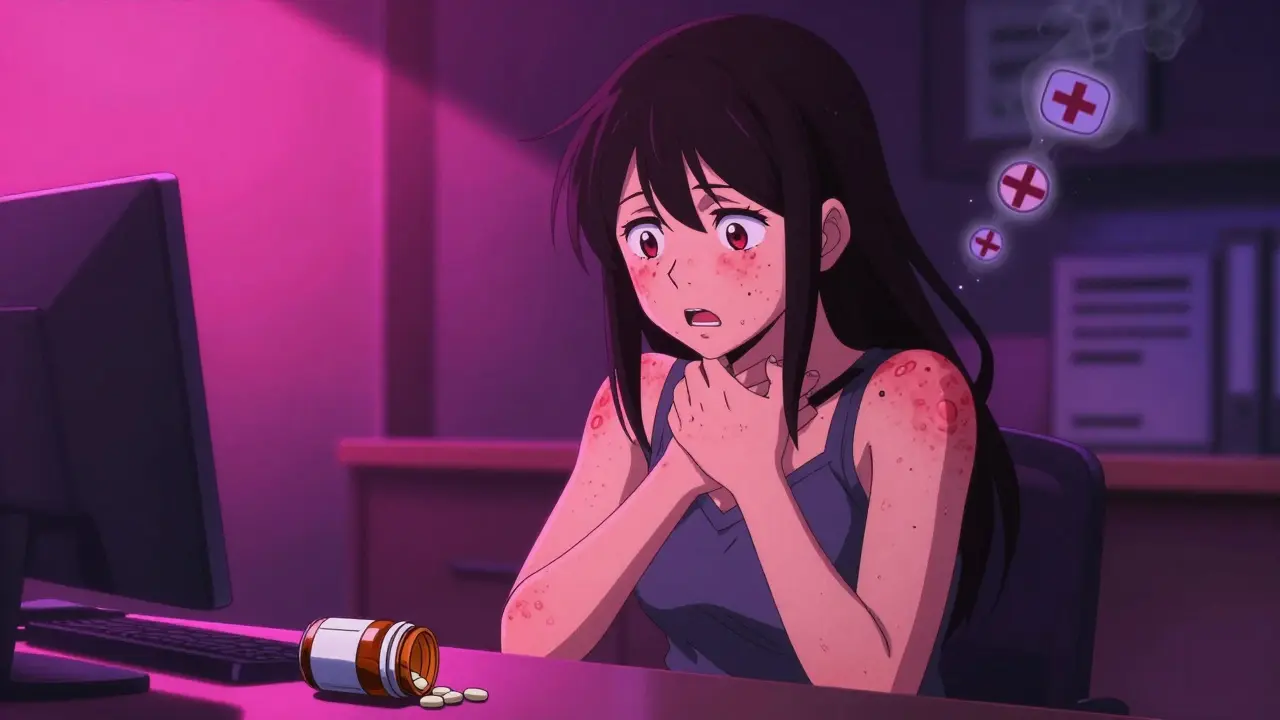
Medications save lives. But they can also hurt you - sometimes in ways that happen fast, quietly, and without warning. You take your pill like always. Nothing seems wrong. Then, in a matter of hours, you’re struggling to breathe, your skin breaks out in hives, or your chest starts to ache. These aren’t just "side effects." These are red flags. And if you ignore them, they can turn deadly.
What Makes a Side Effect Dangerous?
Not all side effects are created equal. Most people experience mild ones: a dry mouth, drowsiness, or an upset stomach. The FDA says about 35% of people dealing with prescriptions face these common issues. They’re annoying, but rarely dangerous. Dangerous side effects are different. They’re rare - affecting only about 0.1% of medication courses - but they’re responsible for over 128,000 deaths in the U.S. every year, according to FDA data. These aren’t just discomforts. They’re signs your body is having a severe, possibly life-threatening reaction. That could mean your immune system is attacking your own tissues, your heart is going out of rhythm, or your liver is shutting down. The key is spotting the difference before it’s too late. Most dangerous reactions don’t show up after weeks. They hit fast - often within minutes to hours after you take the medicine. That’s why timing matters as much as the symptom itself.Immediate Red Flags: Call 911 Now
If you take a new medication and experience any of these, don’t wait. Don’t text your doctor. Don’t check Google. Call 911 or go to the nearest emergency room right away.- Difficulty breathing or wheezing - This isn’t just a stuffy nose. If your throat feels tight, your chest is constricted, or you can’t catch your breath, it could be anaphylaxis. This is a full-body allergic reaction. Your airways swell. Blood pressure drops. You can die within minutes.
- Swelling of the face, lips, tongue, or throat - This often happens with hives. If your lips look puffy or your tongue feels thick, it’s not just an allergy. It’s an emergency.
- Hives, rash, or skin peeling - A mild rash might be harmless. But if it spreads fast, turns purple, or starts blistering, it could be DRESS syndrome or Stevens-Johnson syndrome. Both can destroy your skin and organs.
- Chest pain or irregular heartbeat - If your heart feels like it’s racing, fluttering, or skipping beats, especially with dizziness or fainting, it could be a dangerous drug-induced arrhythmia. Some medications, especially antibiotics or antidepressants, can trigger this.
- Seizures or loss of consciousness - A seizure after taking a new drug is never normal. Neither is suddenly passing out. This could mean your brain is being affected by a toxic reaction.
Dr. Lisa Thompson from Mayo Clinic says: "Any breathing trouble combined with skin changes after taking medicine should be treated as anaphylaxis until proven otherwise." That means: act like it’s life-or-death. Because it is.
Warning Signs That Build Slowly - But Still Kill
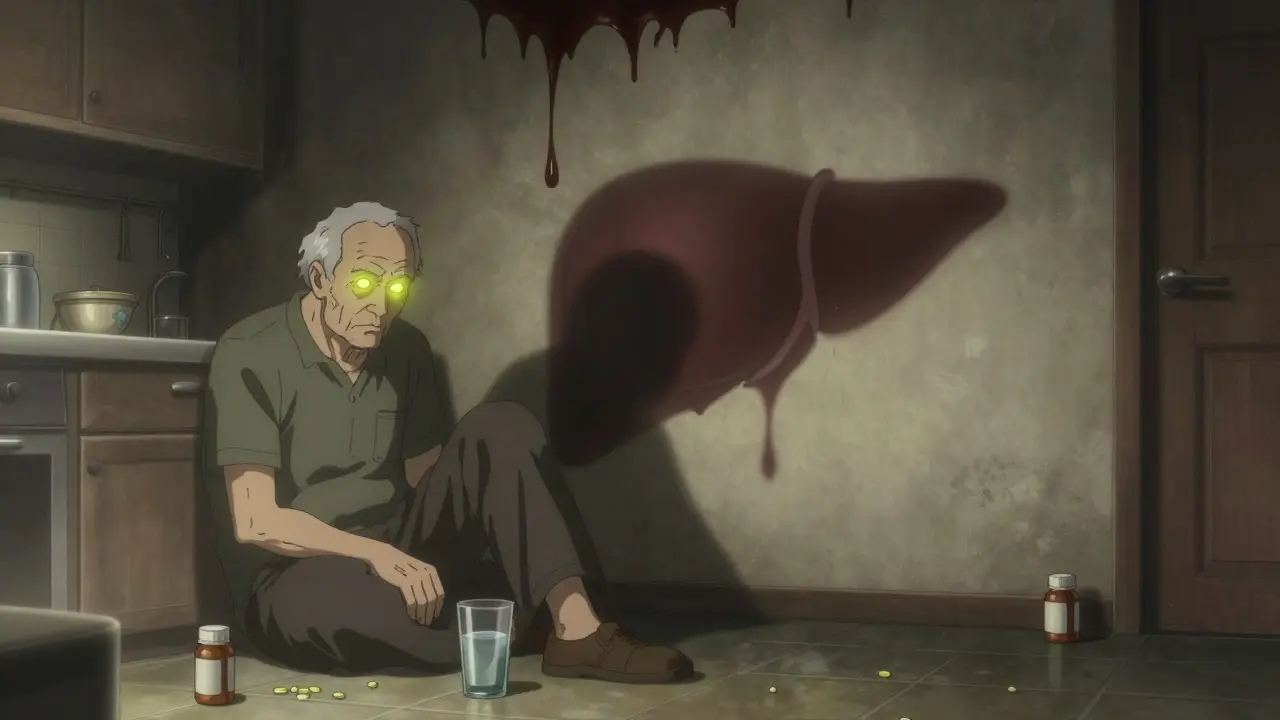
Some deadly reactions don’t scream. They whisper. They creep in over days or weeks. By the time you notice, the damage is already done.- Yellow skin or eyes (jaundice) - This isn’t just from too much sun. It’s a sign your liver is failing. Medications like statins, antibiotics, or weight-loss drugs like semaglutide can cause this. When it shows up with severe stomach pain, you have less than 48 hours before organ failure.
- Unusual bleeding or bruising - If you’re bleeding from your gums, nose, or rectum without injury, or you’re covered in bruises you didn’t get, your blood may not be clotting. This can happen with blood thinners, NSAIDs, or even some antibiotics.
- Dark urine, pale stools, or constant fatigue - These are signs your liver or kidneys are struggling. You might feel exhausted even after sleeping. Your urine might look like cola. Your stool might turn chalky white. This is not normal tiredness. It’s organ stress.
- Decreased urine output or swelling in legs and ankles - Your kidneys are your body’s filters. If they stop working, fluid builds up. You might gain weight overnight. Your feet swell. You feel bloated. This can happen with painkillers, blood pressure meds, or diabetes drugs.
- Extreme drowsiness or confusion - If you’re sleeping more than usual, can’t wake up easily, or feel disoriented, it could be central nervous system depression. This is common with opioids, benzodiazepines, or sleep aids. It can lead to respiratory failure.
Harvard Medical School warns that excessive drowsiness isn’t just a side effect - it’s a warning sign of overdose. And it’s often missed because people assume, "I just need more rest."
Who’s at Highest Risk?
Some people are more likely to have dangerous reactions. You’re not alone if you fit one of these profiles.- People over 65 - Your body processes drugs slower. The American Geriatrics Society says older adults experience side effects 2.7 times more than younger people.
- People taking five or more medications - Polypharmacy is a silent killer. Taking too many drugs increases your risk of dangerous interactions by 300%. Insulin and heparin are especially risky - they’re often confused with other pills because they look or sound alike.
- People with kidney or liver disease - If your organs can’t filter drugs properly, they build up to toxic levels. Even normal doses can become dangerous.
- People with known allergies - If you’ve had a reaction to one drug, you’re more likely to react to others in the same family. Tell every doctor you see.
The FDA’s Adverse Event Reporting System has over 21 million reports of dangerous reactions. The most common? Gastrointestinal bleeding, severe allergies, and heart problems. But many of these could have been caught early.
What to Do When You Notice Something Wrong
Here’s what to do - step by step - if you suspect a dangerous reaction.- Stop the medication - Only if it’s safe to do so. Never stop blood pressure pills, antidepressants, or heart meds without calling your doctor first. Stopping suddenly can cause seizures, heart attacks, or withdrawal symptoms that are just as dangerous.
- Call 911 - If you have any of the immediate red flags: trouble breathing, swelling, chest pain, seizures, or loss of consciousness.
- Call your doctor within 24 hours - If you have unusual bleeding, jaundice, swelling, confusion, or extreme fatigue. Don’t wait for it to get worse.
- Bring all your meds to your next appointment - Use the "Brown Bag Method." Put every pill, supplement, and OTC drug in a bag. Your doctor needs to see everything you’re taking. Many dangerous reactions happen because of hidden interactions.
- Report the reaction - Go to the FDA’s MedWatch website or ask your pharmacist to file a report. This helps track dangerous drugs and protect others.
Don’t rely on memory. Write down: what you took, when you took it, what symptoms started, and how fast they got worse. That information saves lives.

How Technology Is Helping - And What’s Coming
The good news? We’re getting better at catching these reactions before they happen.- Mayo Clinic’s AI dashboard now predicts dangerous side effects with 89% accuracy by analyzing your age, weight, kidney function, and current meds.
- The NIH’s Pharmacogenomics Research Network tests your DNA before prescribing certain drugs. For example, testing for a gene variant before giving carbamazepine reduces severe reactions by 47%.
- Apple and the American Heart Association are now testing smartwatches that detect abnormal heart rhythms caused by medications.
- By 2026, the FDA plans to require "smart packaging" for high-risk drugs - bottles that track when you take them and alert you if you’re at risk for a reaction.
But tech won’t replace your instincts. No app will tell you if your tongue is swelling. No algorithm will notice you’ve stopped eating because your stomach hurts. You are the first line of defense.
Don’t Wait for the Worst
Medications are powerful tools. But they’re not harmless. The most dangerous side effects don’t come with warning labels you can read. They come in the way your body feels - and how fast it changes.Listen to your body. If something feels wrong after taking a new pill, it probably is. Don’t dismiss it as "just a side effect." Don’t wait to see if it goes away. And never, ever stop your meds without talking to your doctor.
Early detection saves lives. You don’t need a medical degree to spot the signs. You just need to pay attention.
Comments
Adrienne Dagg
OMG I literally had a hives reaction to amoxicillin last year and thought it was just "a rash" 😳 I waited 3 hours before going to the ER. My face looked like a balloon. Don’t be me. CALL 911. 🚨❤️🩹
On December 17, 2025 AT 16:51
Glen Arreglo
This is exactly why I always bring my entire pill bottle to every doctor visit. No more guessing. No more "I think I took that one." I’ve seen friends nearly die because someone assumed a new pill was "just like the last one." Knowledge isn’t power here-it’s survival.
Also, if you’re over 65 and on 5+ meds? Please, please, please get a med sync with your pharmacist. It’s free and saves lives.
On December 19, 2025 AT 16:32
shivam seo
LMAO another fearmongering FDA article. You know what kills more people than meds? Processed sugar, corporate greed, and lazy doctors who prescribe like they’re playing bingo. You’re telling me I should panic because my tongue tingles after a painkiller? Maybe stop taking shit your body doesn’t need.
Also, Apple watches detecting heart issues? Cute. My grandpa died from a pill he never even took. The system’s broken, not the meds.
On December 21, 2025 AT 02:11
benchidelle rivera
While the urgency of recognizing these symptoms cannot be overstated, I must emphasize that the responsibility for patient safety does not rest solely on the individual. Healthcare systems must implement mandatory electronic prescribing alerts, pharmacist-led medication reviews for polypharmacy patients, and standardized patient education protocols. Relying on layperson vigilance is a systemic failure.
Furthermore, the normalization of "just a side effect" language in medical discourse perpetuates dangerous complacency. Language matters. We must reframe these reactions as medical emergencies-not inconveniences.
On December 22, 2025 AT 04:06
Andrew Kelly
Let’s be real-this whole thing is a pharmaceutical industry scare tactic to sell more monitoring devices and lawsuits. The FDA has admitted that over 70% of reported adverse events are unrelated to the drug. They want you scared so you’ll pay for genetic tests, smart bottles, and $200 "medication safety consultations."
My cousin took metformin for 12 years. Never had a problem. Now they want to DNA-test every diabetic? Meanwhile, the real killer? Sugar. But you won’t see a PSA about that, will you?
Also, why is it always "call 911"? Why not just call your doctor? Oh right-because they’re on a 3-month waitlist. This isn’t safety. It’s profit.
On December 23, 2025 AT 08:22
Isabel Rábago
I’ve seen people ignore jaundice because "they were just tired."
Then they end up in the ICU.
And then their family posts on Facebook asking why no one warned them.
It’s not magic. It’s not luck. It’s paying attention.
That’s all.
Just pay attention.
And if you’re too busy scrolling to notice your skin turning yellow?
Maybe you need to stop being distracted.
That’s not paranoia.
That’s basic human survival.
And if you think I’m being dramatic?
Go look up Stevens-Johnson syndrome.
Then come back and tell me it’s not real.
On December 23, 2025 AT 09:55
Anna Sedervay
It is, of course, a lamentable and profoundly regressive epistemological failure of contemporary medical discourse that laypersons are expected to self-diagnose life-threatening pharmacological reactions based on anecdotal symptomatology and emotionally charged internet content.
One must wonder-why is it that the burden of discerning between benign and lethal adverse events is placed squarely upon the individual, rather than upon the institutional infrastructure that manufactures, prescribes, and distributes these substances with such cavalier disregard for bioindividuality?
And yet... the FDA's "smart packaging" initiative, while aesthetically pleasing in its techno-utopian veneer, is a Band-Aid on a hemorrhage.
True safety lies not in tracking when one ingests a pill, but in dismantling the profit-driven pharmaceutical-industrial complex that commodifies human physiology.
Also, I typoed "pharmaceutical" as "pharmaceuitcal"-but I think you get the point.
On December 24, 2025 AT 23:45
Mike Rengifo
My mom took a new blood pressure med and started feeling weirdly foggy. She thought it was just aging. Two weeks later, she was in the hospital with liver failure. Turned out it was the new med + her daily turmeric supplement.
She didn’t even know supplements could interact.
So yeah. Brown bag your meds. Every time. Even if you think it’s "just vitamins."
On December 25, 2025 AT 21:10
Ashley Bliss
They say "listen to your body" like it’s some mystical whisper… but what if your body’s been screaming for years and you’ve been too numb to hear it?
I used to think fatigue was normal. I thought dizziness was just stress. I thought nausea was "just anxiety."
Turns out, my body was begging me to stop taking that antidepressant. And I ignored it because I didn’t want to be "that person"-the one who questions doctors, the one who says "this doesn’t feel right."
Now I’m on the other side of a near-death experience.
And I’m not mad at the medicine.
I’m mad at the culture that taught me to doubt myself.
You are not overreacting.
You are not dramatic.
You are not weak.
You are alive.
And that’s not luck.
That’s you listening.
Don’t ever stop.
On December 26, 2025 AT 20:03