
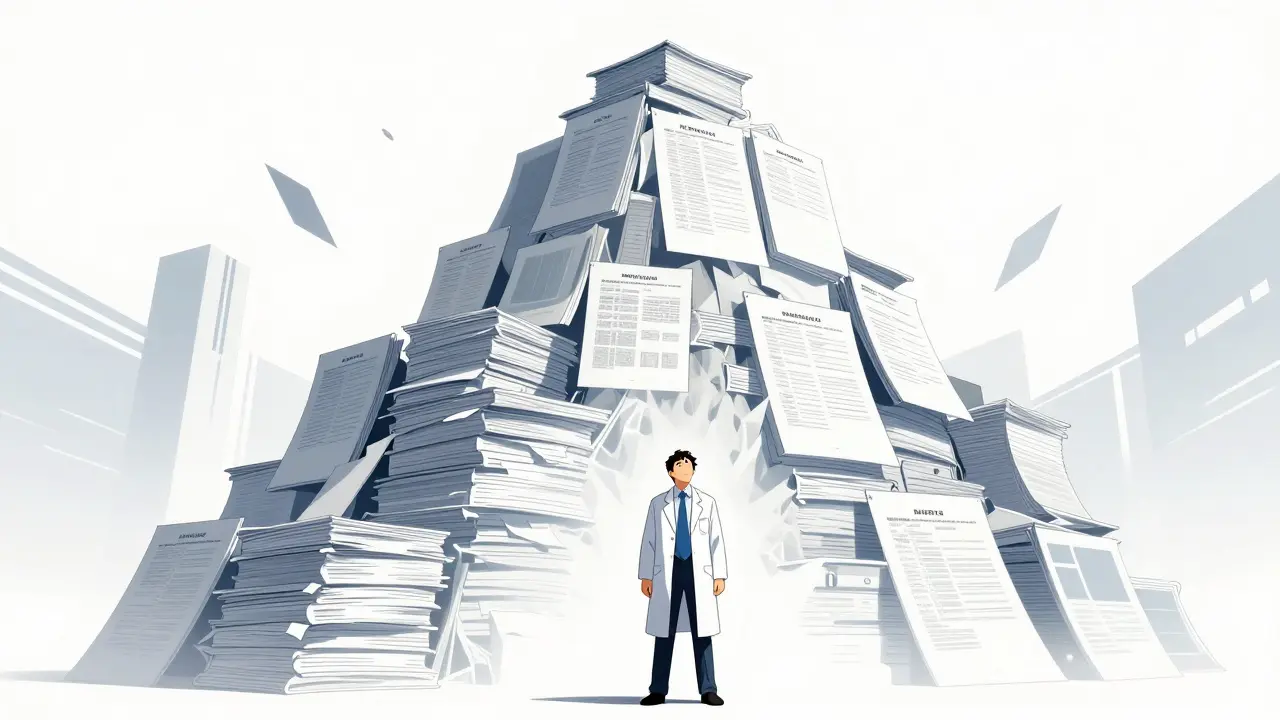
Bringing a generic drug to market isn't as simple as copying a formula and selling it. For pharmaceutical companies, the path to pharmacy shelves is paved with millions of dollars in FDA approval costs for generics and a mountain of paperwork. While generic drugs save the U.S. healthcare system hundreds of billions of dollars annually, the regulatory hurdles can be a double-edged sword-ensuring safety while simultaneously delaying the very competition that lowers prices.
To understand why some generics take years to arrive after a patent expires, we have to look at the financial and bureaucratic machinery of the FDA (Food and Drug Administration). The agency doesn't just rely on government taxes to fund its reviews; it uses a "user fee" system where the industry pays for the privilege of having their applications reviewed. This creates a complex financial landscape for any company trying to launch a lower-cost alternative to a brand-name drug.
The Financial Blueprint: Understanding GDUFA Fees
Since 2012, the Generic Drug User Fee Amendments, better known as GDUFA, have governed how the FDA funds generic reviews. Essentially, the FDA sells its time and expertise back to the companies. Under the current GDUFA III framework, the costs are split into several buckets to keep the agency running.
For a typical company in 2025, the entry price is steep. You're looking at a facility fee of roughly $238,055 per site and a product fee of about $136,485 per application. While there are waivers for small businesses with fewer than 1,000 employees, the baseline cost to even get an application on the desk is significant. When you add in the cost of preparing the documentation-which has ballooned from 75,000 pages a decade ago to nearly 200,000 pages today-the "regulatory tax" on innovation is high.
| Cost Category | Generic (ANDA) | Brand-Name (NDA) |
|---|---|---|
| Base Application Fee | ~$375,000 (incl. facility/product) | $3,685,000 |
| Average Review Time | 10-12 Months | Multi-year process |
| Documentation Volume | 150k - 200k pages | Extensive clinical trials |
The "Complex Generic" Trap: Where Costs Spiral
Not all generics are created equal. A simple tablet is one thing, but a complex nasal spray or an injectable is another. For these Complex Generics, the regulatory cost isn't just about the fees-it's about the risk of failure.
In 2015, the FDA changed how it provides feedback on formulation discrepancies. Instead of giving detailed guidance on why a drug didn't meet "sameness" requirements, the agency became more vague. This forced manufacturers into a costly game of trial-and-error. Imagine spending $8 million on three different reformulations for a single product because you're guessing what the reviewer wants to see. This lack of transparency has increased development costs by as much as 40% for complex products.
The impact is felt directly by patients. When a complex generic is delayed, patients are stuck paying 300% more for the brand-name version. We saw this with testosterone replacement therapies, where approval delays lasted nearly five years, costing patients thousands of dollars in out-of-pocket expenses.
The ANDA Process: From Submission to Pharmacy
To get a drug approved, a company files an Abbreviated New Drug Application, or ANDA. Unlike a brand-name drug, a generic doesn't need to repeat all the clinical trials; it just needs to prove it is bioequivalent to the original.
However, the "abbreviated" part is misleading when it comes to the timeline. A typical manufacturer spends nearly two years developing the product before they even hit the "submit" button. Once submitted, the FDA aims for a 10-month review for standard drugs, but the reality is often closer to 11.2 months. If the FDA issues a Complete Response Letter (CRL)-basically a "not yet"-the company might spend another $2 to $5 million and wait another year to fix the issues.
Pro tip for manufacturers: Early communication is everything. About 78% of successful applicants use Type II meetings to talk to the FDA before filing. This one step can shave over three months off the review time, which is critical when every day of delay means losing millions in potential sales.
The Big Picture: Why We Pay the Price
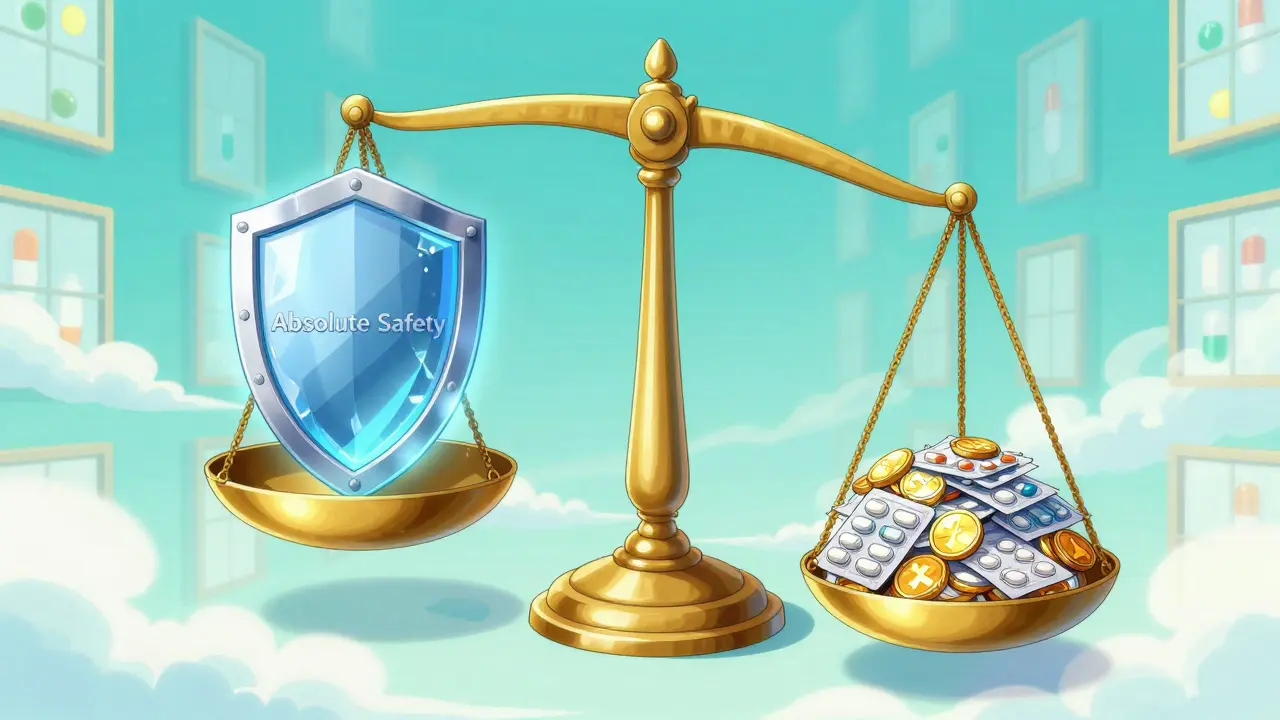
You might wonder why we tolerate such a clunky, expensive system. The answer is a trade-off between speed and safety. Pharmacists often argue that this rigor prevents disasters. For instance, the 2022 valsartan recall affected 22 million patients; strict regulatory oversight is designed to catch those kinds of quality failures before the drug hits the market.
On the other hand, the economics are staggering. In 2024, generics and biosimilars generated $467 billion in savings. They make up 90% of all prescriptions filled in the U.S. but only account for about 12% of total drug spending. This massive gap proves that when a generic *does* make it through the regulatory gauntlet, the financial benefit to the public is enormous.
What's Changing? The Path to GDUFA IV
The industry is currently pushing for a more transparent system. There is a bipartisan effort in Congress via H.R. 1843, the "Increasing Transparency in Generic Drug Applications Act." If this passes, the FDA would be required to bring back the detailed formulation feedback that was scrapped in 2015. The Congressional Budget Office estimates this could speed up approvals for complex drugs by up to 24 months, potentially saving the public another $2 billion per year.
Looking ahead to 2028-2032, the transition to GDUFA IV will likely involve higher fees to fund more review staff. The FDA is fighting inflation, and without more money, they worry that the first-cycle approval rates-the percentage of drugs approved on the first try-will slide backward. We are essentially in a tug-of-war between the need for absolute safety and the urgent need for cheaper medicine.
What is the average cost to get a generic drug approved by the FDA?
While the base regulatory fees (ANDA, facility, and product fees) total roughly $375,000 per application, the total cost is much higher. When you include development, documentation preparation, and potential reformulations, costs can run into millions, especially for complex generics where a single failed attempt can cost $2-5 million to rectify.
How does GDUFA impact the price of medications?
GDUFA provides the funding the FDA needs to review applications faster. When reviews are efficient, more generics enter the market, creating competition that drives prices down. However, if the fee structure or the review process becomes too bureaucratic (like the 2015 policy change for complex generics), it can delay market entry, keeping prices high for longer.
What is an ANDA and how does it differ from an NDA?
An ANDA (Abbreviated New Drug Application) is used for generics. It is "abbreviated" because the manufacturer doesn't have to repeat animal and clinical (human) studies to prove safety and efficacy; they only need to prove the generic is the same as the brand-name drug. An NDA (New Drug Application) is for brand-name drugs and requires full clinical trials, making it vastly more expensive-often costing millions more in fees alone.
Why are complex generics more expensive to approve than standard ones?
Complex generics, such as inhalers or long-acting injectables, have more difficult delivery mechanisms and formulations. Because the FDA provides less specific feedback on these complex formulations, companies often face multiple "cycles" of review, requiring expensive trial-and-error reformulations that can add years to the timeline.
Do small pharmaceutical companies get a break on FDA fees?
Yes, the GDUFA framework includes small business waivers. Companies with fewer than 1,000 employees can apply for these waivers to reduce the financial burden of application and facility fees, helping smaller firms compete with industry giants.
Comments
Goodwin Colangelo
The GDUFA framework is a necessary evil but the lack of transparency for complex generics is where the real damage happens. If companies can't get a straight answer on why a formulation failed, they just burn through capital and the patients pay for it in the long run. Those Type II meetings are basically the only way to navigate the bureaucracy without losing your mind.
On April 5, 2026 AT 07:15
HARSH GUSANI
Typical US system! Just a way to make money from fees 🤑 India makes better generics anyway and we don't need this kind of fake bureaucracy! 🇮🇳💪
On April 6, 2026 AT 12:24
simran kaur
It is quite obvious that these "regulatory costs" are merely a facade to protect the profits of the pharmaceutical elite. The 2015 policy change wasn't an accident; it was a calculated move to ensure that only the most compliant, corporate-aligned entities can enter the market. Why do you think the FDA is suddenly "fighting inflation" while simultaneously increasing fees? It is a closed-loop system designed to keep the masses dependent on overpriced brand-name drugs while pretending to care about safety. Truly a masterclass in institutional gaslighting.
On April 7, 2026 AT 12:20
The Charlotte Moms Blog
Imagine thinking a $375k fee is the "entry price" when the actual cost of compliance is astronomical!!! Totally delusional to call this "abbreviated"!!! The FDA is just a glorified rubber stamp for the highest bidder... clearly!!!
On April 9, 2026 AT 12:10
Brian Shiroma
Oh yeah, because nothing says "patient safety" like making it nearly impossible for affordable versions of life-saving meds to hit the market. I'm sure the people paying 300% markups feel really safe and secure in their bankruptcy.
On April 10, 2026 AT 07:31
Jenna Carpenter
People just dont realze that the energy of the whole system is off. We need more holstic approach to medicine insted of just paying fess to a gov agency that lares about paperwork more than peeple.
On April 10, 2026 AT 15:35
Rachelle Z
Wow... so the solution is just to pay them more money to do their jobs faster...’absolutely brilliant’ logic there!!! 🙄💖 Just a totally fair and balanced system for everyone involved!!!
On April 11, 2026 AT 20:19
Branden Prunica
THIS IS ABSOLUTELY INSANE! 200,000 pages of paperwork?! Are you kidding me?! I can't even imagine the sheer nightmare of a Complete Response Letter. Just imagine spending five million dollars and a whole year of your life only for some bureaucrat to tell you "not yet." It's an absolute tragedy that patients are the ones suffering while these agencies play games with formulation feedback! It's a total circus!
On April 13, 2026 AT 04:41