
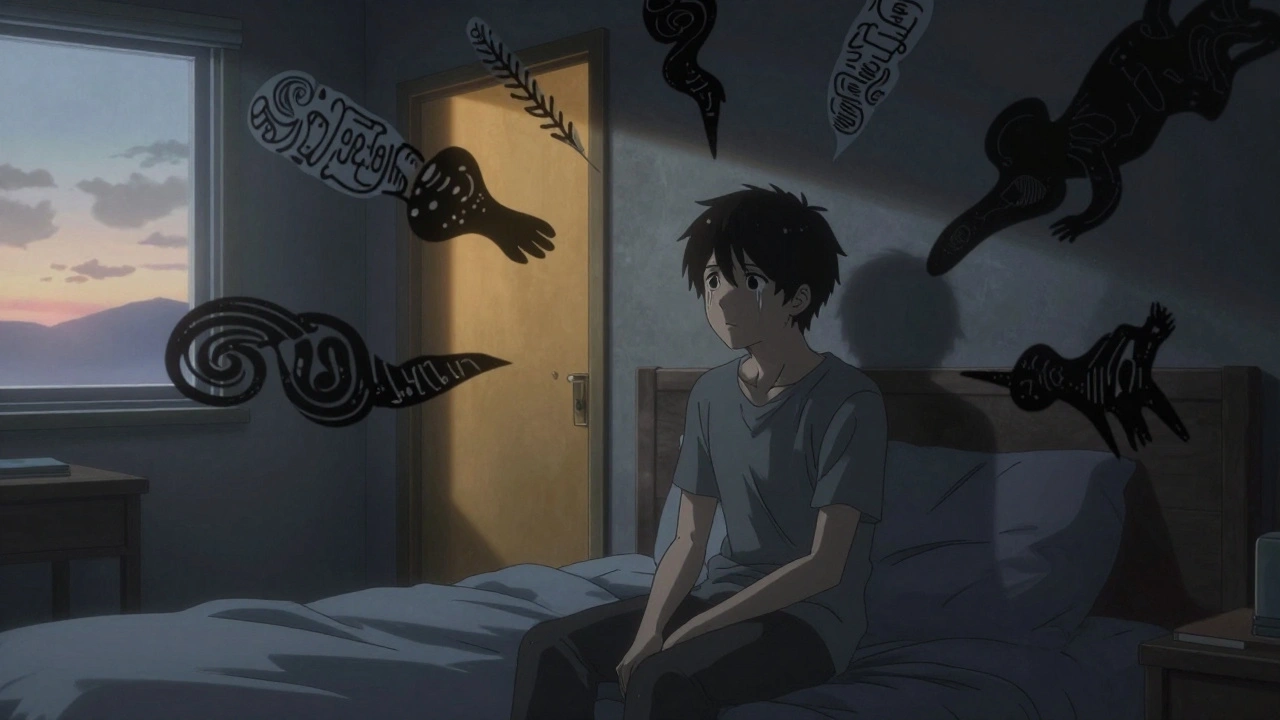
When someone experiences their first episode of psychosis, everything changes. They might hear voices no one else hears, believe things that aren’t true, or act in ways that seem confusing or frightening. For families, it’s terrifying. For the person going through it, it can feel like losing control of their own mind. But here’s the truth: first-episode psychosis is not a life sentence. With the right help, quickly, most people recover - and go on to live full, meaningful lives.
What Exactly Is First-Episode Psychosis?
First-episode psychosis (FEP) is the first time someone experiences psychotic symptoms. That means their brain is misinterpreting reality. They might hear, see, or feel things that aren’t there - called hallucinations. Or they might hold strong beliefs that don’t match reality, like thinking someone is spying on them or that they have special powers - those are delusions. Speech can become jumbled. Behavior might shift suddenly. They may withdraw from friends, stop going to school or work, or seem detached from the world around them.
This isn’t just "being strange" or "going through a phase." It’s a medical event. The brain’s chemistry and wiring are changing. And the longer it goes untreated, the harder it becomes to recover. Research shows that if treatment doesn’t start within 12 weeks of the first symptoms, the chances of full recovery drop significantly. After six months without help, some brain changes may become permanent, affecting memory, focus, and motivation.
Why Timing Matters More Than Anything
Think of psychosis like a sprained ankle. If you rest it, ice it, and get physical therapy right away, you heal fast. Wait six months? You risk long-term damage, chronic pain, and reduced mobility. The same applies to psychosis.
The landmark RAISE study, led by the National Institute of Mental Health, proved this. It compared two groups: one got standard care - maybe a doctor’s visit, a prescription, and a referral. The other got Coordinated Specialty Care (CSC), a full team approach starting within weeks of symptoms. The results were clear. People in CSC programs were 40% more likely to stay in school or work. Their symptoms improved 32% more. Their quality of life jumped. And they stayed in treatment longer - 65% to 75% stuck with it, compared to just 40-50% in standard care.
Even more telling: those who got help within six months of their first episode had 45% greater symptom reduction than those who waited longer. That’s not a small difference. That’s the difference between returning to college and dropping out. Between holding a job and relying on disability. Between living independently and needing constant care.
What Is Coordinated Specialty Care (CSC)?
CSC isn’t just one treatment. It’s five key pieces working together, all under one team. Think of it as a personal support network made of trained professionals who talk to each other every week.
- Case Management: Someone helps you navigate everything - appointments, insurance, housing, transportation. They check in 2-3 times a week during the early stages. No more falling through the cracks.
- Medication Management: Antipsychotics are used, but carefully. First-generation drugs like chlorpromazine are dosed at 300-500 mg/day. Second-generation ones? Half the dose used for chronic cases. High doses? Over 400 mg chlorpromazine equivalent? That’s discouraged by NICE guidelines because they cause more side effects without better results.
- Recovery-Oriented Psychotherapy: This isn’t just talk therapy. It’s cognitive behavioral therapy (CBT) tailored for psychosis. You learn how to recognize early warning signs, manage stress, and build resilience. Sessions happen weekly for at least six months.
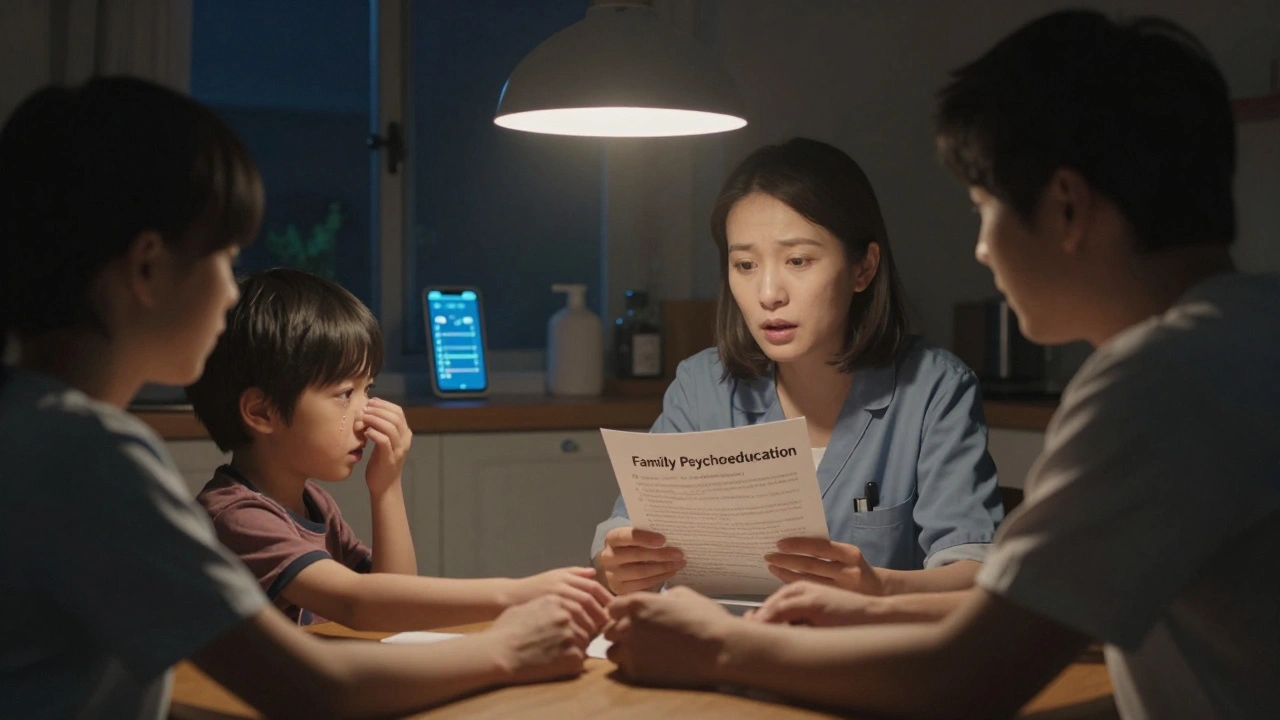
- Family Psychoeducation: This is where many programs fail - and where they could change everything. Families get 8 to 12 structured sessions over six months. They learn what psychosis is, how to respond without panic, and how to reduce stress at home. Studies show this alone cuts relapse rates by 25%.
- Supported Employment and Education: The goal isn’t just to feel better - it’s to live again. The Individual Placement and Support (IPS) model helps people find jobs or return to school. In CSC programs, 50-60% land competitive work or return to education. In traditional care? Only 20-30%.
Teams must meet weekly, all members trained in psychosis, and programs are scored using the Quality Assessment Tool for CSC (QAT-CSC). To be certified, they need at least 70% fidelity. That means they’re doing it right - not just checking boxes.

Why Family Support Isn’t Optional - It’s Essential
Families are the first line of defense. They notice the changes before anyone else. But most don’t know what to do. They might panic, argue, or try to reason with delusions - which only makes things worse.
Family psychoeducation teaches them how to respond. Instead of saying, "That’s not real," they learn to say, "I know this feels real to you. Let’s talk about it." They learn to reduce criticism and hostility - two big triggers for relapse. They learn to recognize early signs of trouble before it becomes a crisis.
In Washington State’s New Journeys program, 95% of teams met high fidelity standards. Why? Because they made family involvement a core requirement - not an afterthought. They trained families to be partners, not bystanders. And it worked. The average delay in treatment dropped from 78 weeks to just 26 weeks.
But here’s the problem: only 55% of eligible families actually stick with the program. Barriers? Shame. Fear. Lack of time. Lack of transportation. That’s why some programs now use telehealth. In Louisiana, mobile crisis units showed up at homes within 14 days. Family participation jumped 35% during the pandemic because people could join from their couch.
What’s Holding Back Widespread Access?
The science is clear. The tools exist. So why aren’t more people getting help?
Cost is one issue. CSC costs $8,000-$12,000 per person per year. Standard care? $5,000-$7,000. But untreated psychosis costs the U.S. $155.7 billion a year - mostly from lost jobs, emergency rooms, and homelessness. Early intervention saves $127 billion annually. That’s not a cost - it’s a return.
Workforce shortages are worse. Only 35% of U.S. counties have a certified CSC program. In rural areas? That number drops to 62% with zero access. Even where programs exist, staff turnover hits 22% a year. Training takes 40 hours of classroom work plus 120 hours of supervised practice. It’s hard to find and keep good people.
Insurance is another wall. Only 31 states have Medicaid waivers that fully cover all CSC components. Many families are told, "We don’t cover that." Or they’re stuck on waiting lists for months.
And yet - progress is happening. In 2010, there were 15 CSC programs. By December 2023, there were 347 across 48 states. The federal government gave $25 million in 2023 to expand them. The VA/DOD updated their guidelines in September 2023 with 17 new evidence-based rules. And digital tools are emerging - apps like PRIME Care help track symptoms in real time and have cut hospitalizations by 30% in early trials.
What You Can Do Right Now
If you or someone you love is showing signs of first-episode psychosis - hearing voices, acting strangely, withdrawing - don’t wait. Don’t hope it will pass. Don’t assume it’s just stress or teenage rebellion.
Here’s what to do:
- Find a local CSC program. Search the Early Psychosis Intervention Network (EPINET) registry. They list certified programs by state.
- Call your primary care doctor and ask for a referral. Say: "I’m concerned about possible first-episode psychosis. Can you help me connect to a coordinated specialty care team?"
- Reach out to NAMI (National Alliance on Mental Illness). They offer free family support groups and can guide you to local resources.
- If you’re in a crisis, go to the nearest emergency room and say: "I need help for possible psychosis. I want coordinated specialty care, not just medication."
- Start family conversations. Say: "We don’t have to fix this alone. There’s a team that can help. Let’s go together."
The window is narrow. But it’s not closed. Every day you wait, the harder recovery becomes. Every day you act, the brighter the future looks.
What Happens After Treatment?
Recovery doesn’t end when symptoms fade. The RAISE-2 project followed people for four years. Those who stayed in CSC for 4 years? 68% kept working or going to school. In standard care? Only 42% did.
Long-term success depends on three things: staying connected to care, avoiding drugs and alcohol, and keeping stress low. Many people continue therapy, check in with their case manager monthly, and stay involved in work or school. Some return to college. Others find meaningful jobs. A few even become peer support specialists - helping others who are just starting out.
And yes - many people never have another psychotic episode. With the right support, psychosis becomes a chapter - not the whole story.
Final Thoughts
First-episode psychosis is not a death sentence. It’s a turning point. And it’s not something anyone should face alone. Science has given us the tools. We just need to use them.
The most powerful thing you can do? Act fast. Get help. Bring your family into the process. Demand coordinated care - not scattered services. Because when we treat psychosis early, we don’t just treat symptoms. We restore lives.
Can someone fully recover from first-episode psychosis?
Yes, many people do. With early, coordinated care, up to 70% of individuals experience significant symptom reduction and return to school, work, or independent living. Recovery means different things for different people - for some, it’s no more hallucinations; for others, it’s holding a job again. The key is starting treatment within 12 weeks of symptoms.
Are antipsychotic medications dangerous for young people?
They carry risks - especially weight gain, high blood sugar, and cholesterol changes - but these are manageable. First-line treatment uses lower doses than for chronic cases. Metabolic monitoring (weight, waist size, blood sugar) starts at day one and happens every three months. The bigger danger is not taking medication at all. Untreated psychosis causes more brain changes than most medications do. The goal is the lowest effective dose, not the highest.
Why can’t I just go to my regular therapist or psychiatrist?
Most general therapists aren’t trained in psychosis-specific care. Standard psychiatrists often focus only on medication. Coordinated Specialty Care brings together a team - case managers, therapists, employment specialists, and family educators - all working together. That’s what makes the difference. One doctor can’t do it all. A team can.
How do I find a Coordinated Specialty Care program near me?
Visit the Early Psychosis Intervention Network (EPINET) website - they maintain a public registry of certified programs by state. You can also call NAMI (National Alliance on Mental Illness) at 1-800-950-NAMI. They’ll connect you to local resources. If you’re in the military or a veteran, contact your VA facility - they have dedicated FEP teams.
What if my family doesn’t believe this is real?
It’s common for families to struggle with denial. Start by sharing facts, not opinions. Show them the NICE or VA/DOD guidelines. Tell them the WHO recommends treatment within 12 weeks. Invite them to a family psychoeducation session - even if the person with psychosis isn’t ready to go. Many families change their minds after hearing from trained professionals. You’re not alone - thousands of families have been where you are.
Is this only for schizophrenia?
No. First-episode psychosis can be caused by many things - schizophrenia, bipolar disorder, severe depression, drug use, or even extreme stress. CSC doesn’t assume a diagnosis. It treats the symptoms and supports recovery regardless of the underlying cause. The focus is on the person, not the label.
Comments
Graham Abbas
Man, this post hit me right in the chest. I watched my cousin go through this - not just the voices, but the way the world just... slipped away from him. We didn’t know what to do. Thought it was just teen angst. Turns out, we were six months late to the party. The CSC program saved him. Not because of meds alone - because someone showed up at our house with a folder, a calm voice, and a plan. Family psychoeducation? That was the game-changer. We learned not to argue with the delusions, but to sit with the fear. And now? He’s teaching guitar to kids. Who saw that coming?
On December 7, 2025 AT 15:32
Andrea DeWinter
As a nurse who’s worked in community mental health for 18 years I’ve seen too many people slip through the cracks because no one had the bandwidth to coordinate care. CSC isn’t fancy - it’s just basic human decency wrapped in a team structure. Case managers checking in 3x a week? That’s not a luxury, it’s the bare minimum. And the fact that only 55% of families stick with it? That’s on us. We need to meet people where they are - literally. Mobile units, telehealth, even text check-ins. If you’re too tired to drive, we’ll come to you. Recovery shouldn’t require a PhD in bureaucracy.
On December 8, 2025 AT 06:23
Steve Sullivan
Bro this is straight fire 🔥 I’ve been in the system and let me tell you - standard care is a joke. One doc, one med, one ‘good luck’ handshake. CSC is like having your whole squad show up with snacks, a therapist, a job coach, AND your mom’s favorite aunt who knows how to make tea and not say stupid stuff. I got diagnosed at 19. By 21 I was interning at a nonprofit. Why? Because someone didn’t just give me a script - they gave me a roadmap. And yes, the meds gave me breathing room, but the family sessions? That’s what kept me from falling off a cliff. Also - stop saying ‘schizophrenia’ like it’s the only option. It’s psychosis, not a destiny.
On December 10, 2025 AT 03:48
Tejas Bubane
Let’s be real. This whole CSC model sounds like a government-funded PR stunt. 8000-12000 per person? For what? Weekly therapy and a case manager who texts you memes? The real issue is societal collapse. People are lonely, overstimulated, and medicated into oblivion. Psychosis isn’t a medical event - it’s a response. And now we’re throwing money at teams instead of fixing housing, wages, and social isolation. Also - ‘recovery’? That’s just code for ‘conform’. You want to be normal? Fine. But don’t call it healing.
On December 10, 2025 AT 21:38
Ronald Ezamaru
I’m from rural Alabama. There’s no CSC program within 90 miles. My brother had his first episode in 2021. We drove 4 hours to the nearest clinic. The waitlist for intake was 11 weeks. They gave him a script and told us to call back in 3 months. That’s not care - that’s neglect dressed up as protocol. I’m not mad at the doctors. I’m mad at the system that makes them choose between 20 patients a day or one patient with a team. We need mobile units. We need telehealth. We need Congress to stop treating mental health like a budget line item. This isn’t politics - it’s survival.
On December 11, 2025 AT 06:23
Rich Paul
Ok but like… why are we still using chlorpromazine equivalents? That’s 90s shit. Why not just say ‘low dose risperidone’ or ‘aripiprazole’? Also, ‘recovery’ is such a buzzword now. People think it means ‘no more hallucinations’ but that’s not the point. The point is function. Can they hold a job? Pay rent? Not scream at the neighbor’s dog? That’s the metric. And yeah, families are key - but most of them are emotionally abusive and don’t even realize it. So yeah, psychoeducation is good but what about therapy for the parents too? They’re the root cause of half the relapses.
On December 11, 2025 AT 21:40
Ruth Witte
YALL I JUST FOUND A CSC PROGRAM IN MY TOWN AND I’M CRYING 😭😭😭 I’ve been begging my sister to get help for 14 months. She kept saying ‘I’m fine’. I showed her this post. She cried. We called today. They said they can start in 10 days. 10 DAYS. That’s less than a week. This is real. This works. We’re going together. Family session first. I’m bringing snacks. And tissues. And hope.
On December 13, 2025 AT 16:19
Katherine Rodgers
So we’re spending $12k per person to get someone back to work? Meanwhile, the guy who cleans my office makes $15/hr and has zero benefits. Who’s the real patient here? The one who hears voices or the one who can’t afford rent? This is capitalism’s version of a band-aid on a hemorrhage. CSC sounds nice on paper. But until we fix the economy, we’re just giving people a better wheelchair while the building burns down.
On December 13, 2025 AT 17:58
Lauren Dare
Let’s not pretend this is revolutionary. The VA’s been doing this since 2015. The NHS in the UK has had FEP teams since 2001. We’re just catching up because we only care when it’s a white kid from the suburbs. If this were happening in a low-income neighborhood, we’d call it ‘bad behavior’ and lock them up. This isn’t science - it’s privilege with a grant application.
On December 14, 2025 AT 03:43