
Supplement Interaction Risk Estimator
Select options on the left to calculate your risk.
You might think taking a garlic pill is as harmless as eating roasted garlic with your dinner. It smells good, it’s natural, and plenty of people swear by it for heart health. But if you are taking blood thinners like warfarin or direct oral anticoagulants (DOACs) such as apixaban or rivaroxaban, that daily supplement could be turning your blood into a ticking time bomb.
The combination of garlic supplements and medications designed to prevent blood clots creates a dangerous interaction that significantly increases the risk of severe bleeding. This isn't just theoretical; it's a documented medical reality that has led to emergency surgeries, prolonged hospital stays, and even life-threatening complications. If you are managing a condition that requires anticoagulation therapy, understanding this specific interaction is not optional-it is critical for your safety.
Why Garlic Supplements Are Different from Fresh Garlic
It is easy to assume that because fresh garlic is safe in cooking, concentrated garlic pills must be safe too. That assumption is where the danger lies. When you crush or chop fresh garlic, you release allicin, which breaks down quickly. However, most commercial garlic supplements are processed differently to stabilize their active compounds.
The primary culprit in these supplements is a sulfur-containing compound called ajoene and a derivative formed during processing that irreversibly inhibits platelet aggregation. Ajoene works by blocking the receptors on platelets-the cells responsible for clotting-preventing them from sticking together. In a standard dose of 600-1,200 mg of dried garlic powder (equivalent to 5,000-7,000 mg of fresh garlic), the concentration of ajoene can be high enough to inhibit platelet function by 20% to 40%.
This effect is not immediate and short-lived. Studies show that the antiplatelet effects peak 2 to 4 hours after consumption but can last up to 72 hours. Because the inhibition is irreversible, your body cannot simply "turn off" the effect. You have to wait for new platelets to be produced, which takes about 7 to 10 days. This persistence makes garlic supplements particularly risky compared to other dietary choices.
How the Interaction Works with Blood Thinners
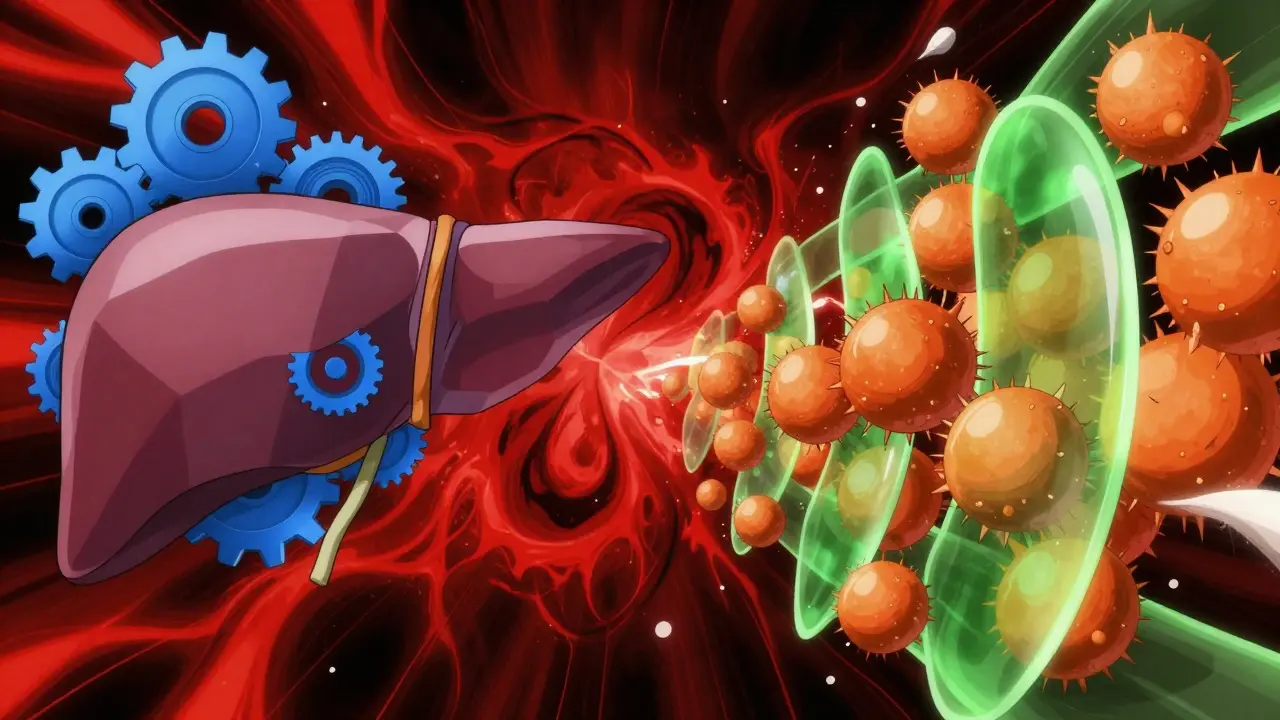
To understand the risk, you need to look at how anticoagulants and garlic attack the clotting process from different angles. Anticoagulants like warfarin work by interfering with vitamin K-dependent clotting factors in the liver. They slow down the chemical cascade that forms a clot. Garlic, on the other hand, acts directly on the platelets themselves.
When you combine them, you get a dual-hit mechanism:
- Pharmacodynamic Interaction: Both substances reduce the blood's ability to clot. Warfarin slows the formation of fibrin (the mesh that holds a clot together), while garlic prevents platelets from aggregating to form the initial plug. Together, they create a synergistic effect that drastically prolongs bleeding time.
- Pharmacokinetic Potential: Some evidence suggests garlic may also affect how your body metabolizes certain drugs, potentially increasing the bioavailability of medications like warfarin. While this is less consistent than the direct antiplatelet effect, it adds another layer of unpredictability.
For patients on warfarin, this interaction can manifest as a sudden spike in the International Normalized Ratio (INR). Case series have documented INR increases of 1.0 to 2.5 points after starting garlic supplementation. For someone whose therapeutic range is tightly controlled between 2.0 and 3.0, an increase of 2.5 points pushes them into the danger zone (INR > 4.0), where spontaneous internal bleeding becomes a real threat.
| Supplement | Mechanism of Action | Platelet Inhibition | Risk Level with Anticoagulants |
|---|---|---|---|
| Garlic (Aged Extract/Oil) | Irreversible platelet inhibition via ajoene | 20-40% | Moderate to High |
| Ginkgo Biloba | Platelet-activating factor antagonist | 30-50% | High |
| Fish Oil (Omega-3) | Eicosanoid pathway modulation | 10-20% | Low to Moderate |
| Ginseng | Variable effects on clotting factors | Variable | Moderate |
Real-World Consequences: Beyond Minor Bruising
We often hear about minor side effects like bruising easily or nosebleeds. While those are warning signs, the clinical literature reveals much graver outcomes. The American Society of Anesthesiologists (ASA) updated its guidelines in 2022 to classify garlic as a "high-risk herbal product" requiring discontinuation before surgery. Why? Because uncontrolled bleeding in an operating room can turn a routine procedure into a catastrophe.
Consider the case reported in the *Annals of the Royal College of Surgeons of England* (2012). Two patients undergoing laparoscopic colorectal surgery developed "generalised capillary ooze." The surgeons could not achieve hemostasis (stop the bleeding) using standard techniques. Both procedures had to be converted to open surgeries, and both patients required defunctioning ileostomies due to poor healing and bleeding risks. Retrospectively, both admitted to taking garlic supplements.
Another terrifying example involves a spinal epidural hematoma. A 2019 report in the *Journal of Neurosurgery: Spine* described an elderly man who developed a spontaneous bleed around his spine after consuming high-dose garlic supplements (approximately 2,400 mg daily). He required an emergency laminectomy to relieve pressure on his spinal cord. Without that surgery, he faced permanent paralysis.
Even outside the operating room, the risks are significant. On patient forums like Reddit’s r/anticoagulants, users frequently share stories of severe, prolonged nosebleeds lasting over 30 minutes after combining garlic pills with DOACs like apixaban. These aren't rare anomalies; they are predictable pharmacological outcomes.
Who Is Most at Risk?
Not everyone taking garlic supplements will experience severe bleeding, but certain groups face exponentially higher risks. The intersection of age, medication type, and surgical status defines your vulnerability.
- Patients on Warfarin: Because warfarin has a narrow therapeutic index and requires regular monitoring, any variable that alters clotting is dangerous. The fluctuating potency of garlic supplements makes maintaining a stable INR nearly impossible.
- Pre-Surgical Patients: Anyone scheduled for surgery, including dental extractions, cataract removal, or joint replacements, is at high risk. The ASA recommends stopping garlic 14 days before any procedure. The European Society of Anaesthesiology suggests 7 days. Ignoring this window can lead to excessive intraoperative bleeding.
- Older Adults: A 2022 National Health Interview Survey found that 18.3% of adults over 65 take garlic supplements. Since anticoagulant use also peaks in this demographic, approximately 3.1 million Americans are potentially exposing themselves to this interaction without realizing it.
- Those with Bleeding Disorders: Individuals with conditions like hemophilia or von Willebrand disease should avoid garlic supplements entirely, regardless of whether they are on anticoagulants, due to the additive effect on platelet function.

Navigating the Confusion: Not All Garlic Is Equal
If you love the idea of garlic’s cardiovascular benefits but rely on blood thinners, you might wonder if there is a safe alternative. The answer depends heavily on the preparation method.
Aged Garlic Extract (AGE): Brands like Kyolic produce aged garlic extract, which undergoes a long aging process that degrades allicin and ajoene. Independent studies suggest AGE has negligible antiplatelet activity compared to raw garlic or oil macerates. Some manufacturers claim a 98% reduction in antiplatelet effects. However, independent verification is still pending, and caution is advised.
Powdered Garlic Capsules: These typically contain moderate amounts of ajoene (0.1-0.3 mg/g). They pose a definite risk when combined with anticoagulants.
Garlic Oil Macerates: These contain the highest concentration of ajoene (0.5-1.0 mg/g) and carry the highest bleeding risk.
The problem is that labels rarely disclose ajoene content. A 2019 FDA warning highlighted inconsistent active ingredient levels, with potency varying by up to 15-fold between brands. You cannot judge the risk by looking at the milligram count on the bottle alone.
Action Plan: What You Should Do Now
If you are currently taking anticoagulants and considering garlic supplements, or already taking them, follow these steps immediately:
- Disclose Everything: Tell your doctor exactly what you are taking. Don’t say "herbal supplements." Say "garlic pills," "garlic oil," or name the brand. Many patients don’t consider garlic a supplement, so doctors may not ask specifically.
- Stop Before Surgery: If you have any upcoming procedures, stop garlic supplements at least 7 to 14 days prior. Confirm the timeline with your surgeon or anesthesiologist.
- Monitor Closely: If you choose to continue low-dose garlic despite warnings (which is generally discouraged), monitor your INR weekly if on warfarin. Watch for signs of bleeding: unusual bruising, red/dark urine, black/tarry stools, or bleeding gums.
- Consider Alternatives: If you want cardiovascular support, discuss safer alternatives with your cardiologist. Statins, lifestyle changes, or monitored doses of aspirin (if appropriate) may offer better risk-benefit profiles than unregulated supplements.
The allure of natural remedies is strong, but "natural" does not mean "safe" when mixed with potent pharmaceuticals. Garlic supplements possess genuine pharmacological power that interferes with the delicate balance of anticoagulation therapy. By recognizing this interaction, you protect yourself from preventable, severe medical emergencies.
Can I eat fresh garlic if I am on blood thinners?
Yes, in most cases. Consuming fresh garlic as part of your diet is generally considered safe for patients on anticoagulants because the amount of active antiplatelet compounds is much lower than in concentrated supplements. However, avoid consuming extremely large quantities (e.g., multiple cloves daily) and always inform your doctor about your dietary habits.
How long does garlic stay in your system regarding blood thinning?
The antiplatelet effects of garlic supplements can last up to 72 hours after consumption. Because the mechanism involves irreversible inhibition of platelets, full recovery of normal platelet function takes about 7 to 10 days, as your body needs to generate new platelets. This is why a 7-14 day washout period is recommended before surgery.
Is aged garlic extract safe with warfarin?
Aged garlic extract (AGE) appears to have significantly lower antiplatelet activity compared to raw garlic or oil-based supplements because the aging process degrades ajoene. Some studies suggest it is safer, but individual responses vary. Always consult your healthcare provider before starting AGE, and monitor your INR closely if you do.
What are the signs of excessive bleeding from this interaction?
Warning signs include unusual or severe bruising, frequent or hard-to-stop nosebleeds, bleeding gums when brushing teeth, red or brown urine, black or tarry stools, coughing up blood, or heavier-than-normal menstrual periods. If you experience any of these, seek medical attention immediately.
Does garlic interact with Eliquis (apixaban) or Xarelto (rivaroxaban)?
Yes. While warfarin interacts primarily through INR elevation, garlic also poses a risk with Direct Oral Anticoagulants (DOACs) like Eliquis and Xarelto through pharmacodynamic synergy. Both substances inhibit clotting via different mechanisms, increasing the overall risk of bleeding events even if lab tests like INR are not applicable.