
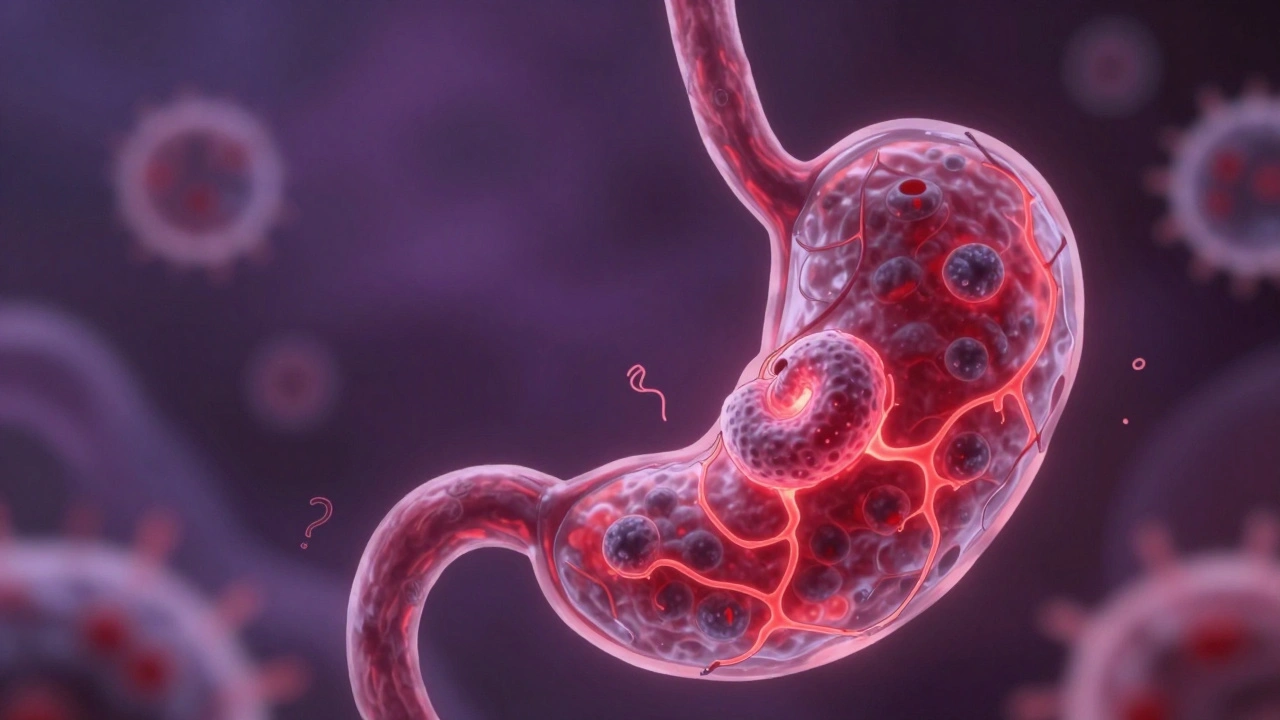
When your stomach feels like it’s on fire-burning, bloated, or achy after eating-it’s easy to blame spicy food or stress. But if the discomfort sticks around, it might not be a passing upset. You could be dealing with gastritis, a real condition where the lining of your stomach becomes inflamed. And in most cases, it’s not just stress or diet. It’s a tiny bacterium called Helicobacter pylori-and it’s hiding in plain sight.
What Exactly Is Gastritis?
Gastritis isn’t one single disease. It’s a group of conditions where the stomach’s protective lining gets irritated or damaged. Think of it like a sunburn, but inside your stomach. That lining normally shields your stomach wall from the strong acid and enzymes it uses to digest food. When it breaks down, acid starts eating away at the tissue, causing pain, nausea, and sometimes bleeding. There are two main types: erosive and nonerosive. Erosive gastritis means there are actual sores or breaks in the lining-you might see blood in your vomit or black, tarry stools. Nonerosive is sneakier. The lining is inflamed, but nothing’s visibly torn. This type often comes with no symptoms at all. About half of people with chronic gastritis don’t even know they have it until something worse happens. The biggest culprit? Helicobacter pylori. This spiral-shaped bacteria lives in the stomach of nearly half the world’s population. In the UK and US, about 1 in 5 adults carry it. But here’s the twist: most never get sick. Only 10-20% of infected people develop ulcers or gastritis. Why? It depends on the strain, your immune system, and how long you’ve had it.How Do You Know If It’s H. pylori?
If you’ve had ongoing stomach pain, bloating, or nausea for weeks, your doctor won’t just guess. They’ll test for H. pylori. The gold standard is an endoscopy-where a thin camera goes down your throat to look at your stomach and take tiny tissue samples. If the biopsy shows the bacteria, that’s confirmation. But not everyone needs a scope. Non-invasive tests work well too. The urea breath test is simple: you drink a special liquid, then blow into a bag. If H. pylori is present, it breaks down the liquid and releases carbon dioxide you can detect. Blood tests can show past exposure, but they can’t tell if the infection is still active. Stool tests look for bacterial proteins and are very accurate. The key is timing. If you’ve been on acid-reducing meds like omeprazole, those can mask the infection. Your doctor will usually ask you to stop them for a week or two before testing.How Is H. pylori Treated?
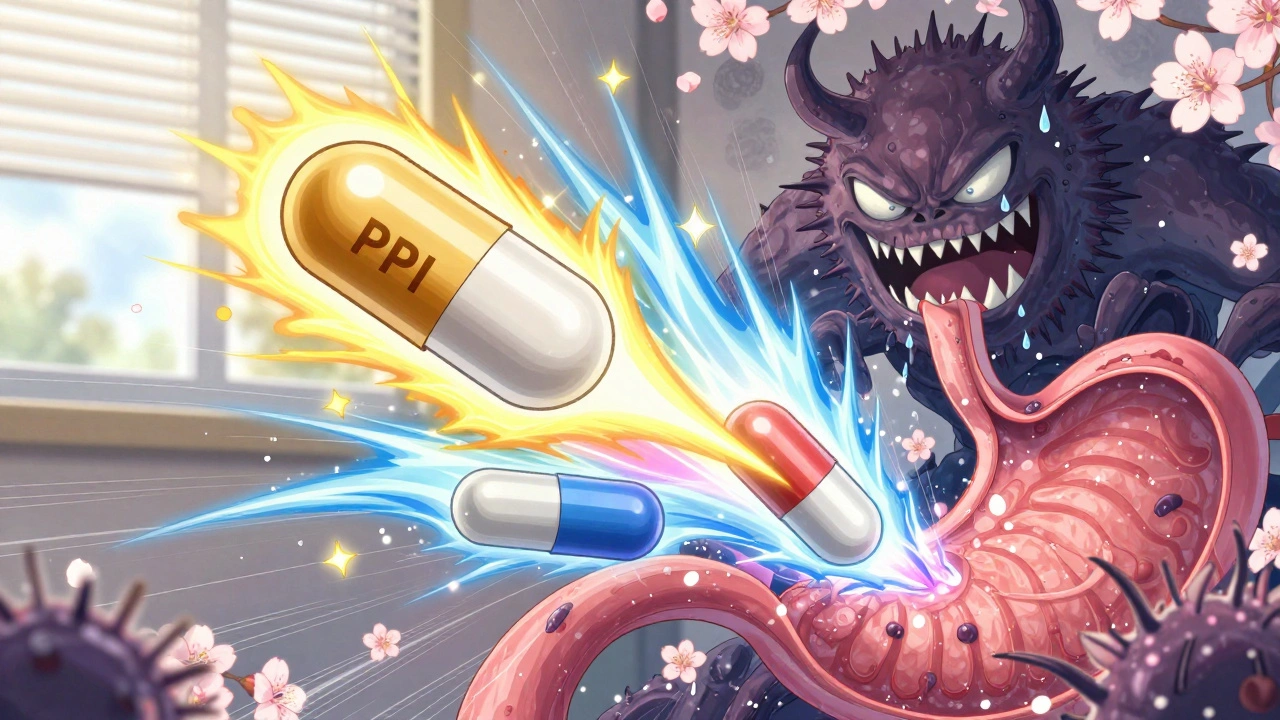
Treating H. pylori isn’t like taking an antibiotic for a sore throat. It’s a three-drug combo, taken for 10 to 14 days. This is called triple therapy: a proton pump inhibitor (PPI) like omeprazole or esomeprazole, plus two antibiotics-usually amoxicillin and clarithromycin. The goal isn’t just to feel better. It’s to kill the bacteria completely. If even one bug survives, it can come back stronger-and resistant. That’s why adherence matters. Missing doses is one of the top reasons treatment fails. Success rates? Around 80-90% in places where clarithromycin resistance is low. But in the UK and US, resistance has jumped from 10% in 2000 to over 35% today. That means many first-line treatments now fail. When that happens, doctors switch to quadruple therapy: a PPI, bismuth subsalicylate (like Pepto-Bismol), plus two antibiotics-metronidazole and tetracycline. This works in 85-92% of cases, even when clarithromycin doesn’t. A newer drug, vonoprazan, has been approved in the US since 2022 and is gaining traction in Europe. It’s not an antibiotic-it’s a potassium-competitive acid blocker. It shuts down stomach acid more completely than PPIs. In trials, it cleared H. pylori in over 90% of patients, even after two failed treatments.What About Side Effects?
The antibiotics are tough. About 6 in 10 people report nausea, diarrhea, or a metallic taste during treatment. Some can’t finish the course. That’s why doctors often prescribe anti-nausea meds like domperidone alongside the antibiotics. Probiotics-especially Lactobacillus and Saccharomyces boulardii-can help reduce side effects and improve success rates by 10-15%. PPIs are generally safe short-term, but long-term use (over a year) carries risks: lower magnesium, higher chance of bone fractures, and rebound acid reflux when you stop. That’s why treatment is time-limited. After finishing antibiotics, you usually stop the PPI after 4-8 weeks unless you still have symptoms.
What If It’s Not H. pylori?
Not all gastritis comes from bacteria. NSAIDs like ibuprofen or aspirin cause about 25-30% of cases. If you’ve been taking them daily for joint pain or headaches, your stomach lining is under constant attack. Stopping them is the first step. If you can’t stop them, your doctor might switch you to a safer painkiller like paracetamol and give you a PPI for protection. Autoimmune gastritis is rare-only 0.1% of people have it-but it’s serious. Your immune system attacks the cells that make stomach acid and intrinsic factor (needed for B12 absorption). People with this type often develop pernicious anemia. They need lifelong B12 injections, not antibiotics. Alcohol, stress, and bile reflux can also trigger gastritis. Heavy drinking (more than 30g a day-about two pints of beer) doubles your risk. Cutting back cuts symptoms by 60% within two weeks.What Happens If You Don’t Treat It?
Left untreated, chronic gastritis doesn’t just cause discomfort. It can lead to ulcers, bleeding, or even stomach cancer. H. pylori infection increases cancer risk by 6-8 times. But here’s the good news: treating it cuts that risk by half. The World Health Organization classifies H. pylori as a Group 1 carcinogen-same as smoking. That’s why experts now recommend testing and treating H. pylori in people with a family history of gastric cancer, or those from high-risk areas like Eastern Europe or East Asia. In the UK, testing is usually offered if you have persistent symptoms or a history of ulcers.What Can You Do at Home?
Medication does the heavy lifting, but lifestyle changes help you heal faster and stay healthy.- Stop smoking. It slows healing by 35%.
- Avoid alcohol. Even moderate intake irritates the lining.
- Eat smaller meals. Large meals stretch the stomach and increase acid pressure.
- Limit spicy, acidic, or fried foods. They won’t cause gastritis, but they can make symptoms worse.
- Manage stress. While stress doesn’t cause gastritis, it can make symptoms feel worse.
How Long Until You Feel Better?
Symptoms often improve within a few days of starting treatment. Pain and nausea usually ease in 3-7 days. But feeling better doesn’t mean you’re cured. The bacteria might still be there. You’ll need a follow-up test-usually a breath or stool test-4 weeks after finishing antibiotics. This confirms the infection is gone. If it’s still positive, you’ll need a second-line treatment.What About Rebound Acid?
Many people stop their PPI after treatment and suddenly feel worse than before. That’s rebound acid hypersecretion. Your stomach overcompensates for the lack of acid suppression. It’s not a relapse-it’s a side effect of stopping too fast. To avoid it, taper off PPIs slowly. Instead of stopping cold, reduce the dose over 2-4 weeks. Talk to your doctor about a plan. Some people need to stay on a low dose for months.When Should You Worry?
See a doctor right away if you have:- Black, tarry stools (sign of bleeding)
- Vomiting blood or material that looks like coffee grounds
- Unexplained weight loss
- Difficulty swallowing
- Severe, persistent pain that doesn’t improve
Final Thoughts: Is Treatment Worth It?
Yes. Even if you feel fine, treating H. pylori if you have it reduces your long-term risk of ulcers and cancer. It’s not about feeling better today-it’s about protecting your stomach for the next 20 years. Most people who complete treatment never have gastritis again. Those who don’t? They’re the ones who end up back in the hospital with bleeding ulcers or worse. Don’t ignore persistent stomach symptoms. Get tested. Treat it properly. And don’t stop your meds early-even if you feel fine. Your stomach will thank you.Can gastritis go away on its own?
Sometimes, especially if it’s caused by a short-term trigger like alcohol or NSAIDs, mild gastritis can improve without treatment. But if it’s caused by H. pylori, it won’t go away on its own. The bacteria sticks around for years-sometimes decades-and keeps damaging the stomach lining. Left untreated, it can lead to ulcers, bleeding, or even stomach cancer. Testing and treating H. pylori is the only way to stop the damage for good.
Can you test for H. pylori at home?
Yes, there are FDA-approved stool antigen test kits you can buy online or at pharmacies. These are reliable for detecting active infection. But breath tests and blood tests require a doctor’s order. Home stool tests are useful if you’ve been treated and want to check if the bacteria is gone. But if you’re just starting to have symptoms, see a doctor first. They’ll help you choose the right test and interpret the results correctly.
Is H. pylori contagious?
Yes. H. pylori spreads through contaminated food, water, or close contact with saliva or vomit. It’s more common in crowded living conditions or areas with poor sanitation. In the UK, it’s less common than in developing countries, but it can still spread within families. If one person is infected, other household members may need testing-especially if they have symptoms or a history of ulcers.
Can stress cause gastritis?
Stress doesn’t directly cause H. pylori gastritis, but it can worsen symptoms and slow healing. Severe physical stress-like from major surgery, burns, or trauma-can trigger acute erosive gastritis. Emotional stress doesn’t create the infection, but it can make you more sensitive to stomach pain and increase acid production. Managing stress helps you feel better, but it won’t cure the infection. You still need to test for and treat H. pylori if it’s present.
Do I need to avoid certain foods forever?
No. Once H. pylori is cleared and the lining heals, most people can return to their normal diet. Some may find that spicy, acidic, or fatty foods still bother them-but that’s true for many people without gastritis too. There’s no lifelong restriction unless you have another condition like GERD or a food allergy. Focus on healing first, then reintroduce foods slowly to see what you tolerate.
Can H. pylori come back after treatment?
It’s possible, but rare in developed countries like the UK. Reinfection rates are under 2% per year after successful treatment. Most cases of recurrence are due to incomplete treatment-not new infection. That’s why it’s critical to finish all your antibiotics and get a follow-up test. If you live in a high-risk area or have close contacts with active infection, your doctor might suggest testing everyone in the household.
Comments
Jackie Petersen
So let me get this straight - we’re supposed to believe some government-approved combo of antibiotics is the only way? What about herbal remedies? I’ve seen people cure this with garlic, mastic gum, and a lot of prayer. Big Pharma doesn’t want you to know this.
And why are they pushing vonoprazan so hard? Sounds like a patent extension scheme to me.
I’m not taking antibiotics unless I absolutely have to. My gut’s already a war zone.
Also - who tested this on 1000 people? Where’s the data? I don’t trust studies funded by drug companies.
On December 7, 2025 AT 04:17
Annie Gardiner
Isn’t it funny how we’ve turned a natural part of human biology into a villain? H. pylori lived with us for thousands of years before we decided it was evil. Maybe it’s not the bacteria - maybe it’s our over-sanitized, processed-food diets that made it turn on us.
I mean, think about it - we’ve wiped out so many microbes, our immune systems don’t know what to do anymore. It’s like we created this monster by trying to eliminate all dirt.
Also, I’ve had gastritis for years. I stopped all meds. Started eating fermented foods. Now I feel better than I did in my 20s. Maybe the real cure is letting go of control.
Just saying.
On December 8, 2025 AT 19:26
Rashmi Gupta
Everyone in India knows this - H. pylori is everywhere. But we don’t panic. We eat turmeric with milk, ginger tea, and avoid cold drinks after meals. No pills needed.
Western medicine is so quick to reach for antibiotics. We’ve been treating stomach issues for centuries with food and rhythm. Why ignore that?
Also - why is everyone so obsessed with testing? If you feel fine, why disturb the peace? Let the bacteria sleep.
My grandmother never heard of endoscopy. She lived to 92.
On December 10, 2025 AT 10:31
Kumar Shubhranshu
Triple therapy fails 30% of the time
Clarithromycin resistance up to 35%
Quadruple works better
vonoprazan is better
Probiotics help
Stop PPIs slowly
Test after treatment
Do the math
Follow the protocol
Simple
On December 11, 2025 AT 07:41
Kenny Pakade
They’re pushing this H. pylori panic because they want to sell you drugs. In my family, we’ve never had stomach issues - we eat spicy food, drink beer, skip meals. No antibiotics needed.
Why are we letting a bunch of doctors in white coats scare us into taking pills? This is just another way to make money off anxiety.
And vonoprazan? That’s a drug made in Germany. Why are we letting foreign companies dictate our health?
Real Americans don’t need fancy pills to digest food.
Just eat real food. Stop overthinking.
On December 12, 2025 AT 21:48
brenda olvera
I used to have terrible gastritis after every meal - felt like I had a brick in my stomach
Then I tried the triple therapy - yeah the metallic taste was awful
But after 4 weeks I felt like a new person
Now I eat pizza and tacos like it’s nothing
Don’t let fear stop you from healing
You got this
On December 14, 2025 AT 16:14
joanne humphreys
I appreciate the thorough breakdown of treatment options and the emphasis on follow-up testing. It’s easy to feel overwhelmed by conflicting advice online, but this gives clear, science-backed steps.
I’ve seen friends dismiss H. pylori as "just stress" and end up with ulcers - it’s scary how quietly it can progress.
The point about tapering PPIs is crucial. I didn’t know rebound acid was a thing until I went cold turkey and spent a week feeling worse than before.
Also, the note about autoimmune gastritis being rare but serious is important - it’s easy to overlook when everything points to infection.
Thanks for sharing this. It’s the kind of post that saves people from years of unnecessary pain.
On December 16, 2025 AT 13:31
Nigel ntini
Excellent, well-structured article. Every point is evidence-based and clearly explained.
The distinction between erosive and nonerosive gastritis is often misunderstood - good to see it clarified.
Also, the emphasis on adherence to the full 14-day regimen is critical. Too many patients stop when they feel better, and that’s how resistance builds.
Probiotics as an adjunct therapy? Brilliant. Lactobacillus and Saccharomyces boulardii have solid data behind them.
And the warning about rebound acid hypersecretion? That’s a missed opportunity in most primary care settings.
Well done. This should be shared with every GP’s office.
On December 17, 2025 AT 08:07
Priya Ranjan
People still believe this? H. pylori is not the cause - it’s a symptom of a broken lifestyle.
You eat processed food. You sleep poorly. You’re stressed. You drink coffee like water. Then you blame a bacterium?
Real healing comes from discipline. Fasting. Clean eating. No pills.
I’ve seen people cure chronic gastritis in 3 weeks with just water, bone broth, and no sugar.
Antibiotics? That’s the lazy way.
If you can’t fix your life, no drug will save you.
And vonoprazan? That’s just another corporate trick to keep you dependent.
On December 19, 2025 AT 04:55
Gwyneth Agnes
Just take the pills
Stop being dramatic
Test after
Done
On December 21, 2025 AT 01:00
Ashish Vazirani
YOU THINK THIS IS BAD? WAIT TILL YOU HEAR WHAT HAPPENED TO MY COUSIN IN DELHI!
He got diagnosed with H. pylori - went to doctor - got antibiotics - felt better - stopped meds early - then BAM - ulcer - bleeding - hospital - surgery - lost 20 pounds - wife left him - now he’s on B12 shots forever!
AND THE DOCTOR? HE’S STILL DRIVING A MERCEDES!
THEY DON’T CARE ABOUT YOU!
THEY JUST WANT YOUR MONEY!
AND THEY’RE LYING ABOUT VONOPRAZAN - IT’S MADE IN CHINA - AND THEY’RE HIDING THE SIDE EFFECTS!
TRUST NO ONE!
EVERYTHING IS A CONSPIRACY!
EVERYTHING.
On December 21, 2025 AT 02:56
Mansi Bansal
It is with profound regret that I observe the prevailing discourse surrounding Helicobacter pylori eradication, which, in many instances, exhibits a lamentable dearth of epistemological rigor.
The empirical literature, particularly meta-analyses published in The Lancet Gastroenterology & Hepatology, unequivocally substantiates the efficacy of sequential quadruple therapy in regions of high clarithromycin resistance.
Moreover, the pharmacokinetic superiority of vonoprazan over proton pump inhibitors has been demonstrated in randomized controlled trials with p-values < 0.001.
To suggest that dietary modification alone constitutes a viable alternative is not merely misguided - it is, in fact, a gross misrepresentation of pathophysiological mechanisms.
One must not conflate symptomatic relief with microbial eradication.
Furthermore, the normalization of self-diagnosis via commercial stool antigen kits, while commercially accessible, lacks clinical context and may precipitate inappropriate treatment trajectories.
Let us not forget: H. pylori is a Class I carcinogen. To treat it with casualness is to court biological catastrophe.
Respect the science.
Respect the data.
Respect the gastric mucosa.
On December 22, 2025 AT 00:40
Kay Jolie
Okay but have you considered the microbiome as a sentient ecosystem? H. pylori isn’t just a bug - it’s a *vibe*. It’s the ghost of ancestral diets whispering through your gut.
Modern medicine treats it like a terrorist. But what if it’s just a refugee? A displaced microbe from a world we destroyed with antibiotics and kale smoothies?
Vonoprazan? That’s not medicine - that’s techno-spiritual suppression.
Try ancestral fasting. Sunlight. Cold showers. And maybe… just maybe… stop treating your stomach like a factory that needs a reset button.
Just saying.
Also - I did a 7-day juice cleanse and my gastritis vanished. Coincidence? I think not.
On December 22, 2025 AT 03:00
pallavi khushwani
I’ve had H. pylori twice. First time I did the triple therapy - felt awful but it worked.
Second time I tried probiotics and garlic for 3 weeks - nothing.
Went back to antibiotics - did it right this time - got tested after - clean.
So yeah - the science works.
It’s not glamorous.
But it works.
Just do the thing.
And maybe eat less pizza.
On December 22, 2025 AT 09:48
Billy Schimmel
So you’re telling me the guy who eats tacos every day and never gets sick is just lucky?
Meanwhile I’m on antibiotics and feeling like a zombie.
Yeah sure - treat it.
But also… maybe stop acting like everyone’s broken.
Some people’s stomachs just… work.
And that’s okay.
On December 23, 2025 AT 07:17
Jackie Petersen
Wow. So now we’re supposed to trust the guy who says "just do the thing"? What’s next? You’re gonna tell me to drink bleach for acid reflux?
And you think I’m the one being lazy? You didn’t even mention antibiotic resistance or the fact that 1 in 3 people fail first-line treatment.
You’re not helping. You’re just noise.
Go eat your turmeric milk and leave the science to people who actually read the studies.
On December 24, 2025 AT 21:17