
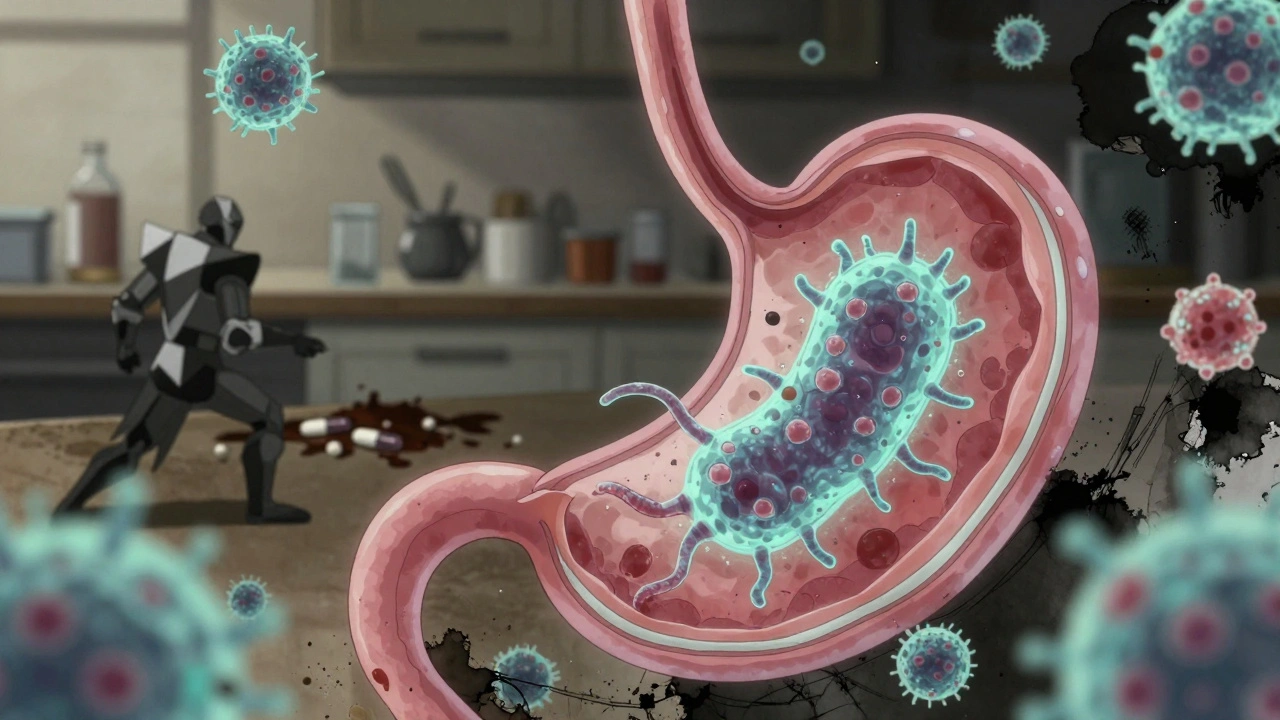
When your stomach hurts after eating, or you feel nauseous and bloated for no clear reason, it’s easy to blame stress or spicy food. But if those symptoms stick around, you might be dealing with gastritis - inflammation of the stomach lining. It’s not just a bad case of indigestion. Left untreated, it can lead to ulcers, bleeding, or even raise your risk of stomach cancer. And in most cases, the root cause is a tiny bacterium most people have never heard of: Helicobacter pylori.
What Exactly Is Gastritis?
Gastritis isn’t one single disease. It’s a group of conditions where the stomach’s protective lining becomes inflamed. This lining, called the mucosa, normally shields your stomach from its own strong digestive acids. When it breaks down, those acids start eating away at the tissue, causing pain, burning, and nausea. There are two main types: erosive and nonerosive. Erosive gastritis means there are visible breaks or sores in the lining - these can bleed, leading to black, tarry stools or vomiting blood. Nonerosive gastritis doesn’t show visible damage, but the cells underneath are still changing. Over time, this can lead to atrophic gastritis, where the stomach lining thins and stops producing acid and digestive enzymes properly. About 70 to 90% of all peptic ulcers are linked to H. pylori. In fact, this bacterium is responsible for 70-85% of chronic gastritis cases. It’s not rare - globally, up to half the population carries it. But most people never know they have it because they have no symptoms. The problem is, even if you feel fine, the bacteria can quietly damage your stomach for years.What Causes Gastritis?
H. pylori is the biggest culprit. It survives in the acidic environment of your stomach by burrowing into the mucus layer and neutralizing acid around it. Over time, it triggers an immune response that causes inflammation. This infection is usually passed through contaminated food, water, or close contact - think sharing utensils or poor sanitation. But it’s not the only cause. Regular use of NSAIDs like ibuprofen or aspirin can damage the stomach lining. About 25-30% of gastritis cases come from these medications. Alcohol, especially more than 30g a day (about two drinks), doubles your risk. Severe stress - like from major surgery, burns, or trauma - can also trigger acute gastritis. Less common causes include autoimmune reactions, where your body attacks its own stomach cells. This is called autoimmune gastritis. It’s rare - affecting only 0.1% of the general population - but more common in people with other autoimmune diseases like Hashimoto’s thyroiditis. In these cases, the stomach stops making intrinsic factor, which is needed to absorb vitamin B12. Without treatment, this leads to pernicious anemia.How Do You Know If You Have It?
Symptoms vary wildly. Some people feel nothing at all. Others have clear signs:- Upper abdominal pain or burning (70-80% of cases)
- Nausea and vomiting (60%)
- Bloating and feeling full quickly after eating
- Loss of appetite
- Unexplained weight loss
- Black, tarry stools (melena) - a sign of internal bleeding
- Vomiting blood or material that looks like coffee grounds
- Extreme fatigue, dizziness, or shortness of breath - signs of anemia from chronic blood loss
How Is It Diagnosed?
The gold standard is an upper endoscopy. A thin, flexible tube with a camera is passed down your throat to look at your stomach lining. If inflammation is seen, small tissue samples (biopsies) are taken to confirm the diagnosis and test for H. pylori. There are also non-invasive tests:- Urea breath test: You drink a solution with labeled carbon, and if H. pylori is present, it breaks it down into carbon dioxide you exhale. It’s 95% accurate.
- Stool antigen test: Detects H. pylori proteins in your poop. Simple, cheap, and reliable.
- Blood test: Looks for antibodies, but can’t tell if the infection is current or past - so it’s not used for diagnosis anymore.

How Is H. pylori Treated?
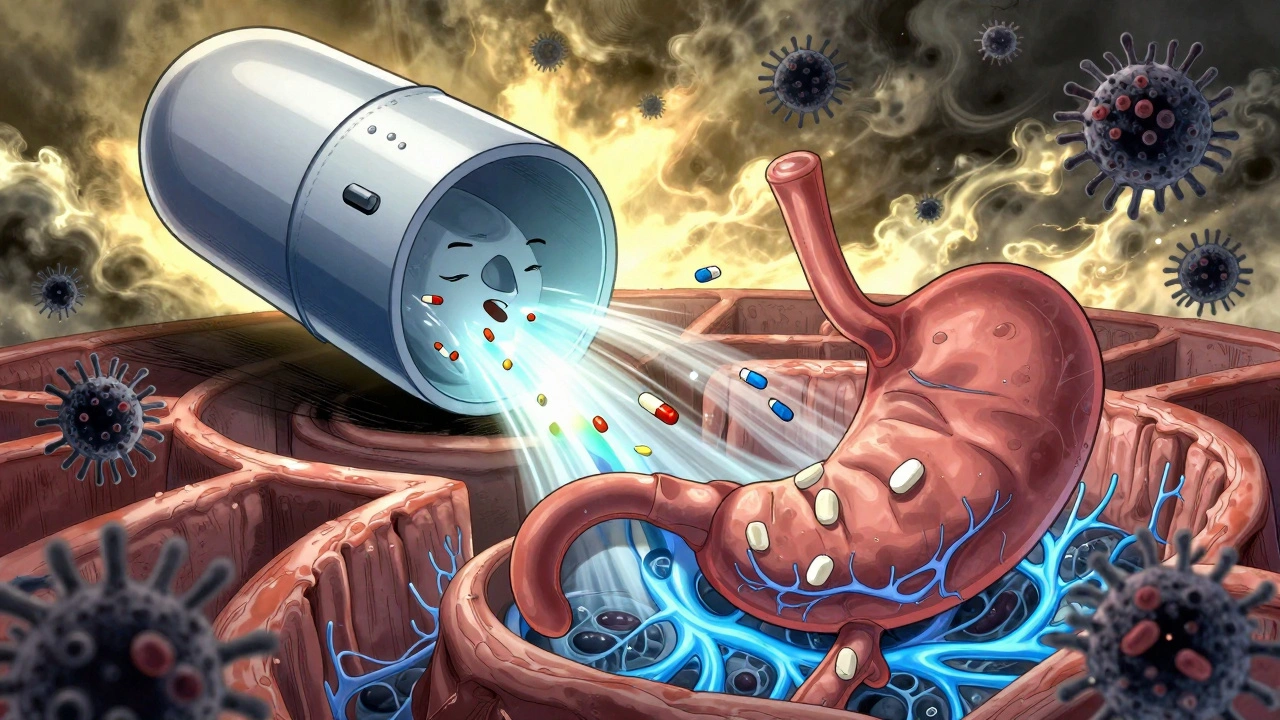
Treating H. pylori isn’t just about relieving symptoms - it’s about curing the infection. Eradication reduces your risk of ulcers and stomach cancer by up to 50%. Standard treatment is triple therapy: a proton pump inhibitor (PPI) like omeprazole or esomeprazole, plus two antibiotics - usually amoxicillin and clarithromycin - taken together for 10 to 14 days. But here’s the catch: antibiotic resistance is rising. In the U.S., clarithromycin resistance has jumped from 10% in 2000 to 35% in 2023. That means triple therapy fails in up to 30% of cases. When resistance is high, doctors use bismuth quadruple therapy: a PPI, bismuth subsalicylate (like Pepto-Bismol), metronidazole, and tetracycline. This works better in resistant areas, with success rates of 85-92%. A newer drug, vonoprazan (brand name Voquezna), was approved by the FDA in 2022. It’s a potassium-competitive acid blocker - stronger and faster at reducing acid than PPIs. In clinical trials, vonoprazan-based therapy cleared H. pylori in 90.3% of patients, compared to 75.6% with standard triple therapy. It’s especially helpful for people who’ve failed previous treatments.What About Other Causes of Gastritis?
If H. pylori isn’t the cause, treatment changes:- NSAID-induced gastritis: Stop the medication if possible. Switch to acetaminophen for pain. Use a PPI for 4-8 weeks to let the lining heal.
- Alcohol-related: Cut out alcohol completely. Symptoms often improve within two weeks.
- Autoimmune gastritis: No cure, but lifelong vitamin B12 injections or high-dose oral supplements are needed to prevent anemia.
What Happens After Treatment?
You don’t stop when the pills run out. After finishing treatment, you need a follow-up test to confirm the bacteria is gone. The urea breath test or stool antigen test should be done at least 4 weeks after finishing antibiotics - and you must stop PPIs for 2 weeks before testing, or you’ll get a false negative. About 25-30% of patients miss doses during treatment. That’s the #1 reason it fails. Set phone alarms. Use a pill organizer. Don’t skip. Side effects are common - 62% of people report diarrhea, metallic taste, or nausea during antibiotic therapy. But these usually fade after treatment ends. Don’t quit early because of side effects - talk to your doctor about alternatives instead.Long-Term Risks and Lifestyle Changes
Even after H. pylori is gone, some damage may remain - especially if you had chronic gastritis for years. Atrophic changes don’t always reverse. That’s why ongoing monitoring matters, especially if you have a family history of stomach cancer. Lifestyle changes make a big difference:- Avoid NSAIDs unless absolutely necessary. If you must take them, pair them with a PPI.
- Quit smoking. It slows healing by 35%.
- Limit alcohol. Even moderate drinking can irritate the lining.
- Manage stress. While stress doesn’t cause gastritis, it can make symptoms worse.
- Eat smaller, more frequent meals. Avoid spicy, greasy, or acidic foods if they trigger symptoms.
Why Some Doctors Don’t Treat H. pylori
You might hear conflicting advice. Some doctors say: “If you don’t have symptoms, leave it alone.” Why? Because not everyone with H. pylori gets sick. In low-risk areas - like the U.S. or UK - the chance of developing stomach cancer from H. pylori is very low. Treating everyone would mean giving antibiotics to millions of people who don’t need them, increasing resistance and side effects. The 2022 Maastricht VI/Florence Consensus says: treat H. pylori if you have ulcers, gastric cancer risk factors, or symptoms. But if you’re healthy and asymptomatic, monitoring may be okay. Still, most experts agree: if you’re diagnosed with H. pylori and have any digestive symptoms - even mild ones - treatment is worth it.What If Treatment Doesn’t Work?
If you’ve had two failed treatments, don’t give up. Resistance patterns vary by region. Your doctor may order a stool or biopsy test to check which antibiotics the bacteria are resistant to. Then they can tailor your next round. New research is exploring personalized therapy based on bacterial genotyping. Early trials show success rates over 95% when treatment is matched to the strain’s resistance profile. Some patients turn to probiotics. While they don’t cure H. pylori, studies show they can reduce antibiotic side effects like diarrhea. Lactobacillus and Saccharomyces boulardii are the most studied.What About Proton Pump Inhibitors (PPIs)?
PPIs are powerful - they block acid production and give your stomach lining time to heal. But long-term use isn’t risk-free. About 40% of people who take PPIs for more than 6 months experience rebound acid hypersecretion when they stop. That means your stomach overproduces acid, making symptoms worse than before. Don’t quit cold turkey. Work with your doctor to taper off slowly. Switch to H2 blockers like famotidine for a while. Make lifestyle changes to reduce acid triggers.Final Thoughts
Gastritis isn’t something you just live with. Whether it’s caused by H. pylori, NSAIDs, or something else, it’s treatable - and often curable. The key is getting the right diagnosis and sticking to the treatment plan. If you’ve had stomach pain for more than a few weeks, don’t ignore it. Get tested for H. pylori. If you’ve been on NSAIDs for years, talk to your doctor about alternatives. If you’ve had treatment and symptoms returned, ask about resistance testing. The goal isn’t just to feel better today - it’s to protect your stomach for the next 20 years.Can gastritis go away on its own?
Sometimes, yes - especially if it’s caused by a short-term trigger like alcohol or NSAIDs. If you stop the irritant, the lining can heal in days or weeks. But if it’s caused by H. pylori, it won’t go away without treatment. Left untreated, chronic gastritis can lead to ulcers, bleeding, or even increase your risk of stomach cancer.
Is H. pylori contagious?
Yes. H. pylori spreads through contaminated food, water, or close contact - like sharing utensils, kissing, or poor hygiene. It’s more common in areas with overcrowding or limited clean water. Most people get infected in childhood. Once you’re an adult, it’s harder to catch, but still possible.
Can stress cause gastritis?
Stress doesn’t directly cause H. pylori gastritis, but severe physical stress - from burns, surgery, or trauma - can trigger acute erosive gastritis. Emotional stress can make symptoms worse by increasing acid production and slowing healing, but it’s rarely the root cause.
What foods should I avoid with gastritis?
Avoid anything that irritates your stomach: spicy foods, fried or fatty meals, caffeine, alcohol, and acidic foods like citrus and tomatoes. Some people also react to chocolate, carbonated drinks, or artificial sweeteners. Everyone’s different - keep a food diary to find your triggers.
How long does H. pylori treatment take?
Standard treatment lasts 10 to 14 days. You’ll start feeling better within a few days, but you must finish the full course. Even if you feel fine, stopping early lets resistant bacteria survive. After treatment, you’ll need a follow-up test 4 weeks later to confirm the bacteria is gone.
Can I get H. pylori again after treatment?
It’s rare in developed countries like the UK or US - less than 1% per year. But it’s more common in places with poor sanitation. If you’re reinfected, it’s usually from a new exposure, not a relapse. Good hygiene and clean water reduce your risk.
Do I need to repeat endoscopy after treatment?
Not routinely. If you had H. pylori and were treated, and your symptoms resolved, repeat endoscopy isn’t needed. But if you had severe atrophic gastritis, a family history of stomach cancer, or ongoing symptoms, your doctor may recommend a follow-up endoscopy in 1-3 years.
Are there natural remedies for gastritis?
Some natural options like honey, garlic, or green tea have mild antibacterial properties, but none can reliably kill H. pylori. Probiotics may help reduce side effects from antibiotics. But don’t rely on them as treatment. Only proven medical therapies - antibiotics and acid blockers - can cure the infection.
Comments
Jackie Petersen
So let me get this straight - we’re giving people antibiotics for a bacteria that half the planet carries, just because some doctor says so? And we’re not even testing if it’s causing symptoms first? This is Big Pharma’s way of keeping us hooked. I’ve had stomach issues for years and never got tested - turned out it was just my gluten sensitivity. They push pills, not answers.
On December 6, 2025 AT 14:11
Annie Gardiner
Isn’t it funny how we treat H. pylori like it’s the devil, but ignore the fact that modern life is literally designed to rot our guts? Processed food, constant stress, no sleep, no connection to nature - we’re not sick because of a bug, we’re sick because we’ve forgotten how to be human. The real cure? Go live in the woods for a month. No phones. No PPIs. Just dirt, sun, and silence.
On December 6, 2025 AT 18:40
Rashmi Gupta
In India, we’ve always known this - stomach problems aren’t just about germs. My grandmother used turmeric milk, warm water with lemon, and never ate after 7pm. No antibiotics. No endoscopies. Just rhythm. Now everyone’s on PPIs like candy. We traded wisdom for pills. And now we wonder why no one heals.
On December 7, 2025 AT 07:54
Kumar Shubhranshu
H pylori is not a bug it's a symptom of poor hygiene and bad diet. Fix the environment not the bacteria. Antibiotics are a bandaid. You think you cured it? You just made it stronger.
On December 8, 2025 AT 03:15
Kenny Pakade
Why are we treating this like a global health crisis? In America we have clean water, refrigerators, and doctors. If you’re getting H. pylori, maybe you should’ve stayed in the third world where this stuff is normal. Stop blaming the bacteria - blame the people who bring it here. We don’t need to treat everyone. We need to screen and deport the carriers.
On December 9, 2025 AT 14:32
brenda olvera
I used to think my stomach pain was just stress until I got tested and found out I had H. pylori. Took the antibiotics, felt like garbage for two weeks but now I’m finally free. No more bloating, no more fear of eating out. If you’re suffering - get tested. It’s not magic but it works. You got this 💪
On December 10, 2025 AT 22:48
joanne humphreys
I appreciate the depth of this post. It’s rare to see such a balanced view on H. pylori - acknowledging both the medical necessity and the over-treatment risks. I’ve had two failed treatments myself, and the follow-up testing was the key. I didn’t know you had to stop PPIs before the breath test. That detail saved me from another round of useless antibiotics. Thank you for including the nuance.
On December 11, 2025 AT 02:15
Nigel ntini
This is exactly the kind of clear, evidence-based information we need more of. Too many people dismiss gastritis as ‘just indigestion’ or self-diagnose with internet myths. The distinction between erosive and nonerosive, the resistance patterns, the importance of follow-up testing - all critical. And kudos for mentioning vonoprazan. It’s not magic, but it’s a real step forward. Keep sharing this.
On December 11, 2025 AT 21:33