
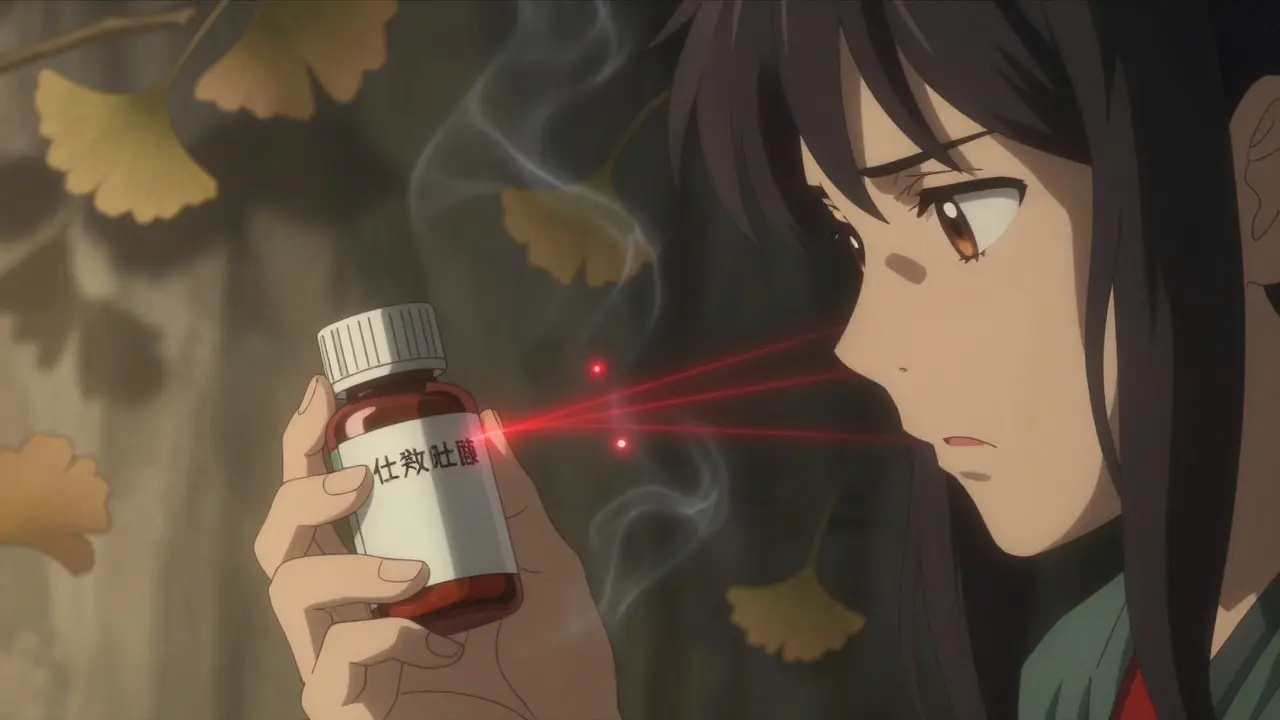
Millions of people take Ginkgo biloba to help with memory, focus, or circulation. It’s one of the most popular herbal supplements in the U.S., with about 12 million Americans using it each year. But if you’re on a blood thinner-like warfarin, aspirin, or clopidogrel-there’s a serious question you need to ask: Ginkgo biloba and blood thinners might not mix safely.
What is Ginkgo Biloba, Really?
Ginkgo biloba comes from the leaves of the Ginkgo tree, one of the oldest living species on Earth, dating back over 270 million years. It’s been used in traditional Chinese medicine for centuries. Today, most supplements use a standardized extract called EGb 761, which contains 24% flavonol glycosides and 6% terpene lactones. This specific formula is what most research studies use-and it’s what about 70% of global Ginkgo sales are based on.People take it for cognitive support, to improve blood flow, or to ease symptoms of tinnitus or dizziness. But unlike prescription drugs, herbal supplements aren’t held to the same strict standards. That means not all Ginkgo products are the same. Some are poorly made, mislabeled, or contaminated. And that’s part of why the safety picture gets so muddy.
How Ginkgo Might Affect Blood Thinning
Ginkgo biloba doesn’t work like warfarin or aspirin. It doesn’t directly thin your blood. Instead, it may interfere with how platelets-tiny blood cells that help clots form-stick together. Some lab studies suggest it blocks signals that trigger platelet activation, which could slow down clotting. It may also affect liver enzymes (like CYP2C9) that break down certain blood thinners, potentially making them stronger in your body.That sounds scary. But here’s the twist: most controlled clinical trials haven’t found a clear, dangerous interaction. A 2008 review in PubMed found no significant increase in bleeding risk when Ginkgo was taken with aspirin or warfarin in well-designed studies. Yet, there are real case reports-some serious-of brain bleeds, nosebleeds, and internal bleeding in people taking Ginkgo along with blood thinners.
The key difference? The bad outcomes usually involve non-standardized Ginkgo products. The good studies used EGb 761. That suggests the problem might not be Ginkgo itself-but poor-quality supplements.
Which Blood Thinners Are Most Concerning?
Not all blood thinners carry the same level of risk with Ginkgo. Here’s what the data shows:- Warfarin (Coumadin, Jantoven): This is the biggest red flag. GoodRx and the Mayo Clinic list this as a "high-risk" interaction. Even though clinical trials don’t always show a problem, the potential for warfarin levels to rise is real-and warfarin has a narrow safety window. A small increase can lead to dangerous bleeding.
- Aspirin: Classified as "moderate-risk." Some studies say no interaction. Others show a slight increase in bleeding time. If you’re taking low-dose aspirin for heart protection, don’t assume Ginkgo is harmless.
- Clopidogrel (Plavix): A 2020 study found Ginkgo was involved in 2.6% of clopidogrel prescriptions with potential interaction. That’s not huge, but it’s enough to matter if you’ve had a stent or stroke.
- DOACs (Apixaban, Rivaroxaban, Dabigatran): These newer blood thinners have less research, but 18% of cases in one study showed possible interaction. Since DOACs don’t require regular blood tests, you won’t know if Ginkgo is affecting them.
Even over-the-counter NSAIDs like ibuprofen or naproxen can add to the risk. Combine those with Ginkgo and blood thinners? You’re stacking multiple ways your body can’t form clots.

What Do Experts Actually Recommend?
There’s no universal answer. That’s the problem.The American Society of Health-System Pharmacists says the risk is "theoretical." The American College of Chest Physicians says routine discontinuation isn’t needed. But the Mayo Clinic, Cleveland Clinic, and GoodRx all say: avoid it. Or at least talk to your doctor first.
Here’s where it gets messy: pharmacists are the front line. A 2022 survey found 78% of pharmacists routinely warn patients about Ginkgo-blood thinner interactions. Sixty-three percent recommend stopping it before surgery. That’s not because the science is clear-it’s because the consequences of getting it wrong are too high.
Surgeons and anesthesiologists are even more cautious. The American Society of Anesthesiologists recommends stopping Ginkgo at least two weeks before any procedure. Why? Because even if the chance of bleeding is low, the cost of a brain bleed or uncontrolled surgical bleeding is catastrophic.
What Should You Do If You’re Taking Both?
If you’re on a blood thinner and already taking Ginkgo biloba, don’t panic. But don’t ignore it either.- Don’t stop your blood thinner. Stopping it suddenly can cause clots, stroke, or heart attack. Only change your prescription under medical supervision.
- Stop Ginkgo biloba. If you’re scheduled for surgery, stop it at least two weeks before. If you’re not, talk to your doctor about whether you even need it.
- Review your full supplement list. Ginkgo isn’t the only herb that thins blood. Garlic, ginger, danshen, fish oil, and evening primrose oil can do the same. Your doctor needs to see everything you’re taking.
- Ask your pharmacist. They’re trained to spot these interactions. Bring your bottles or a list-don’t rely on memory.
- Watch for signs of bleeding. Unexplained bruising, nosebleeds that won’t stop, blood in urine or stool, headaches that feel different-these could be early warnings.
What About Supplements Labeled "Safe"?
You might see Ginkgo products that say "no interactions" or "safe with medications." Don’t believe them.The FDA doesn’t approve supplements for safety or effectiveness. Only 42% of manufacturers now include bleeding risk warnings on labels-up from 28% in 2018, but still less than half. That means most bottles you buy won’t tell you the truth.
Even if a product says it’s "standardized to EGb 761," there’s no guarantee it actually is. Independent testing has found that many "standardized" supplements contain less active ingredient than claimed-or even toxic contaminants.
Bottom line: if you’re on a blood thinner, assume any Ginkgo product could be risky. The burden of proof isn’t on you to prove it’s dangerous. It’s on the supplement maker to prove it’s safe-and they haven’t.

Is There a Safe Dose?
There’s no proven safe dose of Ginkgo biloba if you’re on a blood thinner.Most supplements contain 120 mg to 240 mg per day. That’s the range used in most studies. But even at 120 mg, there’s still a theoretical risk. And since you can’t test for Ginkgo levels in your blood like you can with warfarin, there’s no way to monitor if it’s affecting you.
Some people think taking it every other day or cutting the dose in half will help. But that’s guesswork. Platelet effects can build up over time. You won’t feel it until it’s too late.
What Are the Real Risks?
The FDA has received 18 reports of bleeding events linked to Ginkgo between 2008 and 2020. Causality wasn’t proven in any case. That doesn’t mean it didn’t happen-it means proving it’s hard. Blood thinners alone can cause bleeding. Ginkgo might be the hidden trigger.Real-world data from PLOS ONE shows that 21% of patients on anticoagulants or antiplatelets also take herbal supplements. Nearly half of them are at risk of a dangerous interaction. Most don’t tell their doctors. Why? Because they think herbs are "natural" and therefore safe.
That’s the biggest danger: false confidence. You wouldn’t skip your warfarin dose because you think it’s "just a pill." Don’t treat Ginkgo like it’s harmless because it’s from a tree.
What’s the Bottom Line?
Ginkgo biloba isn’t a miracle herb. It’s a supplement with a plausible, documented risk of increasing bleeding when combined with blood thinners. The science is mixed, but the consequences are not.If you’re on warfarin, aspirin, clopidogrel, or any other blood thinner:
- Do not start Ginkgo biloba without talking to your doctor.
- If you’re already taking it, don’t stop abruptly-ask how to stop safely.
- Always tell your surgeon, dentist, or anesthesiologist you’re taking it-even if you think it’s "just an herb."
- Consider whether you really need it. Are the benefits worth the risk?
There’s no magic number. No safe dose. No guaranteed clean interaction. If you’re taking a blood thinner, the safest choice is to avoid Ginkgo biloba entirely.
Can I take Ginkgo biloba if I’m on aspirin?
It’s not recommended. While some studies show no interaction, others suggest Ginkgo may increase bleeding risk when combined with aspirin. Since aspirin already thins the blood, adding Ginkgo could push you into a dangerous zone. Talk to your doctor before combining them.
How long before surgery should I stop Ginkgo biloba?
Most experts recommend stopping Ginkgo biloba at least two weeks before any surgery or dental procedure. This gives your body time to clear the compound and reduces the risk of uncontrolled bleeding. Some anesthesiologists require a 36-hour stop, but two weeks is the safer standard.
Is Ginkgo biloba safe with warfarin?
No, it’s not considered safe. Even though clinical trials haven’t consistently proven a dangerous interaction, case reports show serious bleeding events. Warfarin has a narrow safety window, and Ginkgo may interfere with how your body processes it. Most doctors advise avoiding this combination entirely.
Do all Ginkgo supplements have the same risk?
No. Most research on safety uses the standardized extract EGb 761. Many over-the-counter products are not standardized, may contain different ingredients, or could be contaminated. The risk is higher with low-quality or unverified supplements. But because you can’t tell just by looking, the safest approach is to avoid all Ginkgo if you’re on blood thinners.
What are the signs of bleeding from Ginkgo and blood thinners?
Watch for unusual bruising, nosebleeds that won’t stop, blood in urine or stool, unusually heavy menstrual bleeding, vomiting blood, or sudden, severe headaches. These could signal internal bleeding. If you notice any of these, contact your doctor immediately.
Can I take Ginkgo if I’m not on blood thinners?
If you’re not on blood thinners and don’t have a bleeding disorder, Ginkgo is generally considered low-risk for most people. But it’s still a supplement with potential side effects like headaches, dizziness, or stomach upset. Always check with your doctor before starting any new supplement, even if you think it’s harmless.
Comments
Retha Dungga
ginkgo is just nature's way of saying "hey your blood might wanna chill" 🌿🩸
On December 31, 2025 AT 16:04
Jenny Salmingo
i take ginkgo for my memory and i’m on aspirin… i didn’t know this could be a thing. thanks for the heads up. gonna talk to my doc tomorrow 💛
On January 1, 2026 AT 07:45
Brady K.
let me get this straight - we’re treating a 270-million-year-old tree like it’s a pharmaceutical-grade anticoagulant? 🤦♂️ the real issue isn’t ginkgo, it’s that we’ve outsourced critical thinking to supplement labels that say "natural" and expect a medal. EGb 761 is the only thing with peer-reviewed backing. Everything else is snake oil with a leaf emoji.
On January 3, 2026 AT 01:09
Kayla Kliphardt
i’ve been taking ginkgo for years and never told my cardiologist. now i’m scared. what if i’ve been risking my brain this whole time?
On January 4, 2026 AT 10:32
John Chapman
my grandma takes ginkgo and she’s 92 and still dancing at weddings 🕺💃 so maybe the risk is overblown? also why do we treat herbs like they’re weapons? 🌱❤️
On January 4, 2026 AT 12:16
Urvi Patel
if you need ginkgo to remember things then you probably shouldn't be on blood thinners anyway the real problem is american healthcare turning everything into a risk matrix
On January 4, 2026 AT 19:13
Robb Rice
i appreciate the thoroughness of this post. however, i believe the phrasing "don't stop your blood thinner" could be misinterpreted. it should read: "do not discontinue your anticoagulant without consulting your prescribing physician." small difference, but critical for clarity.
On January 4, 2026 AT 21:19
Darren Pearson
the notion that herbal supplements are inherently safe because they’re "natural" is a dangerous myth perpetuated by wellness influencers and poorly regulated manufacturers. ginkgo biloba is a bioactive compound with pharmacological properties - it’s not tea. period.
On January 5, 2026 AT 19:45
Stewart Smith
i used to take ginkgo for focus. then i started getting nosebleeds every time i sneezed. stopped it. nosebleeds stopped. no big deal. but now i wonder how many other people are just... living with it.
On January 6, 2026 AT 01:38
Aaron Bales
if you're on a blood thinner and taking ginkgo, stop. now. call your doctor. don't wait for a nosebleed. don't wait for surgery. this isn't a debate. it's a safety protocol.
On January 7, 2026 AT 08:31
Lawver Stanton
okay but let’s be real - the entire supplement industry is a scam. you know how many people have died from ginkgo? probably none. but you know how many people have spent $80 on a bottle labeled "standardized EGb 761" that’s just ground leaves and caffeine? thousands. the real danger isn’t the herb - it’s the fact that we let corporations sell placebo with a tree on the label and call it medicine. i’ve been taking ginkgo for 15 years. i’ve had more bruising than a toddler after a playground incident. but i also swear it helps me remember where i put my keys. so… trade-off? maybe. but i’m not dying. yet.
On January 9, 2026 AT 03:12
Sara Stinnett
how is it that a plant that’s survived dinosaurs and ice ages is now considered a "risk" by people who think vitamin C cures colds? the fact that we treat ginkgo like a ticking time bomb while swallowing 20 pills a day for depression, anxiety, and sleep is the true absurdity of modern medicine. the real danger isn’t ginkgo - it’s the medical industrial complex that profits from fear and ignorance.
On January 9, 2026 AT 23:22
linda permata sari
in my village in indonesia, we use ginkgo leaves in tea for circulation. no one ever died. no one ever bled out. maybe the problem isn’t the herb… maybe it’s the way we over-medicalize everything? 🌿💧
On January 11, 2026 AT 15:45
Brandon Boyd
you don’t need to be scared - you need to be informed. if you’re on blood thinners, talk to your pharmacist before you take anything. even if it’s "just an herb." your future self will thank you. and hey - if you’re taking ginkgo for memory? try walking outside for 20 minutes. it’s free, has zero side effects, and actually works. just saying.
On January 11, 2026 AT 15:57