
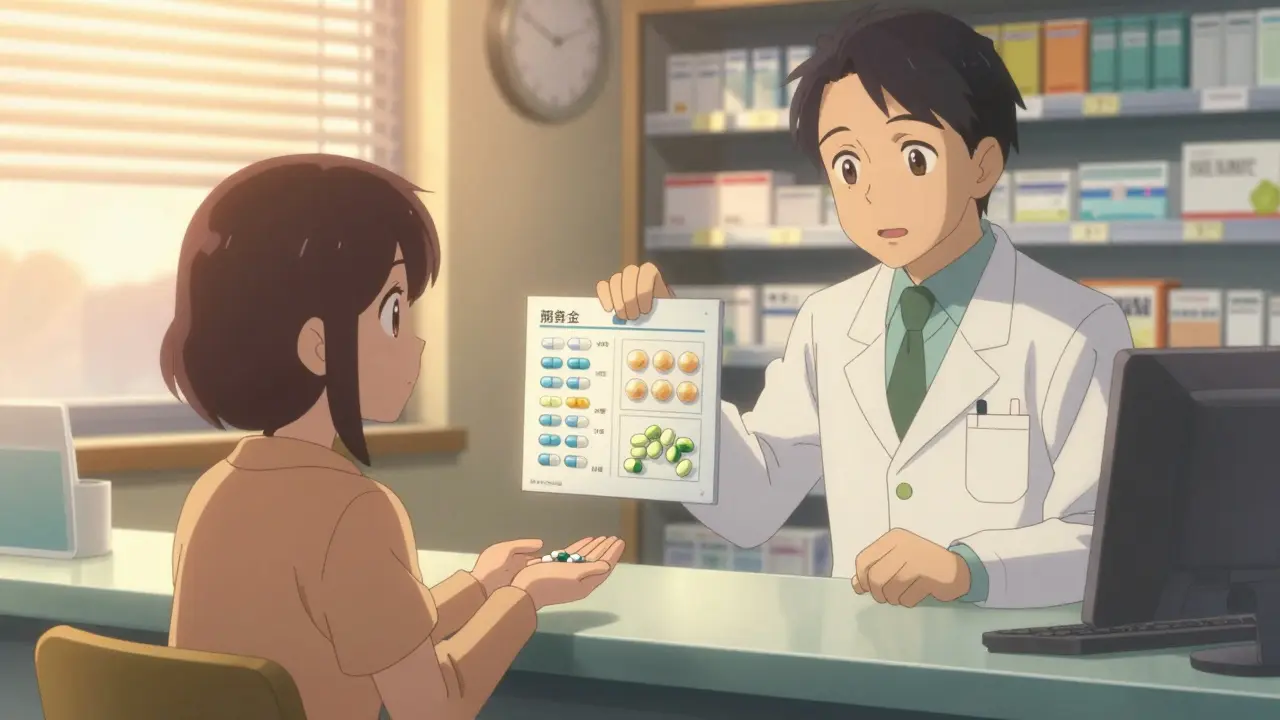
Switching from a brand-name drug to a generic version happens more often than most people realize. In fact, 90% of all prescriptions filled in the U.S. are for generic medications. That’s not just a trend-it’s the new normal. But even though generics are just as safe and effective, many patients still feel unsure when the pill they’ve been taking suddenly looks different. Maybe it’s a different color. Maybe the shape changed. Or maybe your insurance stopped covering the brand and pushed you toward the cheaper option. Whatever the reason, this transition can feel confusing-or even scary-if you don’t know what to ask or who to talk to.
Why Generics Are Used (And Why It Matters to You)
The FDA doesn’t approve generics lightly. To be sold in the U.S., a generic drug must contain the same active ingredient, strength, dosage form, and route of administration as the brand-name version. It must also deliver the same amount of medicine into your bloodstream at the same rate. That’s called bioequivalence. The FDA requires that the generic’s absorption rate falls within 80% to 125% of the brand’s. That’s not a wide gap-it’s a tight range designed to ensure consistent results. But here’s the thing: generics aren’t identical. They can differ in color, shape, size, and inactive ingredients like fillers or dyes. These differences don’t affect how well the drug works for most people. But for some medications-like those used for seizures, thyroid conditions, or blood thinners-tiny changes in how the drug is absorbed can matter. That’s why communication with your pharmacist isn’t optional. It’s essential.When to Start Talking to Your Pharmacy
Don’t wait until your last pill is gone. The best time to start the conversation is at least 30 days before your brand-name medication runs out. Why? Because transitions aren’t always smooth. Insurance companies may change their formularies. Pharmacies might not have the generic in stock right away. Or your prescriber might need to send a new prescription. If you’re on Medicare Part D, you have extra protections. Plans must give you a 90-day transition period if you’re switching to a new plan and your current drug isn’t on their formulary. During that time, your pharmacy can override coverage blocks if your doctor says you need to stay on the brand. But you have to ask. Don’t assume they’ll know.What to Ask Your Pharmacist
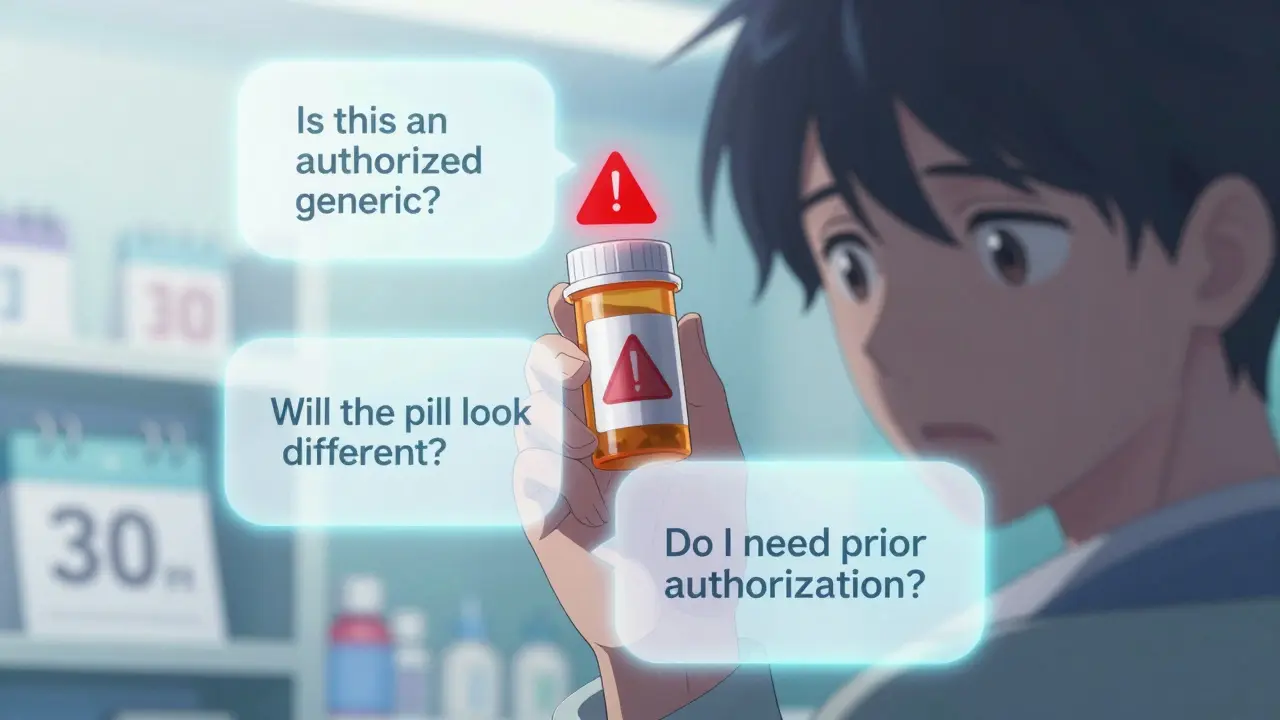
When your pharmacist says, “We’re switching you to a generic,” don’t just nod and walk away. Ask these five questions:- Is this an authorized generic? Authorized generics are made by the same company that makes the brand-name version. They’re identical in every way except the label. If your brand is made by Pfizer, the authorized generic might be labeled as “Pfizer Generic.” These are often the smoothest switches.
- Will the pill look different? If yes, ask for a picture or sample. Many patients panic when they see a new pill-especially older adults who rely on visual cues. Knowing what to expect reduces anxiety and improves adherence.
- Are there any special instructions? Some generics have different release patterns. For example, a once-daily extended-release tablet might now be a twice-daily version. Always confirm dosing.
- Do I need prior authorization? Some insurers require approval to stay on the brand. If your doctor needs to submit paperwork, ask the pharmacy to help. They can often call on your behalf.
- Can you help me synchronize my refills? If you take multiple medications, ask about medication synchronization. This service aligns all your refill dates so you can pick everything up in one visit. Studies show it improves adherence by 27%.
When You Should Worry
Most people don’t notice a difference after switching. In fact, a 2023 Healthline survey of over 1,200 patients found that 78% reported no change in how they felt. But 22% did notice something. For some, it was a headache. For others, it was dizziness, nausea, or even worsening symptoms. If you’re taking a drug with a narrow therapeutic index-like warfarin, levothyroxine, or certain seizure medications-you should be extra careful. A 2021 JAMA study found that 9.4% of patients switching from brand to generic antiepileptic drugs experienced therapeutic failure. That’s nearly double the rate of those who stayed on brand. If you feel worse after the switch, don’t ignore it. Call your pharmacist immediately. They can check if the generic you received matches the one your doctor prescribed. They can also contact your prescriber to request a return to the brand-or to try a different generic manufacturer.How Insurance Plays a Role
Your insurance doesn’t just influence whether you get a generic-it can force you into one. Most commercial plans and nearly all Medicare Part D plans put generics on lower-cost tiers. That means you pay less. But if your plan requires you to try a generic first before covering the brand, you’re stuck unless your doctor appeals. Some plans will cover the brand only if you’ve tried at least two generics and they didn’t work. That’s called step therapy. If you’ve had a bad experience before, make sure your doctor documents it. Your pharmacist can help you file the appeal. Also, check if your drug has a patient assistance program. Many generic manufacturers offer discounts or free samples for people who qualify. Ask your pharmacist-they often have brochures or links to these programs.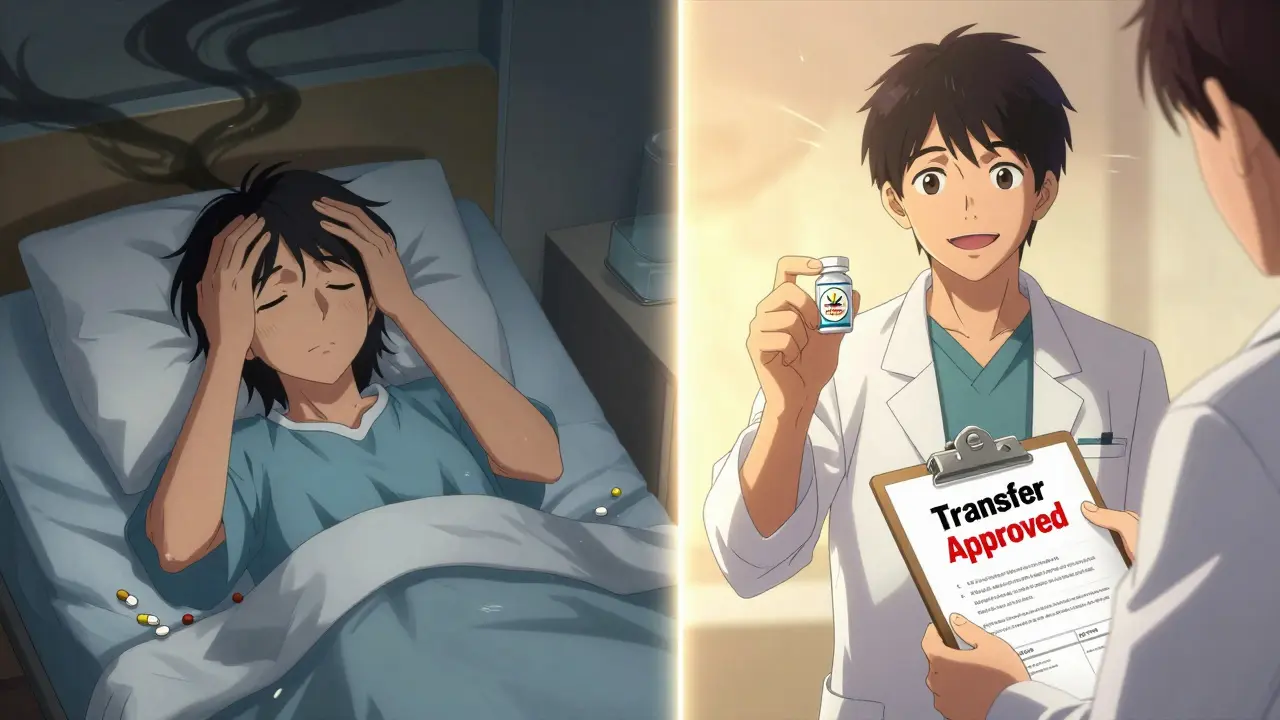
What’s Changed Recently (And How It Helps You)
In August 2023, the DEA made a major change: patients can now request electronic transfers of controlled substance prescriptions (like opioids, ADHD meds, or anxiety drugs) directly between pharmacies-no doctor needed. Before this, you had to go back to your prescriber just to move your prescription. Now, if your pharmacy runs out of your generic, you can ask them to transfer it from another location. It cuts down delays and keeps you covered. Pharmacies are also using new tools. Electronic health records now flag potential issues when a generic switch happens. If you’re on a high-risk medication, your pharmacist might get an alert before the switch even occurs. That means they can reach out to you before you even walk in.Real Stories, Real Lessons
One Reddit user, u/MedConcern87, switched from brand-name Keppra to generic levetiracetam and suddenly had more seizures. After a week of panic, they called their pharmacist. The pharmacist checked the manufacturer-turns out, this particular generic had a different filler that affected absorption. They switched to a different generic brand, and the seizures stopped. The key? They spoke up. Another patient, on Medicare, switched to a generic blood pressure pill and started feeling dizzy. She thought it was aging. But when she mentioned it to her pharmacist, they discovered the generic had a different release profile. They switched her back to the brand for a month while her doctor reviewed the case. The dizziness cleared. She’s now on a different generic that works just fine. These aren’t rare cases. They’re common enough that pharmacists are trained to expect them.What You Can Do Today
You don’t need to wait for a crisis to start managing your transitions. Here’s what to do now:- Keep a written list of every medication you take, including dosage, reason, and how often. Bring it to every appointment.
- Ask your pharmacist at your next visit: “Are any of my meds about to switch to generic?”
- Set a calendar reminder 30 days before your next refill. Use it to call your pharmacy and ask about upcoming changes.
- Don’t assume that because it’s cheaper, it’s automatically better. If something feels off, speak up.
- Know your rights. You can refuse a generic substitution. Your pharmacist must tell you before switching. If they don’t, ask why.
Generic drugs save Americans $373 billion a year. That’s huge. But savings shouldn’t come at the cost of your health. The system works best when you’re informed-and when you talk to your pharmacist like a partner, not just a dispenser.
Can I refuse to switch to a generic drug?
Yes. Your pharmacist is required to inform you before making the switch. If you don’t want to change, you can say no. However, your insurance may not cover the brand-name drug unless your doctor submits a prior authorization. In some cases, you may have to pay the full price out of pocket.
Why do some generics make me feel different?
While generics must meet strict FDA standards, they can contain different inactive ingredients-like fillers, dyes, or preservatives. For most people, this doesn’t matter. But for those taking medications with a narrow therapeutic index (like levothyroxine or warfarin), even small changes in how the drug is absorbed can affect how you feel. If you notice new side effects after switching, contact your pharmacist right away.
Do authorized generics work better than regular generics?
Authorized generics are made by the same company that produces the brand-name drug, just under a different label. Because they’re identical in every way-including inactive ingredients-they’re often the smoothest transition. Many patients report fewer issues switching to authorized generics compared to other generics.
Can my pharmacy transfer my prescription if the generic runs out?
Yes. Since August 2023, the DEA allows patients to request electronic transfers of controlled substance prescriptions directly between pharmacies without needing a doctor’s approval. This applies to generics and brand-name drugs alike. Just ask your pharmacy to transfer the prescription from another location if they’re out of stock.
How do I know if my generic is from a reliable manufacturer?
All FDA-approved generics must meet the same quality standards. But some manufacturers have better reputations. If you’re concerned, ask your pharmacist which company makes the generic you’re receiving. You can also look up the manufacturer online-reputable ones include Teva, Mylan, and Apotex. Avoid generics from manufacturers with recent FDA warning letters.
Comments
Agnes Miller
Just wanted to say thanks for this. I switched to a generic thyroid med last year and thought I was just getting older-turns out the filler in that batch made me feel like a zombie. Called my pharmacist, they switched me to a different maker, and now I’m back to normal. Don’t ignore those weird symptoms. They’re not "just in your head."
On February 17, 2026 AT 03:36
Haley DeWitt
YES!! I’ve been saying this forever!!! 😊😊😊 And seriously-ask about authorized generics!! They’re basically the brand but cheaper!! My doc didn’t even know the difference until I asked!! So glad someone finally wrote this!! 😭💕
On February 18, 2026 AT 19:32
John Haberstroh
Man, this whole generic switch thing is wild when you think about it. We’re basically gambling with our biology every time a pill changes color. The FDA says it’s all the same, but I’ve seen people go from ‘I’m fine’ to ‘I think I’m dying’ over a different starch filler. It’s like your body becomes a finicky espresso machine-same beans, different grinder, suddenly you’re drinking tar. Pharmacies should hand out pamphlets with every refill. Not just because it’s smart-but because it’s a miracle we don’t have more meltdowns.
On February 20, 2026 AT 00:37
Carrie Schluckbier
Of course they say generics are ‘just as good.’ But who’s really testing them? Big Pharma owns half the generic manufacturers. It’s all one big money game. You think the FDA’s independent? Ha. They get funding from the same companies that make the original drugs. And don’t get me started on the ‘authorized generics’-those are just the brand repackaged under a new name. They’re not cheaper because they’re better-they’re cheaper because they’re still owned by Pfizer. Wake up, people.
On February 20, 2026 AT 18:58
guy greenfeld
It’s funny how we treat medicine like a vending machine. You put in your insurance, you get a pill. But what if the pill isn’t the same? What if your nervous system remembers the exact molecular handshake of the brand? Maybe we’re not just reacting to chemistry-we’re reacting to memory. To ritual. To the placebo of familiarity. And maybe that’s why some of us crash after switching. Not because the drug is bad. But because we’ve been conditioned to believe the shape, the color, the logo, is part of the cure.
On February 21, 2026 AT 10:55
Steph Carr
So let me get this straight: the system is designed to save us money… but we have to become pharmaceutical detectives just to not die? 😏 I love how we’ve turned healthcare into a scavenger hunt where the prize is ‘not having a seizure.’ Honestly? If I had to file an appeal, write a letter, call three pharmacies, and beg my pharmacist for a sample photo of my pill… I’d just pay out of pocket. And that’s the real problem.
On February 21, 2026 AT 16:09
Brenda K. Wolfgram Moore
This is so important. I’m a nurse, and I see patients panic every time their pill changes. You’re right-ask the questions. Set reminders. Keep a list. And if you feel off? Call your pharmacist immediately. They’re not just dispensing pills-they’re your frontline defense. Don’t wait for a crisis. Prevention is quieter, but it saves lives. And yes, you can say no. You have that right. Use it.
On February 23, 2026 AT 02:43
James Lloyd
Authorized generics are the unsung heroes of this whole system. I used to work in pharmacy supply chain. The same tablet, same factory, same quality control-just no brand logo. People don’t realize that 60% of the time, the ‘generic’ they’re getting is actually made by the original company. If your pharmacist says ‘it’s from Teva’ and your brand was Teva too? You’re golden. No need to stress. Just ask for the manufacturer name. It’s not complicated. And if they hesitate? That’s your cue to dig deeper.
On February 24, 2026 AT 14:02