
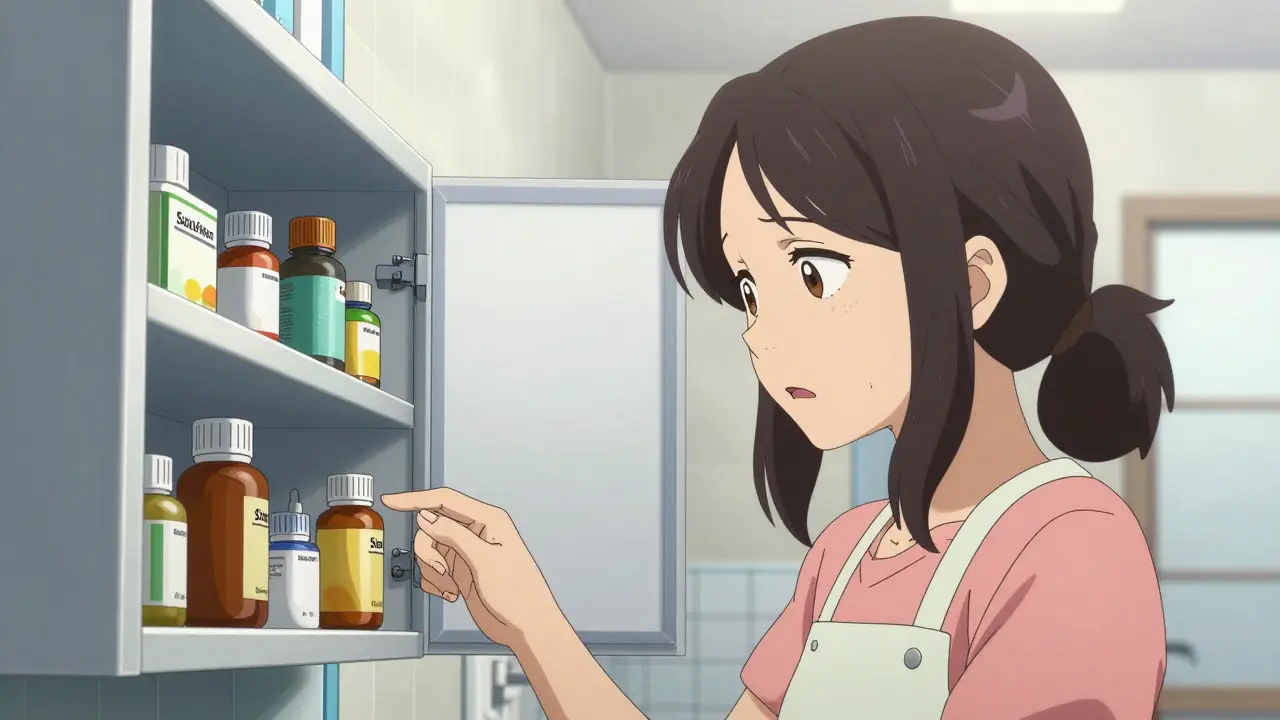
Check your medicine cabinet right now. Do you see that half-empty bottle of liquid antibiotic from last winter? Or the colorful box of fever reducer with a date from two years ago? You might think it’s just a bit weaker than fresh stock, but for a growing child, expired medicine isn’t just ineffective-it can be dangerous. In fact, only one in five parents realizes that expired meds pose a real health threat to kids, yet 70% of homes keep over-the-counter children’s medicines on hand. That is a risky combination.
Medicines are the leading cause of poisoning incidents in young children. The Centers for Disease Control and Prevention (CDC) reports roughly 60,000 emergency room visits every year involving children under five who accessed unsupervised medication. When those medicines are expired, the stakes get even higher because their chemical stability is compromised. This guide breaks down exactly why expired pediatric drugs are risky, how to spot them, and the safest ways to throw them away without harming your family or the environment.
Why Expired Medicine Is Different for Kids
Adults have fully developed liver and kidney systems that process drugs efficiently. Children do not. Their metabolic pathways are still maturing, which means they handle chemicals differently-and often more unpredictably. When a medication expires, its active ingredients break down. For an adult, this might mean a headache pill doesn't work as well. For a child, those breakdown products can sometimes become toxic.
The Food and Drug Administration (FDA) explicitly warns against giving any expired medicine to children. They state that expired drugs may lose potency or change chemically in ways that harm developing bodies. Take tetracycline antibiotics, for example. If these expire, they don't just stop working; they can degrade into compounds that cause permanent tooth discoloration and stunt bone growth in children at rates nearly four times higher than normal. Another scary example is benzocaine teething gel. Between 2018 and 2022, toxicology reports documented 127 cases of pediatric methemoglobinemia-a condition where blood loses its ability to carry oxygen-linked specifically to expired benzocaine gels.
Liquid formulations are especially tricky. A study by the University of Michigan found that 87% of liquid antibiotics lose their effectiveness within just 14 days after expiration. Some even develop bacterial contamination once opened. Dr. Karen Sheehan, Medical Director of Injury Prevention at Ann & Robert H. Lurie Children's Hospital, notes that "children's developing organ systems are particularly vulnerable to degraded medications that may contain harmful breakdown products." It’s not worth the gamble.
Common Misconceptions Parents Have
It’s easy to fall into bad habits when you’re tired and dealing with a sick kid. Many parents believe that if a medicine is only a month or two past its date, it’s safe to use. A 2023 survey published in Contemporary Pediatrics revealed some startling numbers about parental beliefs:
- 20% believed expired meds were safe if used within one month of expiration.
- 14% thought three months was okay.
- 15% felt it was fine even a year later.
- 44% simply assumed expired medicine was just "weaker," not dangerous.
This mindset is widespread. On parenting forums, it’s common to see comments like, "I always thought expired Tylenol was just less effective." But here’s the reality: reduced efficacy means your child isn’t getting the treatment they need, which can lead to complications like resistant infections or severe dehydration. Meanwhile, the chemical changes happening inside that bottle could trigger unexpected side effects, such as excitability instead of sedation from antihistamines, as warned by experts in the Pediatric Allergy and Immunology Journal.
Another major gap is disposal knowledge. Nearly half of parents (47%) admitted they’ve given expired medicine to their children at least once. Even worse, most don’t check expiration dates until they are actually preparing to give the dose. By then, it’s too late to prevent potential issues. Awareness is the first step toward safety.
How to Spot Expired and Compromised Meds
Finding the expiration date should be simple, but it’s not always obvious. Look for phrases like "Exp," "EXP," or "Use By" on the label. For prescription bottles, this date is printed clearly near the bottom. For over-the-counter boxes, check the crimped edge of the foil strip inside the box or the back panel.
However, the printed date isn’t the only thing to watch. Storage conditions play a huge role in whether a drug is still good. Heat and humidity are enemies of medicine stability. Research shows that acetaminophen suspensions can lose 22% of their potency if stored above 86°F (30°C) for just 30 days. Bathrooms are terrible places for medicine cabinets because of the steam and temperature swings from showers.
Here is what to look for before you toss anything:
- Color Changes: If pills have turned yellow, brown, or spotted, they are degrading.
- Smell: Liquid antibiotics often smell sour or fermented if bacteria have grown.
- Texture: Creams that separate or pills that crumble easily are compromised.
- Clarity: Suspensions that won’t mix back together after shaking are likely expired.
If you aren’t sure, throw it out. It’s cheaper to replace a $10 bottle of fever reducer than to pay for an ER visit.
The Safest Way to Dispose of Expired Pediatric Drugs
So, you’ve cleared out the cabinet. Now what? Don’t just flush everything down the toilet, and don’t leave loose pills in the trash where curious fingers-or pets-can find them. The Drug Enforcement Administration (DEA) and FDA recommend specific methods based on the type of medication.
Option 1: Drug Take-Back Programs (Best Choice)
This is the gold standard. The DEA operates thousands of permanent disposal sites across pharmacies, hospitals, and police stations. In October 2023 alone, National Prescription Drug Take Back Day collected over one million pounds of unused medication. These programs ensure secure destruction and protect the environment. Check with your local pharmacy or hospital to see if they have a drop-off bin. As of early 2024, major chains like Walgreens and CVS have expanded these kiosks to over 12,000 locations nationwide.
Option 2: Household Trash (If No Take-Back Is Available)
If you can’t make it to a take-back site, the FDA says you can dispose of most medicines in your home trash, but you must follow strict steps to make them unappealing and inaccessible:
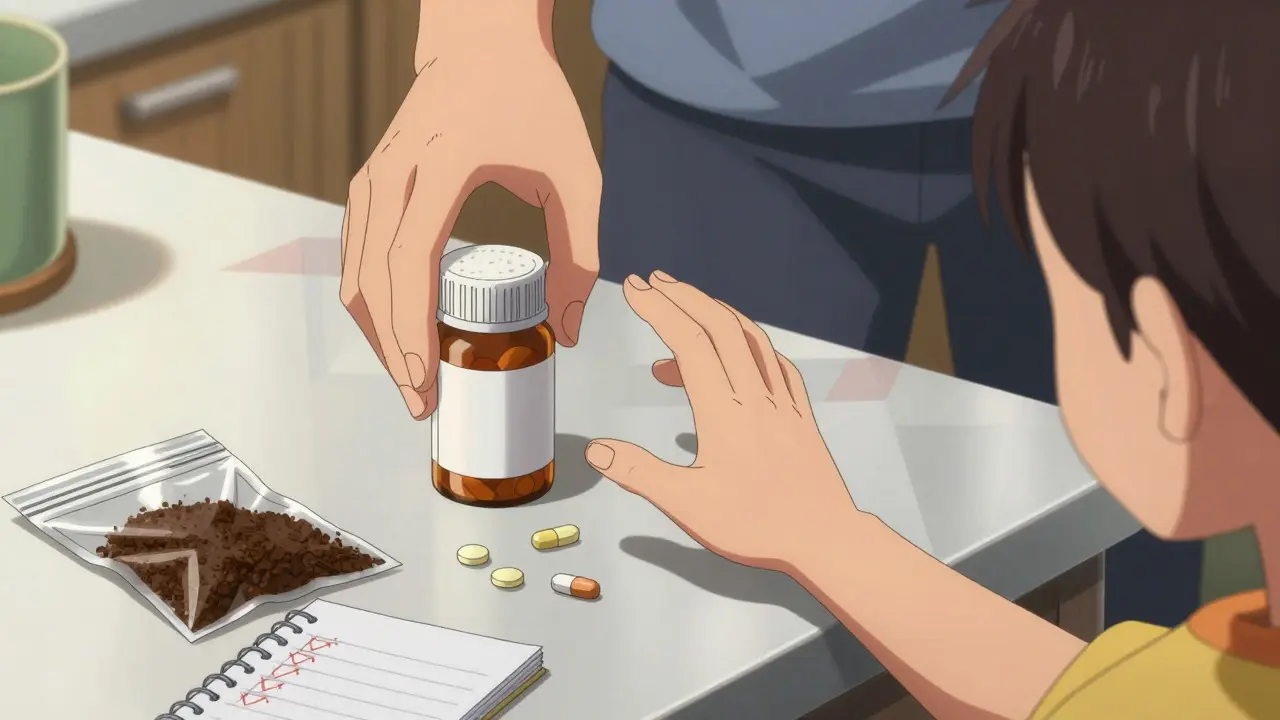
- Mix it up: Combine the medications with an unpalatable substance like cat litter, used coffee grounds, or dirt. A ratio of two parts grounds to one part medication works well.
- Seal it tight: Place the mixture in a sealed plastic bag or container so nothing leaks out.
- Hide the info: Scratch out all personal information on the original prescription labels to protect your privacy. Studies show 97% of parents fail to do this, risking identity theft.
- Throw it away: Put the sealed bag in your household trash.
For liquids, pour them into the absorbent material (like cat litter) before sealing. This prevents spills and accidental ingestion.
Option 3: Flushing (Only Specific Drugs)
Yes, flushing is sometimes recommended-but only for highly potent opioids or drugs that are extremely dangerous if misused. The FDA maintains a specific "flush list" of about 15 drugs. Unless your medication is on this list, avoid flushing. Why? Because pharmaceutical compounds end up in our water supply. USGS studies detected 82 different drug residues in 80% of U.S. waterways, affecting aquatic life and potentially human health downstream. Environmental protection matters too.
| Method | Safety Level | Environmental Impact | Convenience | Best For |
|---|---|---|---|---|
| Take-Back Program | High | Low | Medium | All medications, controlled substances |
| Household Trash | Medium | Medium | High | Most non-controlled OTC and Rx drugs |
| Flushing | High (for misuse) | High | High | Only FDA Flush List drugs (e.g., fentanyl patches) |
Preventing Future Risks: Smart Storage Habits
Disposing of old meds is crucial, but preventing accidents starts with how you store current ones. Child-resistant packaging sounds secure, but it’s not foolproof. Testing by the Consumer Product Safety Commission showed that 62% of children aged 4 to 5 can open these containers in under a minute. They’re designed to slow kids down, not lock them out completely.
To truly safeguard your home, follow these AAP-recommended practices:
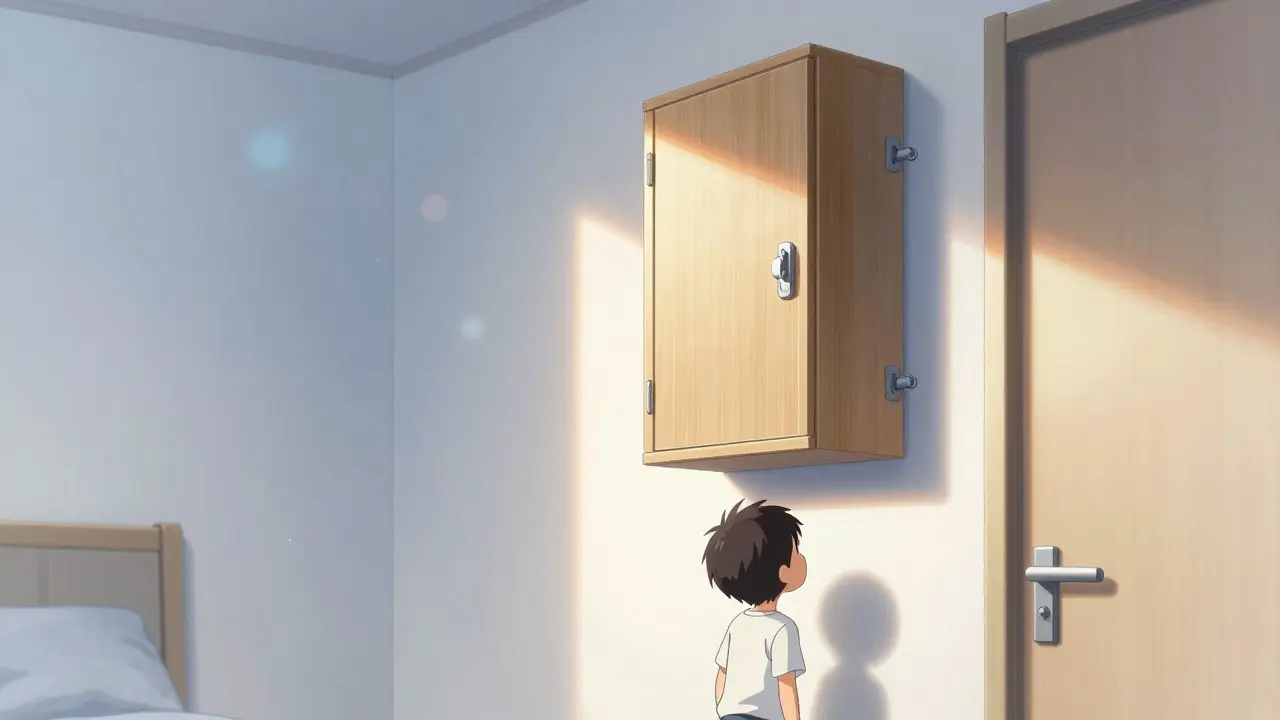
- Store High and Locked: Keep all medicines in a locked cabinet placed higher than 5 feet off the ground. Data shows that 78% of pediatric poisonings involve meds stored below this height.
- Keep Original Containers: Never transfer pills to generic jars. The original label has critical info like dosage instructions and expiration dates. Only 58% of parents currently do this.
- Audit Regularly: Set a reminder to check expiration dates monthly for liquids and quarterly for solids. Establishing a routine makes it easier to catch expired items before they’re needed.
- Control Temperature: Store meds in a cool, dry place away from sunlight. Avoid bathrooms and kitchens if possible. A bedroom closet or hallway shelf is ideal.
Technology is also helping. New smart cabinets with QR codes and expiration tracking apps are becoming available. While not everyone needs high-tech solutions, using a simple calendar alert on your phone to review your medicine cabinet every season can save headaches-and money.
What To Do If Your Child Ingests Expired Medicine
If you suspect your child has swallowed expired medication, stay calm but act quickly. Symptoms vary widely depending on the drug, but watch for signs like vomiting, lethargy, difficulty breathing, or unusual behavior. Call Poison Control immediately at 1-800-222-1222 (in the US) or your local emergency number. Have the medication container ready to provide details on the drug name, strength, and approximate amount ingested. Most cases are managed successfully, but timely advice is critical.
Can I give my child medicine that is one month past its expiration date?
Generally, no. While some solid tablets might retain potency slightly longer, liquid formulations like antibiotics can degrade rapidly and even grow bacteria within weeks. The FDA advises against using any expired medication for children due to unpredictable chemical changes and reduced efficacy.
Is it safe to flush expired children's medicine down the toilet?
Only if the drug is on the FDA's specific "flush list," which includes highly addictive or dangerous opioids. For most other medications, flushing contaminates water supplies. Instead, use a take-back program or mix with coffee grounds and seal in trash.
Where can I find a drug take-back location near me?
You can search for permanent collection sites via the DEA’s website or call your local pharmacy. Major chains like CVS and Walgreens often have disposal kiosks. Additionally, many communities host semi-annual National Prescription Drug Take Back Days.
Do child-proof caps really keep kids safe from medicine?
They help, but they aren't perfect. Studies show over 60% of 4-to-5-year-olds can open child-resistant containers in under a minute. For true safety, store medicines in a locked cabinet located high up, out of reach and sight of children.
How long does liquid antibiotic last after opening?
Most liquid antibiotics should be discarded 14 days after opening, regardless of the printed expiration date. They lose potency quickly and can become contaminated with bacteria if kept longer. Always refrigerate if required and mark the start date on the bottle.