
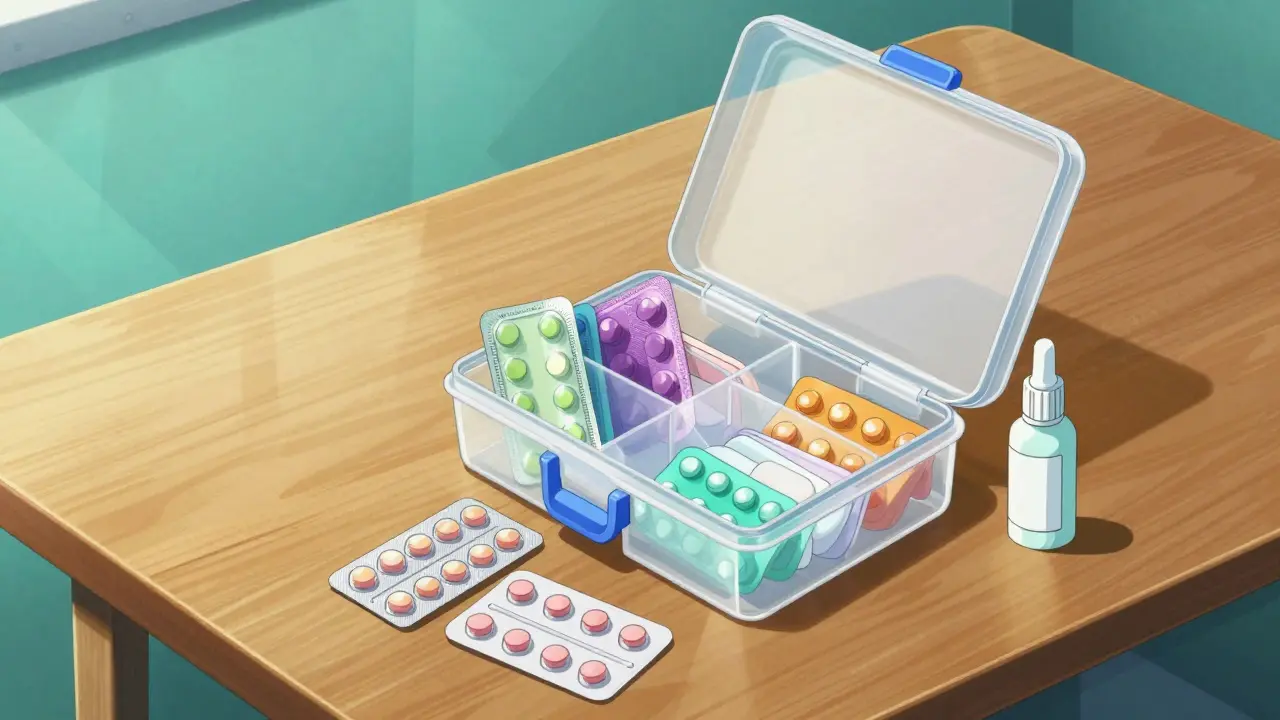
Imagine landing in a beautiful foreign city, only to spend your first three days locked in a hotel bathroom with a brutal case of traveler's diarrhea. Or perhaps you're hiking a trail in the Alps and a small blister turns into a distracting pain that ruins your trek. These aren't just inconveniences; they're trip-killers. You don't need to pack your entire medicine cabinet, but having a curated travel medication kit means you can handle a sudden fever or a nasty insect bite without spending four hours hunting for a pharmacy in a language you don't speak.
| Category | Must-Haves | Why It Matters |
|---|---|---|
| Pain & Fever | Ibuprofen, Acetaminophen | Headaches, muscle aches, fevers |
| Stomach Issues | Loperamide, Oral Rehydration Salts | Diarrhea and dehydration |
| Allergies | Loratadine, Hydrocortisone cream | Hives, itchy bites, seasonal allergies |
| Wound Care | Bandages, Antiseptic, Antibacterial ointment | Cuts, scrapes, and blister prevention |
Building Your Core Medication Base
Every kit starts with the basics. You want medications that handle the most common "glitches" of travel. For pain and inflammation, Ibuprofen is a go-to for reducing swelling and treating pain, usually packed in 200-400mg doses. If you have a sensitive stomach or need something for a fever, Acetaminophen (commonly known as Tylenol) is the better bet. Most experts suggest packing at least 10 tablets of each to cover a few days of illness.
Digestive issues are perhaps the most common travel ailment. To stop the "emergency" side of things, pack Loperamide (found in Imodium). This antidiarrheal agent helps slow down your system. However, the real secret to recovering from stomach bugs is hydration. Don't just rely on bottled water; carry WHO-formulated Oral Rehydration Salts (ORS). These packets replace the electrolytes you lose, preventing the dizzy, exhausted feeling that comes with dehydration.
For those who react to everything from new laundry detergents in hotels to exotic pollen, an antihistamine is non-negotiable. Loratadine or Cetirizine (10mg) provide non-drowsy relief for allergies. Pair these with a 1% Hydrocortisone cream to soothe itchy insect bites or contact dermatitis.
Wound Management and First Aid Essentials
You don't need a full surgical suite, but a few specific items can prevent a small cut from becoming a major infection. Start with an assortment of adhesive bandages in various sizes-you'll use more than you think. Add a few 4x4 inch gauze pads and a roll of medical tape for larger scrapes.
Cleaning the wound is where most people fail. Avoid using harsh alcohol which can damage tissue; instead, use a Antiseptic wound cleaner like chlorhexidine or povidone-iodine. Once clean, apply a thin layer of antibacterial ointment-look for ingredients like Bacitracin or Neomycin to keep the area protected and moist for faster healing.
Customizing Your Kit for the Destination
A trip to a snowy village in Switzerland requires different tools than a beach holiday in Thailand. If you're heading to the mountains, consider Acetazolamide, which helps your body adjust to lower oxygen levels and prevents altitude sickness. For tropical regions, a DEET-based insect repellent (20-30% concentration) is a must to ward off mosquitoes carrying diseases like Dengue or Zika.
If you're venturing into areas where the tap water is questionable, don't gamble with your health. Include water purification tablets. Similarly, if you're planning a lot of walking or hiking in a national park, add specialized blister pads. These act as a second skin, preventing the friction that leads to painful sores.
Handling Prescriptions and Chronic Conditions
If you take daily medication, the biggest risk isn't just running out-it's losing your supply. A smart rule of thumb is to pack twice as much as you need. Divide this amount into two separate bags: one in your carry-on and one in your checked luggage. If your suitcase disappears, you still have a few days of medication to get you through the crisis.
For those with chronic conditions, documentation is your safety net. If you are diabetic and carry needles or syringes, obtain a formal letter from your doctor explaining the medical necessity. This prevents stressful encounters with customs agents. Always carry a printed list of your medications using their Generic Names. Brand names change by country, but the chemical name is universal. A pharmacist in Tokyo might not recognize a US brand name, but they'll know exactly what the generic version is.
Organization and Legal Logistics
Avoid the "pill soup" effect where all your meds end up in one giant, unlabeled bag. Keep medications in their original packaging whenever possible. This is not just for organization-it's a legal requirement in many countries. If a customs officer sees a bottle with a professional pharmacy label, they're much less likely to question the contents.
Store everything in a waterproof, squash-proof container, like a clear plastic hard-shell box. Be mindful of temperature; medications like insulin can break down if they hit 86°F (30°C). Keep your kit in the coolest part of your luggage and away from direct sunlight.
Be aware that some countries have incredibly strict laws. Japan, for example, prohibits certain common cold medicines containing pseudoephedrine. Before you fly, it's a good idea to check with the embassy or consulate of your destination to ensure your "essential" meds aren't actually illegal there.
How much medication should I pack for a two-week trip?
As a general rule, pack enough for your intended stay plus an extra week's worth of prescriptions. This provides a buffer for travel delays or lost luggage. For over-the-counter items like pain relievers, a 10-20 count of each basic type is usually sufficient for most travelers.
Can I carry all my medical supplies in my carry-on?
Most medications are fine in carry-on bags. However, be careful with tools. Items like scissors, large tweezers, or safety pins may be flagged by TSA or international security. It is safer to pack these sharp tools in your checked luggage while keeping the actual medicines with you.
What should I do if I lose my prescription medication abroad?
This is why you should carry a printed list of your medications with generic names and a copy of your prescriptions. Take these documents to a local pharmacy or clinic. Having the generic name allows the local doctor to find an equivalent medication available in that country.
Are there special considerations for traveling with infants?
Yes. Standard adult doses are dangerous for children under 2. You must use infant-specific formulations and dosages. Consult your pediatrician to determine the exact dosage based on your child's weight before you pack your kit.
Do I need a doctor's note for my medications?
While not always required for basic meds, it is highly recommended for international travel, especially for controlled substances or injectable medications (like insulin). A letter stating the medicine is for personal use, the dose, and the medical necessity can prevent significant delays at customs.
Next Steps for Your Journey
Before you zip your suitcase, schedule a quick visit with your primary care provider. Check if you're up to date on vaccines for your specific destination. If you're heading to a region with high malaria or yellow fever prevalence, this is the time to get your prescriptions. Finally, create a "contact card" with the addresses and phone numbers of your family, your doctor, and the nearest embassy in your destination city. Keep this card in your wallet, not just on your phone.
Comments
Joshua Nicholson
most of this is common sense but whatever i guess it's okay for people who have never traveled before
On April 17, 2026 AT 15:22
Agatha Deo
Oh, absolutely. Just trust the big pharma-approved list provided by the internet. I'm sure the "recommended" antiseptics aren't just designed to keep you dependent on the healthcare system while you're conveniently trapped in a foreign country. How quaint that people actually believe a generic list can cover the complexities of biological warfare we call "local bacteria" 🙄
On April 17, 2026 AT 17:22
Maggie Graziano
dont trust the tablets they track you with chemicals
On April 19, 2026 AT 15:30
Anmol Garg
It's really about finding a balance between being prepared and not letting fear dictate your journey. I've found that carrying a small notebook with a few local phrases for "pharmacy" or "doctor" can be just as healing as the medicine itself because it connects you with the locals in a moment of vulnerability. We are all just humans trying to navigate a strange world, and a little bit of empathy goes a long way when you're feeling sick in a place where you don't know the language.
On April 20, 2026 AT 03:45
Rob Schlautman
imagine thinking a 4x4 gauze pad is a game changer in the real world when you're actually out there in the wilderness and you realize that the sheer incompetence of most travelers is the real disease they should be packing for because honestly nobody reads the fine print on the labels anyway and they just pop pills like candy without a second thought to the side effects which is just typical of the modern age of laziness where we want a quick fix for everything without actually understanding the biological mechanism of the cure
On April 21, 2026 AT 03:03
ira fitriani
Omg yes!! 🌟 I once forgot my allergy meds in Bali and I was literally fighting for my life against every single flower in the jungle! 🌸 It was a complete nightmare but I survived! definitely pack the Loratadine or you'll be a sneezing mess for the whole trip! 😭✈️
On April 21, 2026 AT 09:13
Nell O'Leary
The point about generic names is a high-value insight. In my experience with cross-functional medical logistics, utilizing the INN (International Nonproprietary Name) minimizes the friction in procurement at foreign points of care. Very efficient approach! :)
On April 21, 2026 AT 14:02
Heer Malhotra
It is a matter of national pride that our own traditional Ayurvedic remedies are far superior to these synthetic Western chemicals. One should prioritize the holistic wisdom of Indian medicine over a simple list of tablets if they wish to maintain true health while traversing the globe.
On April 22, 2026 AT 09:05
Nathan Berlin
Indian pharma is literally carrying the world on its back while you guys just brag about your brand names 🙄🇮🇳 we make the generics you all rely on so maybe show some real respect to the source of your meds lmao
On April 23, 2026 AT 01:43
Sophia Rice
I always forgt to pack a small pair of tweezers but they are so helpful for splinters when you're walking in the woods! Just a litle tip for everyone else!
On April 23, 2026 AT 14:53
Rock Stone
Just keep it simple and don't overthink it. Pack the basics and enjoy the ride. The world is a friendly place if you just go with the flow!
On April 25, 2026 AT 01:26
Ben Ferguson
I remember a trip to the Andes where the altitude hit me like a freight train and I felt as though my lungs were being squeezed by a giant invisible hand, and I must say that having that specific medication mentioned here was the only thing that kept me from spending my entire vacation staring at the ceiling of a dim hotel room in complete misery while my companions were out exploring the ruins!
On April 25, 2026 AT 11:49
Josephine Wyburn
I tried to pack my kit but then I realized my suitcase was slightly too heavy and I had a complete emotional breakdown in the middle of my bedroom because I just felt like the universe was conspiring against my vacation and I spent three hours crying about how I'm just not organized enough for international travel and then I accidentally dropped my bottle of Ibuprofen on the floor and they all rolled under the dresser which was just the cherry on top of a very stressful morning 😭💔
On April 25, 2026 AT 12:27
Bonnie Piersall
That's a powerhouse of a list! Get your gear sorted and crush those travel goals! A little preparation now means zero stress later, so let's get those kits packed and get moving!
On April 26, 2026 AT 13:57