
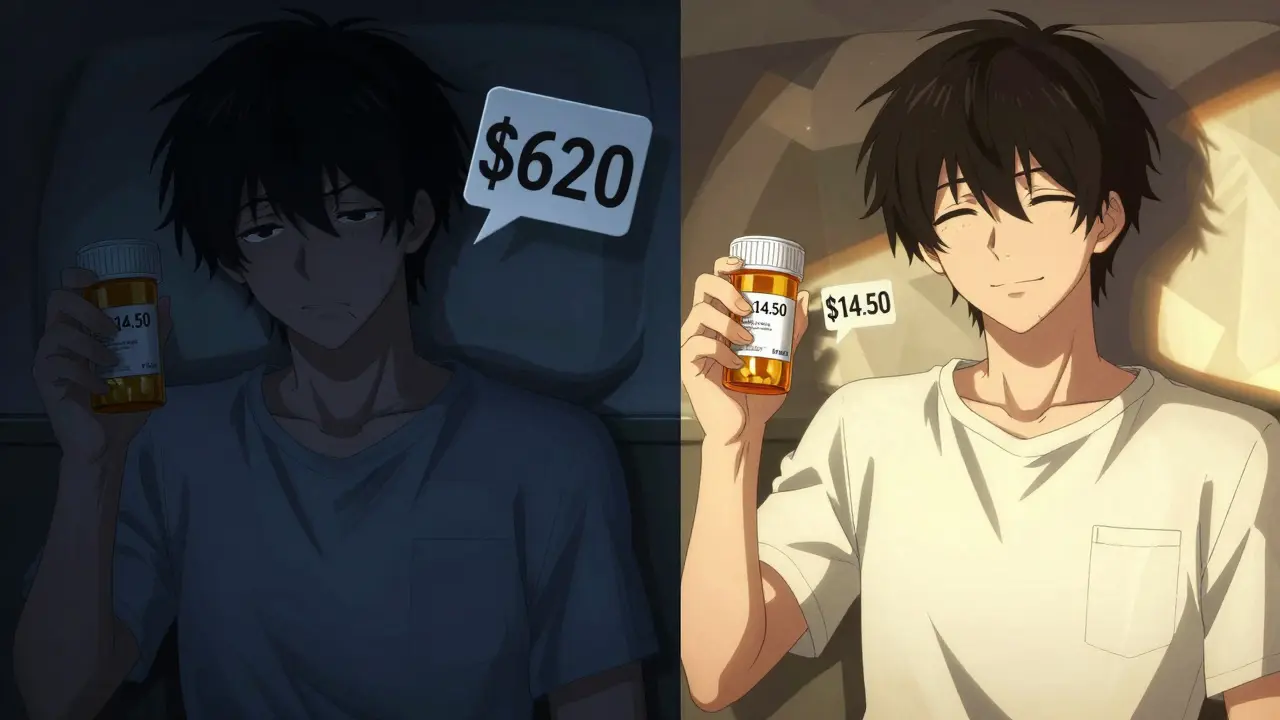
Imagine paying $620 for a prescription when you could get the exact same therapeutic result for $14.50. That is not a hypothetical scenario; it is the daily reality for millions of patients who choose generic medications are pharmaceutical products that contain the same active ingredients, strength, dosage form, and route of administration as their brand-name counterparts. The hesitation to switch often stems from a fear that "cheaper" means "worse." But does lower price actually mean lower safety? The short answer is no. In fact, generics save the U.S. healthcare system an estimated $370 billion annually, according to the Association for Accessible Medicines, while maintaining rigorous safety standards.
To understand why you can trust these alternatives, we need to look past the pill bottle’s label and into the science of how they are approved, tested, and manufactured. This guide breaks down exactly how generics work, where the risks truly lie, and how you can maximize your savings without compromising your health.
The Science Behind Generic Equivalence
The foundation of generic drug safety lies in the concept of bioequivalence. When a pharmaceutical company wants to release a generic version of a brand-name drug, they cannot simply claim it works. They must prove it through rigorous testing mandated by the U.S. Food and Drug Administration (FDA) is the federal agency responsible for protecting public health by ensuring the safety, efficacy, and security of human and veterinary drugs.. Under the Hatch-Waxman Act of 1984, manufacturers must submit an Abbreviated New Drug Application (ANDA). This application requires demonstrating that the generic drug’s absorption rate and extent fall within 80-125% of the brand-name drug’s pharmacokinetic profile.
This might sound like a wide margin, but in pharmacological terms, it is considered clinically insignificant for most drugs. For medications with a narrow therapeutic index (NTI)-such as warfarin, levothyroxine, or phenytoin-the FDA enforces even stricter standards, requiring the range to be between 90-111%. These NTI drugs have a very small window between being effective and becoming toxic, so the margin for error is virtually non-existent. The FDA conducts approximately 1,800 domestic and foreign facility inspections annually to ensure that manufacturing facilities comply with Current Good Manufacturing Practices (cGMP), which are identical to those required for brand-name drugs.
The key takeaway here is that the active ingredient-the part of the drug that treats your condition-is chemically identical. The only differences allowed are in inactive ingredients, such as colors, flavors, and preservatives. These excipients do not affect the therapeutic outcome, though they may occasionally cause minor variations in side effects for sensitive individuals.
Cost Comparison: Brand vs. Generic
The financial argument for generics is overwhelming. A 2022 report on the Generic Drug User Fee Amendments (Gdufa) highlighted that generic versions typically cost 80-85% less than their brand-name equivalents. Let’s look at some real-world examples to illustrate this disparity:
| Drug Name | Brand-Name Cost (30-day supply) | Generic Cost (30-day supply) | Savings Percentage |
|---|---|---|---|
| Atorvastatin (Lipitor) | $450 | $0.50 | ~99.9% |
| Clopidogrel (Plavix) | $380 | $1.20 | ~99.7% |
| Average Prescription | $620 | $14.50 | ~97.7% |
These savings are not just pocket change; they are transformative for long-term health management. A 2024 survey by the Generic Pharmaceutical Association found that 72% of patients saved $500 or more annually by using generics. More importantly, 89% of users who switched to generics maintained adherence to their medication regimens, compared to only 67% who remained on brand-name drugs due to cost concerns. When medication is too expensive, people skip doses. Generics solve this accessibility issue, directly improving public health outcomes.
Safety Profile and Clinical Evidence
Despite the cost benefits, skepticism remains. Is there any hard evidence that generics are less safe? The data suggests otherwise. A landmark 2020 study published in *Nature Communications* analyzed 17 cardiovascular drugs and found that generic formulations were associated with significantly fewer deaths in 10 of those 17 drugs. Furthermore, there were fewer major adverse cardiovascular events (MACCE) in 11 of the 17 drugs studied. Dr. Niteesh Choudhry, Director of the Center for Population Health at Brigham and Women’s Hospital, stated in a 2019 Harvard Health report that "there is really no hard proof at this point that generic medications are any less effective or safe than the originals."
However, nuance is important. A 2023 meta-analysis identified exceptions, noting a slightly higher risk of major adverse cardiac events with generic statins compared to brand-name versions in some cases. Conversely, other studies, including a 2024 analysis from the University of California San Francisco tracking 2.3 million patients, suggested that generic statins demonstrate equivalent efficacy when consistent manufacturers are maintained. This highlights a critical point: the issue is rarely the generic molecule itself, but rather consistency in sourcing and individual patient variability.
User experiences also reflect this mixed but predominantly positive feedback. On Reddit’s r/Pharmacy community, 78% of respondents reported identical therapeutic effects with generics versus brand-name drugs. However, 15% noted minor side effect differences that resolved within a few weeks. This variance is often linked to inactive ingredients or placebo/nocebo effects, where expectations influence perception.

Navigating Risks: Narrow Therapeutic Index Drugs
While most generics are seamlessly interchangeable, certain medications require extra caution. These are known as Narrow Therapeutic Index (NTI) drugs. As mentioned earlier, drugs like warfarin (a blood thinner), levothyroxine (for thyroid conditions), and phenytoin (an antiepileptic) have very tight margins for safety. Even small fluctuations in blood concentration can lead to serious complications.
For these specific medications, the American Medical Association’s 2022 best practices guide advises physicians to avoid multiple generic switches. A study in *JAMA Internal Medicine* found that switching manufacturers for warfarin increased INR instability by 18%. If you are prescribed an NTI drug, discuss with your doctor whether you should stick to a single manufacturer. You can monitor this by checking the imprint code on your pills, which identifies the manufacturer. The FDA’s Orange Book database allows you to verify which companies produce specific generics.
Additionally, if you experience unexpected side effects after switching to a generic, do not assume the drug is unsafe. It could be an reaction to an inactive ingredient like a dye or filler. Consult your pharmacist. They can often source a generic from a different manufacturer that uses different excipients, providing the same active benefit without the irritant.
Practical Steps to Maximize Savings and Safety
You don’t need to be a pharmacist to navigate the world of generics effectively. Here are actionable steps to ensure you get the best value without risking your health:
- Ask for Substitution: In 49 U.S. states, pharmacists are legally allowed to substitute a brand-name drug with a generic unless the physician explicitly prohibits it. Always ask, "Is there a generic available for this prescription?"
- Verify the Manufacturer: Use the FDA’s Drugs@FDA database to check if the generic comes from an FDA-inspected facility. Look for the National Drug Code (NDC) on your bottle to identify the manufacturer.
- Maintain Consistency: If you find a generic that works well for you, try to stick with the same manufacturer. Frequent switching can sometimes lead to variability in how your body responds, especially for NTI drugs.
- Monitor Your Body: When switching from brand to generic, pay attention to your symptoms for the first two weeks. Note any changes in effectiveness or new side effects. Keep a simple log to share with your doctor if issues arise.
- Use Price Comparison Tools: Platforms like GoodRx provide real-time pricing for both brand and generic options across different pharmacies. Sometimes, a mail-order pharmacy offers better rates for chronic medications.
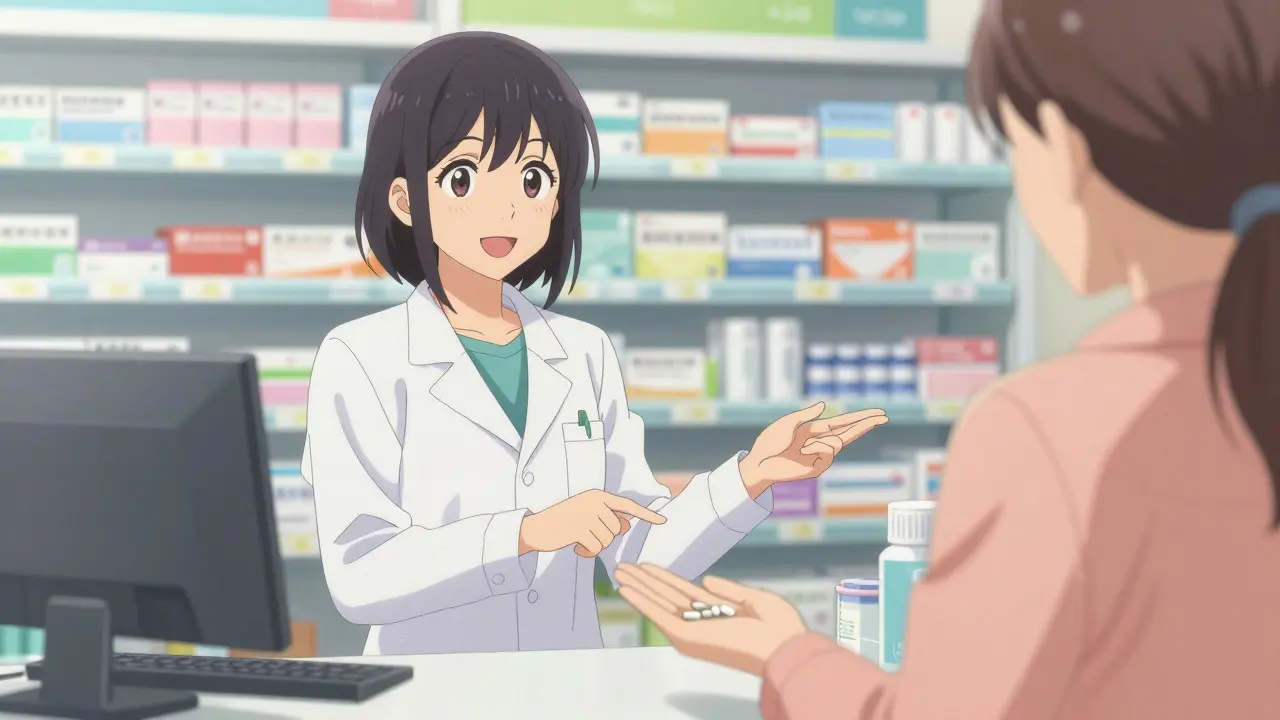
Pharmacists are your best ally in this process. A 2023 University of Michigan study demonstrated that patients who received structured counseling about generics from pharmacists had 32% higher adherence rates and 27% fewer medication-related problems. Don’t hesitate to ask them questions like, "Does this medication have multiple generic manufacturers?" or "Are there any known issues with this specific generic formulation?"
The Future of Generics and Biosimilars
The landscape of affordable medication is expanding beyond traditional small-molecule generics. Enter biosimilars-complex generic versions of biologic drugs used to treat conditions like cancer, rheumatoid arthritis, and Crohn’s disease. While biologics are made from living cells and are more complex to replicate, biosimilars must demonstrate high similarity to the reference product with no clinically meaningful differences in safety, purity, and potency.
As of March 2024, 32 biosimilars have been approved in the U.S. The Generic Pharmaceutical Association projects that biosimilars will generate $300 billion in savings by 2030. With major patents expiring for blockbuster drugs like Eli Lilly’s Trulicity and AbbVie’s Skyrizi in 2024, the availability of these high-cost treatments is set to democratize access further. Regulatory bodies like the FDA and the European Medicines Agency continue to refine oversight, with the FDA’s 2024 launch of the Generic Drug Shortage Task Force aiming to enhance supply chain resilience and prevent disruptions.
Conclusion
Choosing generic medications is one of the most impactful decisions you can make for your financial and physical well-being. Backed by rigorous FDA standards, extensive clinical data, and billions in proven savings, generics offer a safe, effective, and accessible alternative to brand-name drugs. By understanding the nuances of bioequivalence, recognizing the needs of narrow therapeutic index drugs, and actively engaging with your healthcare providers, you can confidently embrace generics. You are not sacrificing safety; you are smartly managing your health in an increasingly complex medical economy.
Are generic drugs exactly the same as brand-name drugs?
Generic drugs contain the same active ingredients, strength, dosage form, and route of administration as brand-name drugs. They must meet the same FDA standards for quality, safety, and effectiveness. The only differences are in inactive ingredients like colors or flavors, which do not affect therapeutic outcomes.
Why are generic drugs so much cheaper than brand-name drugs?
Brand-name drugs require massive investment in research, development, and marketing, costs recouped during the patent period. Generic manufacturers do not bear these initial R&D costs. Once the patent expires, competition among generic producers drives prices down significantly, often by 80-85%.
Can I switch between different generic manufacturers?
For most drugs, yes. However, for Narrow Therapeutic Index (NTI) drugs like warfarin or levothyroxine, frequent switching between manufacturers can cause variability in blood levels. It is recommended to maintain consistency with a single manufacturer for NTI drugs to ensure stable therapeutic effects.
What should I do if I experience side effects after switching to a generic?
Contact your pharmacist or doctor. Side effects may be due to inactive ingredients in the generic formulation. Your pharmacist can often source a generic from a different manufacturer with different excipients. Do not stop taking your medication without consulting your healthcare provider.
Are biosimilars as safe as traditional generics?
Yes. Biosimilars are highly similar to existing biologic medicines and undergo rigorous FDA review to ensure no clinically meaningful differences in safety, purity, or potency. They are expected to provide the same clinical benefit as the reference product, offering significant cost savings for complex therapies.