
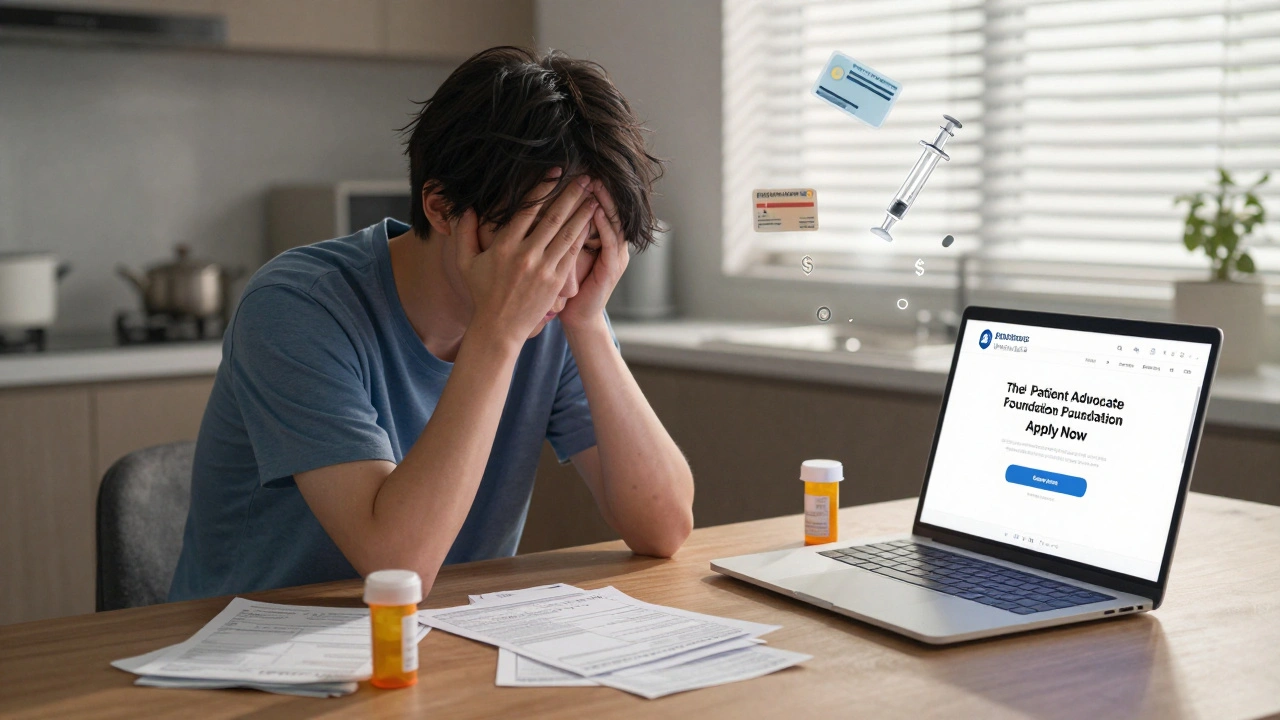
Why Medication Costs Are Breaking People’s Budgets
Imagine you’re prescribed a life-saving drug. It works. It’s essential. But the monthly co-pay is $800. You’re insured. You have a job. You still can’t afford it. This isn’t rare. In 2025, nearly 1 in 4 Americans skip or cut back on prescriptions because of cost. Even people with insurance are getting hit by high deductibles, formulary restrictions, and surprise charges. That’s where patient advocacy foundations step in-not as a last resort, but as a real, working solution.
What Are Patient Advocacy Foundations?
Patient advocacy foundations are nonprofit groups that help people pay for medications they can’t afford. They’re not pharmaceutical companies. They’re not government programs. They’re independent organizations that pool donations and grants to cover out-of-pocket costs. The biggest and most well-known is the Patient Advocate Foundation (a national nonprofit founded in 1996 that provides direct financial aid and case management to patients with serious illnesses). They run multiple programs, including the Co-Pay Relief Program (a fund that helps insured patients pay for co-pays, coinsurance, and deductibles on specific medications), and condition-specific grants for diseases like cancer, sepsis, and thyroid eye disease.
These foundations don’t give cash to patients. They pay the pharmacy or provider directly. That means no risk of misuse. No delays. Just the medication delivered.
Who Qualifies for These Grants?
Eligibility isn’t about being poor. It’s about being stuck. You don’t need to be uninsured. In fact, the Co-Pay Relief Program is designed for people who are insured but still can’t afford their share.
Here’s what you need to qualify for most PAF grants:
- A confirmed diagnosis of a serious, chronic, or life-threatening condition
- Proof you’re in active treatment-or starting within the next 60 days
- U.S. citizenship or permanent residency
- Treatment received in the U.S. or a U.S. territory
- Proof of income (tax returns, pay stubs, or a signed financial hardship letter)
- For co-pay relief: active commercial insurance covering the medication
Some funds have extra rules. For example, the Sepsis/ARDS/TSS fund requires your application to be submitted within 6 months of diagnosis. The Thyroid Eye Disease fund limits grants to $10,000 per year. You need to check the specific program you’re applying for.
How to Apply: Step-by-Step
- Find the right program - Go to www.patientadvocate.org and click on "Financial Aid Funds" or "Co-Pay Relief." Use the search tool to find your condition. If your medication isn’t listed, check if your diagnosis qualifies for a broader fund.
- Gather documents - You’ll need: your diagnosis letter from your doctor, proof of income, your insurance card, and your most recent tax return. If you’re unemployed, a letter from your employer or a benefits statement works.
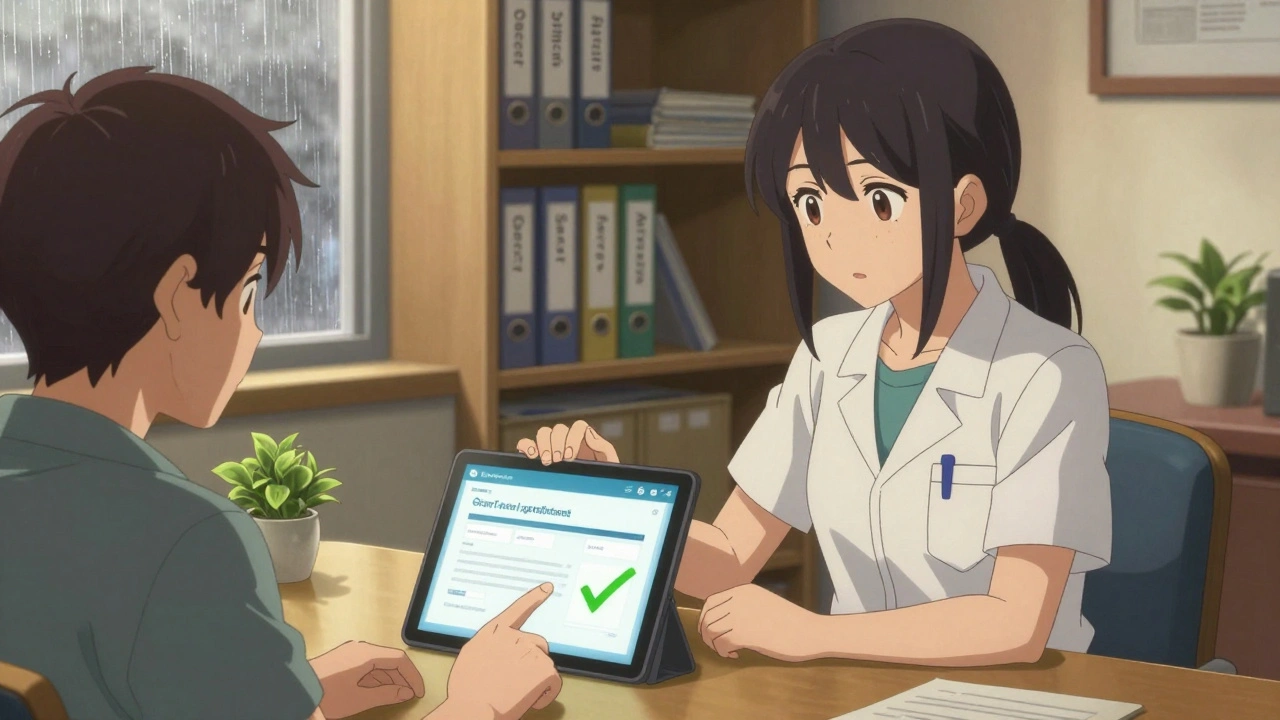
- Get your doctor to help - Most applications require your provider to complete a form verifying your diagnosis, treatment plan, and medication. Don’t wait until the last minute. Doctors are busy. Give them at least 5 business days.
- Submit your application - You can apply online or by phone. Online is faster. Phone support is available at 1-800-532-5274 for general questions. For condition-specific funds, use the dedicated numbers: 855-824-7941 for Sepsis, 844-462-8072 for Caregiver Support.
- Wait and follow up - Most decisions take 7-14 days. If you don’t hear back, call. Funds are limited. If your application is denied, ask why. Sometimes it’s a missing form, not a lack of need.
What Happens After You’re Approved?
If you’re approved, the grant is sent directly to your pharmacy or provider. You won’t get a check. You won’t have to pay anything out of pocket for the covered medication. The amount varies. For co-pay relief, it can cover up to $10,000 annually per medication. For broader financial aid, grants are usually $500-$3,000 per year, depending on fund availability.
Some programs, like the Caregiver Support fund, send payments to the caregiver if the patient can’t manage their own finances. That’s important to know if you’re helping a parent or loved one.
When Funds Run Out-What Then?
This is the hard truth: funding is not guaranteed. Most programs are donor-funded and run on a first-come, first-served basis. Once a fund is depleted, applications close. They don’t reopen until the next month. For example, the Co-Pay Relief fund for multiple myeloma might close on the 12th of the month and not reopen until the first business day of the next.
Here’s how to beat the system:
- Apply early in the month. Don’t wait until the 25th.
- Set a calendar reminder to check the website every 30 days. Funds refill monthly.
- If your fund is closed, check if another fund under PAF covers your condition. You might qualify for more than one.
- Don’t give up. Many people get approved on their second or third try.
How PAF Compares to Other Options
There are other ways to get help with medication costs. Here’s how PAF stacks up:
| Program Type | Who It Helps | Coverage | Limitations |
|---|---|---|---|
| Patient Advocate Foundation | Insured and uninsured patients | Co-pays, deductibles, non-medication costs (transport, lodging) | Funds deplete quickly; not all conditions covered |
| Pharmaceutical Company PAPs | Uninsured or underinsured patients | Free medication for their specific drug | Only covers one manufacturer’s drug; strict income limits |
| Medicaid/Medicare | Low-income or elderly patients | Partial or full coverage based on eligibility | Long wait times; complex paperwork; not available to everyone |
| State Assistance Programs | Residents of specific states | Varies by state; often limited to seniors or disabled | Only available in some states; funding varies yearly |
PAF stands out because it helps people with multiple medications from different companies. If you’re on five drugs and can’t afford any of them, PAF might be your only option. Pharmaceutical PAPs only cover their own drugs. Medicaid won’t help if your income is $10,000 over the limit. PAF doesn’t care about that.
What to Do If You’re Denied
Denial doesn’t mean you’re not eligible. It often means you missed a step.
- Did you submit your doctor’s form? Many applications fail because the provider didn’t complete it.
- Did you send the right tax documents? A 2023 IRS form won’t work if you submitted a 2022 version.
- Is your diagnosis code correct? Some funds require specific ICD-10 codes.
- Did you apply during an open funding window?
Call PAF’s case management team. They’ll review your file and tell you exactly what’s missing. They’ve helped thousands of people get approved after a first denial.
Real Stories, Real Help
One woman in Ohio had stage 4 breast cancer. Her insurance covered the chemo, but the co-pay was $900/month. She couldn’t afford rent and meds at the same time. She applied to PAF’s Co-Pay Relief Program on the 3rd of the month. Got approved in 10 days. Her co-pay dropped to $0. She kept her apartment. She finished treatment.
A man in Texas with rheumatoid arthritis needed a biologic that cost $12,000 a year. His insurance covered 70%. He was stuck with $3,600. He applied to PAF’s arthritis fund. Got $3,000. He paid the rest with a payment plan. He’s still working.
These aren’t outliers. They’re everyday people who used a system designed to help them.
Final Tips for Success
- Start early. Don’t wait until your prescription runs out.
- Keep copies of everything. Emails, forms, letters.
- Use PAF’s case managers. They’re free. They know the system inside out.
- Check the website every month. Funds refill on the first business day.
- Don’t assume you don’t qualify. Many people think they make too much money-until they see the actual income limits.
Medication shouldn’t be a luxury. It’s medicine. And if you need it, you deserve it. Patient advocacy foundations exist to make sure that’s true.
Can I get a medication grant if I have Medicare?
Yes, but only if you’re on a Medicare Advantage plan with high out-of-pocket costs. PAF’s Co-Pay Relief Program does not help with traditional Medicare Part D. However, their broader Financial Aid Funds may help with non-medication expenses like travel to treatment or home care. Check eligibility for your specific condition.
How long does a grant last?
Most grants are awarded for one year. You’ll need to reapply annually. Some funds, like the Co-Pay Relief Program, allow you to reapply each month if funds are available. Others, like the Sepsis fund, require a new diagnosis letter each time. Always confirm renewal rules with the specific program.
Do I need to pay back the grant?
No. These are grants, not loans. You don’t owe anything back, even if your financial situation improves later. The money comes from donations, not government funds, so there’s no repayment requirement.
Can I apply for multiple grants at once?
Yes. You can apply to PAF’s Co-Pay Relief Program and their Financial Aid Funds at the same time. You can also apply to pharmaceutical company programs and state assistance programs in parallel. Just make sure you’re not double-dipping on the same medication-most programs require you to disclose other aid you’re receiving.
What if I’m not a U.S. citizen?
The Patient Advocate Foundation only serves U.S. citizens and permanent residents. If you’re not eligible, look into local charities, religious organizations, or hospital financial aid offices. Some hospitals offer sliding-scale payment plans regardless of immigration status.
Where to Go Next
If you’re struggling with medication costs, start with www.patientadvocate.org. Bookmark it. Check it monthly. Talk to your doctor about it. Ask your pharmacist if they know of any local funds. You’re not alone. Thousands of people get help every month. You just need to take the first step.
Comments
Mellissa Landrum
lol so now the government's gonna pay for your drugs? next they'll pay for your Netflix too. this is socialism with a side of pity. i've got a job and i pay my bills. why should i fund your $800 co-pay? the system's broken but this ain't the fix. #AmericaFirst
On December 4, 2025 AT 20:38
Mark Curry
it's strange how we treat medicine like a luxury. if you need a pill to live, it's not a privilege. it's biology. these foundations are just filling the gaps where profit got in the way of care. i'm not angry. just... sad we need them at all.
On December 6, 2025 AT 09:56
Manish Shankar
Respected sir/madam, I find your detailed exposition on patient advocacy foundations both enlightening and profoundly humane. In my country, India, such structured nonprofit assistance remains largely inaccessible to the majority. Your framework offers a model of dignity in healthcare delivery that deserves global emulation. Thank you for your clarity and compassion.
On December 6, 2025 AT 09:59
luke newton
you people are so weak. if you can't afford your meds, maybe you shouldn't have gotten sick. or maybe you should've gotten a better job. i work two shifts and i pay for everything. you want a handout? go get a real job. this is why america's falling apart. no accountability. just handouts.
On December 7, 2025 AT 02:57
an mo
the paf co-pay relief program is a band-aid on a hemorrhage. let's be real: the pharma oligarchs are the real villains. they inflate prices 500% because they can. these foundations are just PR tools to make them look good while they rake in billions. the real solution? price caps, patent reform, and breaking up the monopoly. not charity.
On December 8, 2025 AT 15:28
aditya dixit
i've helped my cousin apply for this. it took three tries. but when it worked? she cried. not because she got money. because someone saw her. not as a number. not as a burden. just as a person who needed help. that matters more than the grant itself.
On December 10, 2025 AT 00:29
Mark Ziegenbein
I mean... have you ever stopped to consider the existential weight of a $800 co-pay? it's not just money. it's the erosion of dignity. the quiet surrender of autonomy. the daily calculus of whether to eat or breathe. we live in a society where your right to life is contingent on your bank balance and the whims of a corporate board. and we call this freedom? I'm not being dramatic. I'm being accurate. And frankly? It's a national shame.
On December 11, 2025 AT 07:22
Juliet Morgan
i applied last month. got denied. called them. turned out my doc used the wrong code. they walked me through it. sent me a handwritten note saying "you got this." i cried. not because i got money. because someone cared enough to fix it for me.
On December 11, 2025 AT 11:41
Deborah Jacobs
i used to think these places were just charity. now i know they’re lifelines stitched together by strangers who refuse to look away. it’s not about handouts. it’s about saying: "you matter, even when the system says you don’t." i’m not rich. but i donate every month. because someone did it for me.
On December 12, 2025 AT 02:28
James Moore
Let me just say-this whole system is a grotesque parody of capitalism, isn't it? We have a nation that glorifies individualism, yet denies its citizens access to the very biological necessities that sustain life-unless they jump through a thousand hoops, beg for scraps, and pray that a nonprofit hasn't run out of funds by the 15th. And then we wonder why people are angry? It's not anger. It's grief. Grief for a country that sold its soul to shareholders.
On December 13, 2025 AT 10:01
Kylee Gregory
i think what's beautiful here is that this isn't about politics. it's about people. whether you're conservative, liberal, or somewhere in between-if you've ever had to choose between rent and refills-you know this isn't a debate. it's a human issue. maybe the answer isn't more government or less. maybe it's just... more care.
On December 14, 2025 AT 15:09