
Key Takeaways for Managing IBS
- The IBS diet most backed by science is the low-FODMAP plan, which helps 75-80% of people reduce symptoms.
- Low-residue diets are better for short-term diarrhea management but can lead to nutrient gaps if used long-term.
- Elimination plans are useful for general sensitivities but lack the clinical precision of the FODMAP protocol.
- Most restrictive diets should be temporary; the goal is always to reintroduce foods to maintain a diverse gut microbiome.
The Gold Standard: The Low-FODMAP Diet
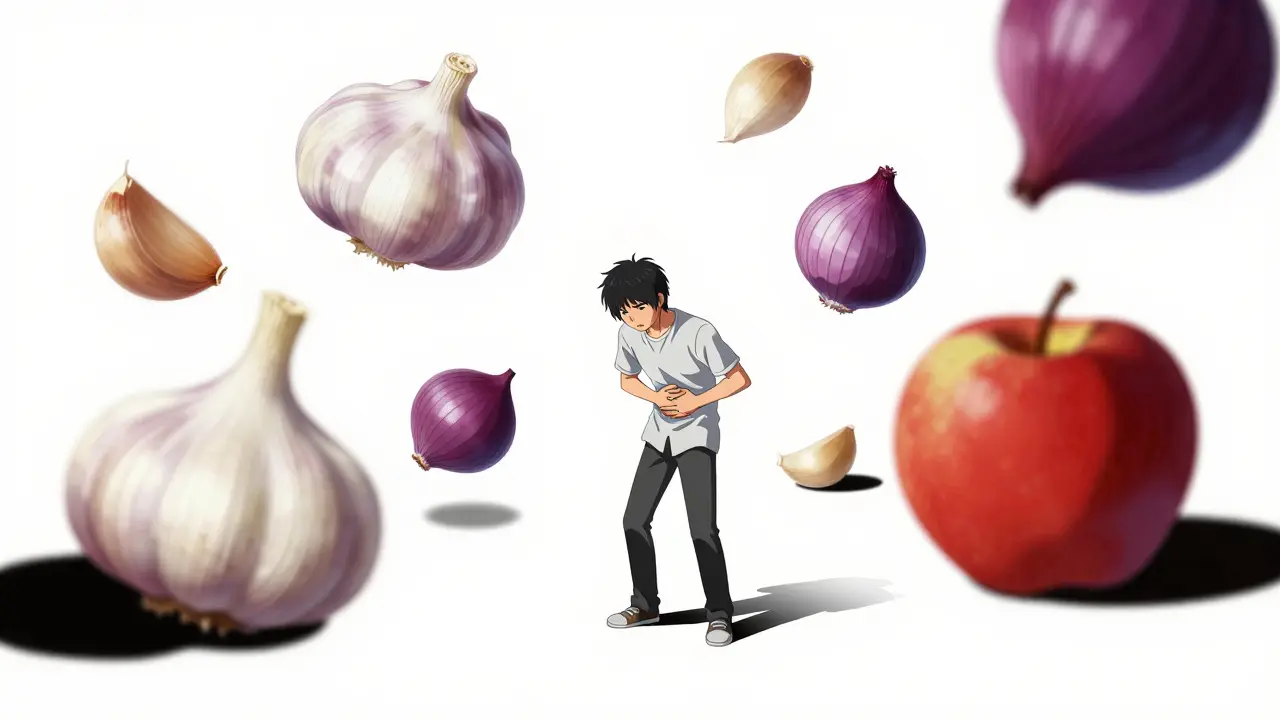
If you've spent any time researching IBS, you've likely seen the term FODMAP. Developed by researchers at Monash University a world-leading research institution in Melbourne, Australia specializing in gastroenterology, this isn't a lifelong restriction but a diagnostic tool. FODMAP stands for Fermentable Oligosaccharides, Disaccharides, Monosaccharides, and Polyols. In plain English, these are short-chain carbohydrates that the small intestine absorbs poorly. When they reach the colon, they ferment, drawing in water and producing gas-which is exactly why you feel like a balloon after eating certain "healthy" vegetables.
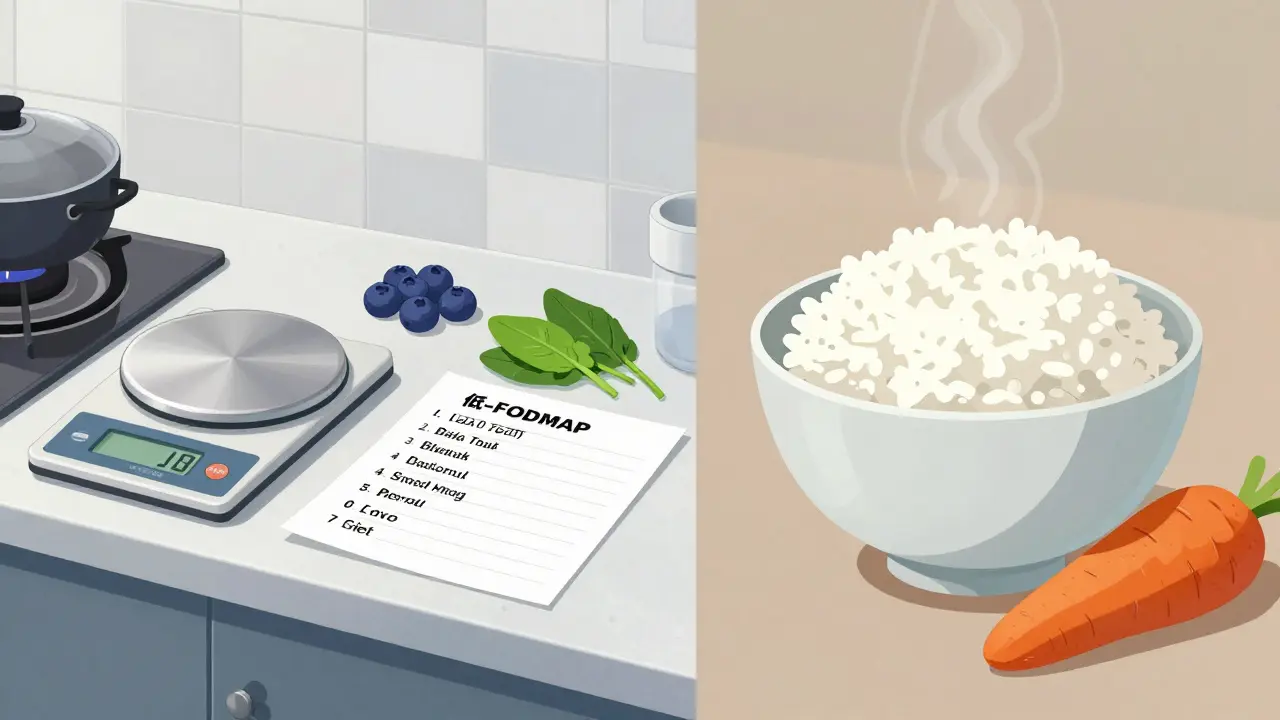
The process happens in three distinct stages. First is the Elimination Phase, lasting 2 to 6 weeks. You cut out high-FODMAP foods entirely. This is the hardest part and requires precision; for example, while garlic is a major trigger, even a small amount of garlic powder can set off a reaction. Second is the Reintroduction Phase. This is where the magic happens. Over 8 to 12 weeks, you systematically test specific groups-like lactose or fructans-to see exactly which one causes your symptoms. Finally, you hit the Personalization Phase. Instead of avoiding everything, you only cut out the specific triggers you identified. Most people find they can actually tolerate 50-80% of the foods they initially cut out.
Low-Residue Diets: When Fiber is the Enemy
While FODMAPs focus on how carbohydrates ferment, a Low-Residue Diet a dietary regimen that limits high-fiber foods to reduce the volume and frequency of stools focuses on the physical bulk of what you eat. "Residue" is just a medical term for the part of food your body can't digest, mainly fiber. This diet limits fiber to about 10-15g per day-far lower than the typical 25-38g recommended for the general public.
You'll skip raw vegetables, nuts, seeds, and whole grains, sticking instead to refined grains and well-cooked produce. This is often a lifesaver for people with IBS-D (diarrhea-predominant) because it reduces stool volume and gives the bowel a much-needed break. However, it's a dangerous long-term strategy. Because you're cutting out so many nutrient-dense foods, folate and calcium levels can drop significantly. It's also a terrible choice for those with IBS-C (constipation-predominant), as the lack of fiber will only make the backup worse.
General Elimination Plans: The Broad Brush Approach
A general Elimination Diet a nutritional strategy where common trigger foods are removed from the diet to identify sensitivities is the "old school" method. Usually, this involves cutting out common culprits like dairy, gluten, soy, and caffeine for a few weeks. It's simpler to start than a FODMAP plan, but it's much less precise. Because it doesn't use standardized doses for reintroduction, many people guess wrong about what's actually bothering them.
These plans are great if you suspect a general food allergy or intolerance, but for true IBS-where the issue is often how your gut processes specific sugars-they can be frustrating. You might cut out gluten (a protein) when the real culprit was the fructans (a carbohydrate) in the wheat. You end up restricting your diet more than necessary without actually solving the root cause of the bloating.
Comparing Your Options: Which Plan Fits Your Symptoms?
| Feature | Low-FODMAP | Low-Residue | General Elimination |
|---|---|---|---|
| Primary Goal | Reduce fermentation/gas | Reduce stool volume | Identify general triggers |
| Main Restrictions | Certain carbs/sugars | High fiber, raw skins/seeds | Dairy, Gluten, Soy, etc. |
| Best For | Bloating & Abdominal Pain | Severe Diarrhea (IBS-D) | General Food Sensitivities |
| Complexity | High (Requires tracking) | Medium | Low to Medium |
| Sustainability | High (after personalization) | Low (nutrient gaps) | Medium |
The Hidden Hurdles of Implementation
Switching to a restrictive diet sounds simple on paper, but the real world is messy. One of the biggest traps is "hidden FODMAPs." You might buy a "healthy" packaged snack only to find inulin or honey listed in the ingredients-both are high-FODMAP triggers. According to university analysis, up to 60% of processed foods marketed as healthy actually contain these hidden triggers. This is why using a digital scale and reading every single label is non-negotiable during the elimination phase.
Then there's the social toll. Imagine being at a dinner party and having to explain why you can't have a piece of garlic bread or a slice of apple. About 72% of people on these diets report significant anxiety when eating out. To handle this, many successful "navigators" use restaurant cards that clearly list their restrictions for the chef or stick to a handful of "safe" meals they've pre-verified. The mental load of constant vigilance can be as draining as the IBS itself, which is why having a support system-or a dedicated app-is vital.
Protecting Your Gut Health While Restricting
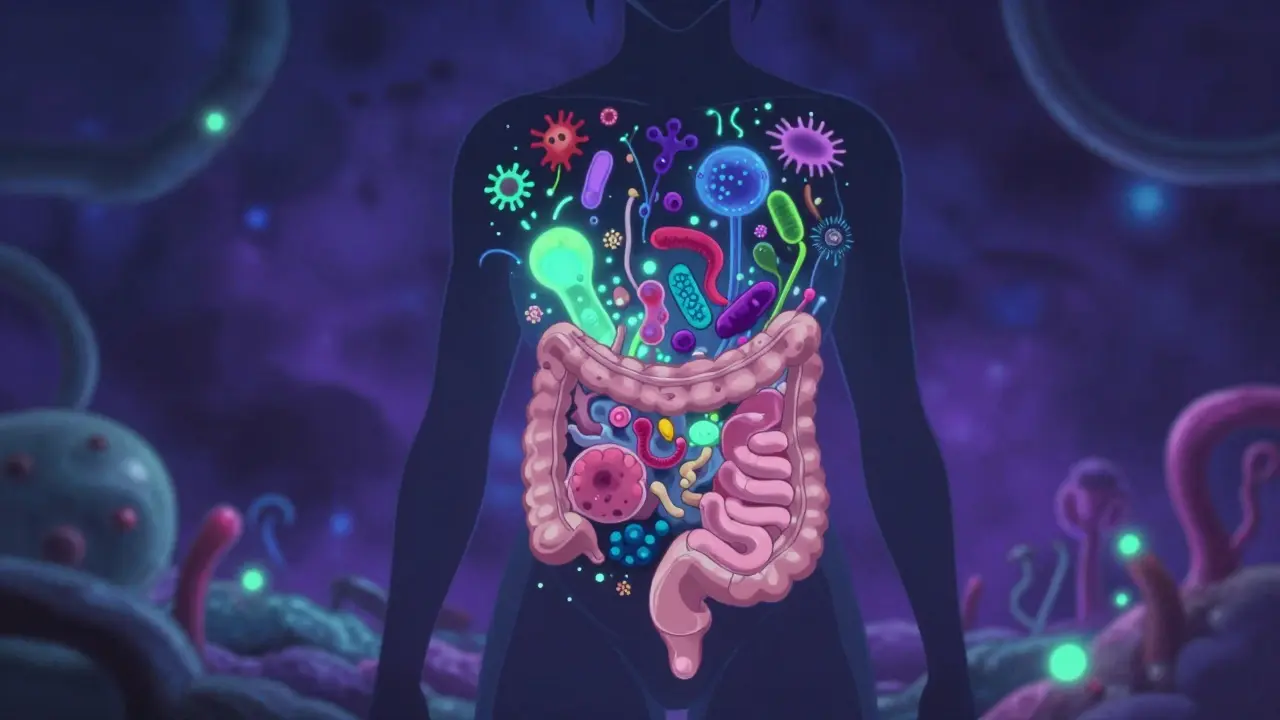
There is a hidden cost to strict dieting: your microbiome. Your gut bacteria thrive on the very fibers and sugars you're cutting out during an elimination phase. Research shows that a strict low-FODMAP diet can reduce Bifidobacterium a genus of beneficial bacteria that help digest dietary fiber and maintain gut health by up to 40% in just four weeks. This is exactly why you should never stay in the elimination phase indefinitely.
The goal is a "bridge," not a destination. If you stay restricted for too long, you might find that when you finally do try a "forbidden" food, your gut is even more sensitive than before because the bacteria that used to help you process those foods have disappeared. Professional guidance from a registered dietitian is highly recommended to ensure you're getting enough calcium and folate, especially if you're leaning toward a low-residue or heavy elimination approach.
Can I do the low-FODMAP diet without a dietitian?
Yes, but it's much harder. While many people use apps and lists, the reintroduction phase is technically complex. Without a professional, about 55% of people struggle to correctly identify their triggers or skip the reintroduction phase entirely, which means they stay unnecessarily restricted for years.
Is a low-residue diet safe for long-term use?
Generally, no. Because it removes almost all whole grains, raw fruits, and vegetables, you risk significant deficiencies in folate and calcium. It's typically used as a short-term intervention to calm an inflamed bowel or prepare for a medical procedure.
How long does it take to see results with FODMAPs?
Many people report significant relief from bloating and pain within the first 10 to 14 days of the elimination phase. However, the full benefit comes after the personalization phase, when you've optimized your diet for your specific triggers.
What is the difference between a food allergy and an IBS trigger?
An allergy involves an immune system response (like hives or swelling). An IBS trigger is usually a digestive issue where a specific type of sugar or fiber is fermented by bacteria in the colon, causing gas, pressure, and altered bowel movements.
Can I combine a low-residue and low-FODMAP diet?
It's possible, but very restrictive. This is usually only done under strict medical supervision for severe cases of IBD or extreme IBS-D. Doing this without guidance can lead to severe malnutrition and a depleted gut microbiome.
Next Steps for Your Journey
If you're just starting out, don't try to do everything at once. Start by keeping a detailed food and symptom journal for two weeks. Note not just what you ate, but the portion size and your stress levels. If you decide to go the FODMAP route, download a certified app to help with label scanning and meal planning.
For those with severe diarrhea, a short-term low-residue approach might be the first move to stabilize the gut before attempting the more complex FODMAP reintroduction. Regardless of the path, remember that the goal is to eat the most variety possible while staying symptom-free. Your gut is a living ecosystem; the more diverse the fuel you give it, the healthier it will be.
Comments
Benjamin cusden
It is quite quaint that people still struggle with the basics of Monash University's research. The biochemical pathways of short-chain carbohydrates are elementary science, yet most users treat a FODMAP guide like a sacred scroll rather than a clinical protocol.
On April 10, 2026 AT 00:11
jack hunter
Dieting is just a social construct to make us feel like we have control over the chaos of existance... like the gut is just a mirror of the broken soul. these lists are just more ways to alienate ourselves from the earth's natural offerings lol.
On April 10, 2026 AT 19:09
Ethan Davis
Anyone notice how the "healthy" processed foods are the ones pushing the hidden FODMAPs? Big Food probably wants us bloated and tired so we keep buying their fake supplements to fix the problems their ingredients created in the first place. Totally rigged.
On April 12, 2026 AT 08:00
Stephen Luce
I really feel for anyone currently in that elimination phase. It's so isolating when you can't even grab a snack with friends without feeling like a burden or a weirdo. Hang in there, everyone.
On April 13, 2026 AT 16:39
Windy Phillips
It is simply tragic... truly tragic... how some people believe they can navigate this without a professional!!! The lack of discipline in modern self-care is simply appalling, is it not??? One must have a guide, or they are merely wandering in a digestive wasteland...
On April 15, 2026 AT 04:55
Srikanth Makineni
too much text. just use the app and eat rice
On April 15, 2026 AT 07:37
Rauf Ronald
Spot on! If you're struggling with the reintroduction part, try keeping a digital log with photos of your meals. It makes it way easier to spot patterns that a handwritten journal might miss. You guys got this!
On April 16, 2026 AT 08:32
Jay Vernon
I use a little notebook for my safe foods 📝 it helps a lot! Good luck everyone 🍀
On April 17, 2026 AT 02:46
Jitesh Mohun
stop whining about dinner parties and just fix your gut health if you actually care about your life stop being soft
On April 18, 2026 AT 06:43
shelley wales
It's okay to feel overwhelmed at first! We're all learning together. Just remember that every small win, like finding a bread you can actually tolerate, is a huge victory for your quality of life. Keep moving forward!
On April 19, 2026 AT 05:14
Christopher Cooper
This is a fantastic breakdown of the different paths. I wonder if combining a modified low-FODMAP approach with mindful eating practices could further reduce the stress-induced flares that often accompany IBS. It seems the gut-brain axis is just as important as the actual food we consume. Let's keep exploring these connections because the more we understand, the better we can tailor these diets to our individual needs. It's all about that balance between restriction and nourishment!
On April 20, 2026 AT 12:24
Dhriti Chhabra
I believe it is most prudent to follow the advice of a medical professional to ensure that one does not inadvertently cause further nutritional deficiencies while attempting to heal the digestive system.
On April 21, 2026 AT 02:40
Rupert McKelvie
Cheering on everyone who is starting their journey today! It's a bit of a slog at the start, but the relief you feel once you identify your triggers is absolutely worth the effort. Stay positive!
On April 21, 2026 AT 18:37
Nikhil Bhatia
Too many diets. Just eat whatever.
On April 22, 2026 AT 04:35