

Imagine waking up with a pain so sharp it makes you curl into a ball. For millions of people, this is the reality of passing a kidney stone, specifically the hard mass formed when calcium and oxalate combine in urine. If you have been diagnosed with calcium oxalate stones, you know that prevention is not just about drinking water-it’s a complex balancing act involving diet, chemistry, and daily habits. The good news? You can significantly lower your risk of recurrence by understanding exactly how these stones form and manipulating your body's internal environment to stop them before they start.
Calcium oxalate stones are the most common type, accounting for roughly 70% to 80% of all cases. They form when your urine becomes too concentrated with specific minerals. Think of it like a supersaturated solution; if you add too much salt to a glass of water, eventually, crystals appear. In your kidneys, calcium and oxalate are the "salt," and low fluid volume is the trigger. Once these crystals stick together, they grow into stones that can block urine flow and cause severe pain. Preventing this requires targeting the five key chemical players in your urine: sodium, citrate, oxalate, uric acid, and calcium.
The Critical Role of Hydration Goals
Hydration is the single most effective tool you have. But "drink more water" is vague advice. What actually works is hitting a specific urine output target. Clinical guidelines recommend aiming for a urine volume of at least 2.5 liters per day. This translates to consuming approximately 2.5 to 3.0 liters of total fluids daily, depending on your climate and activity level.
Why 2.5 liters of urine? Research shows a linear relationship between urine volume and stone risk reduction up to this point. People who produce 2.0 to 2.5 liters of urine daily have a 50% lower risk of stone recurrence compared to those producing less than 1.0 liter. Beyond 2.5 liters, the benefits diminish, so there is no need to force excessive intake that might disrupt sleep or electrolyte balance.
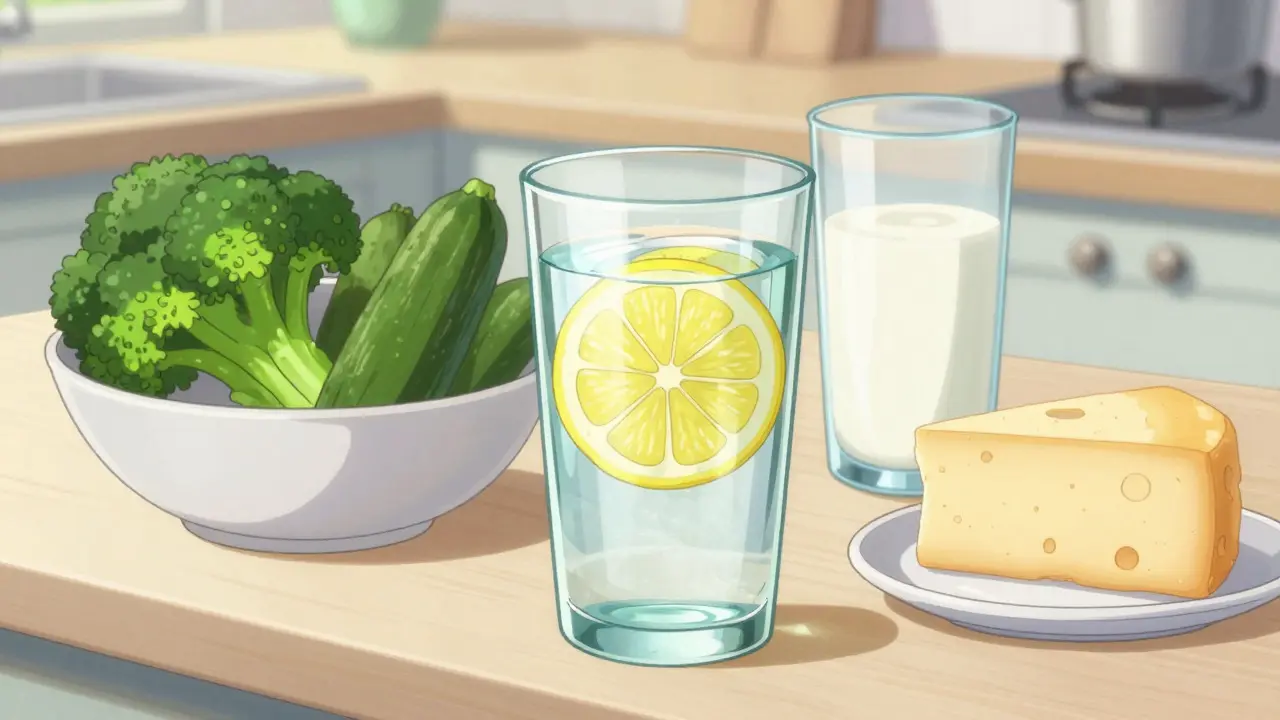
Not all fluids are created equal. Water remains the gold standard. Coffee and beer also show protective effects due to their diuretic properties, which help flush out minerals. However, grapefruit juice is a hidden trap. Unlike other citrus fruits, grapefruit juice consistently increases stone risk because it interferes with citrate absorption. Conversely, lemon juice is a powerhouse. Adding the juice of two lemons (about half a cup of concentrate) to your daily water intake can increase urine citrate levels by 120 mg/day. Citrate acts as a natural inhibitor, binding to calcium in the urine and preventing it from sticking to oxalate.
| Beverage | Effect on Stone Risk | Key Mechanism |
|---|---|---|
| Water | Protective | Dilutes urine, reduces crystal concentration |
| Lemon Juice (diluted) | Highly Protective | Increases urine citrate, inhibits crystal growth |
| Coffee / Beer | Mildly Protective | Diuretic effect increases urine volume |
| Grapefruit Juice | Risk-Increasing | Reduces citrate availability, promotes crystallization |
| Fizzy Drinks (Cola) | Risk-Increasing | Phosphoric acid content alters urine pH |
Navigating the Calcium Paradox
Here is where most patients get confused. Should you eat more calcium or less? The counterintuitive answer is: eat more, but from food sources, not pills. A common myth suggests that reducing dietary calcium prevents stones. In reality, low calcium intake can *increase* stone risk. When you don't consume enough calcium, less of it is available in your gut to bind with oxalate from your food. Unbound oxalate gets absorbed into your bloodstream and filtered by your kidneys, leading to higher oxalate levels in your urine.
The National Kidney Foundation recommends consuming 1,000 to 1,200 mg of calcium daily from food. This typically means 2 to 3 servings of dairy products. One serving could be one cup of milk, one ounce of cheese, or three-quarters of a cup of yogurt. The timing matters immensely. You should consume calcium-rich foods simultaneously with oxalate-containing foods. Studies show that eating calcium two hours before or after an oxalate-rich meal reduces the binding efficacy by 40% to 50%. By pairing them, you create insoluble calcium oxalate complexes in your intestines that are excreted in your stool, never reaching your kidneys.
Be cautious with supplements. While dietary calcium is protective, calcium supplements taken away from meals may increase stone risk by up to 20%, according to data from the Women's Health Initiative. If you must supplement due to documented deficiency, ask your doctor about calcium citrate rather than calcium carbonate. Calcium citrate is better absorbed and provides an additional boost of citrate, which is beneficial for stone prevention.
Managing Oxalate and Sodium Intake
Oxalate is a natural compound found in many healthy foods, but for stone formers, high-oxalate foods need moderation. You don't need to eliminate spinach or almonds entirely, but you should be aware of their oxalate content. Spinach contains 755 mg of oxalate per half-cup cooked, while rhubarb has 541 mg per half-cup. Almonds contain 122 mg per ounce. Instead of strict restriction, which can lead to nutritional deficiencies, aim for a balanced approach. Include at least five servings of fruits and vegetables daily, but vary your choices. Swap high-oxalate greens for lower-oxalate options like lettuce, zucchini, or broccoli when possible.
Sodium is the other major culprit. High salt intake forces your kidneys to excrete more calcium. For every additional 1,000 mg of sodium you consume, your urinary calcium excretion increases by 25 to 30 mg. To keep this in check, aim for no more than 2,300 mg of sodium per day. This often means reading labels on processed foods, canned soups, and restaurant meals. Limiting animal protein is also helpful; keeping protein below 30% of your total caloric intake helps maintain a favorable urine pH and reduces uric acid levels.
When Medication Becomes Necessary
Diet and hydration work for many, but some patients have underlying metabolic issues that require pharmacological intervention. This is where personalized medicine comes in. Before starting any medication, you need a 24-hour urine test to establish your baseline chemistries. This test measures your exact levels of calcium, oxalate, citrate, sodium, and uric acid over a full day.
If your urine calcium is high (hypercalciuria), doctors often prescribe thiazide diuretics like hydrochlorothiazide or chlorthalidone. These medications reduce calcium excretion in the urine, lowering stone risk by 30% to 50%. However, they can deplete potassium, so monitoring is essential. Low potassium can lead to low citrate, which cancels out the benefit. That’s why these prescriptions are often paired with potassium supplements or strict sodium restriction.
If your urine citrate is low (hypocitraturia), potassium citrate supplements are the go-to treatment. Doses typically range from 10 to 20 mEq twice daily. Potassium citrate raises urine citrate levels directly, creating a chemical shield against stone formation. For patients with high urine uric acid (hyperuricosuria), allopurinol may be prescribed to reduce uric acid production, which can otherwise act as a nucleus for stone growth.
Practical Implementation and Monitoring
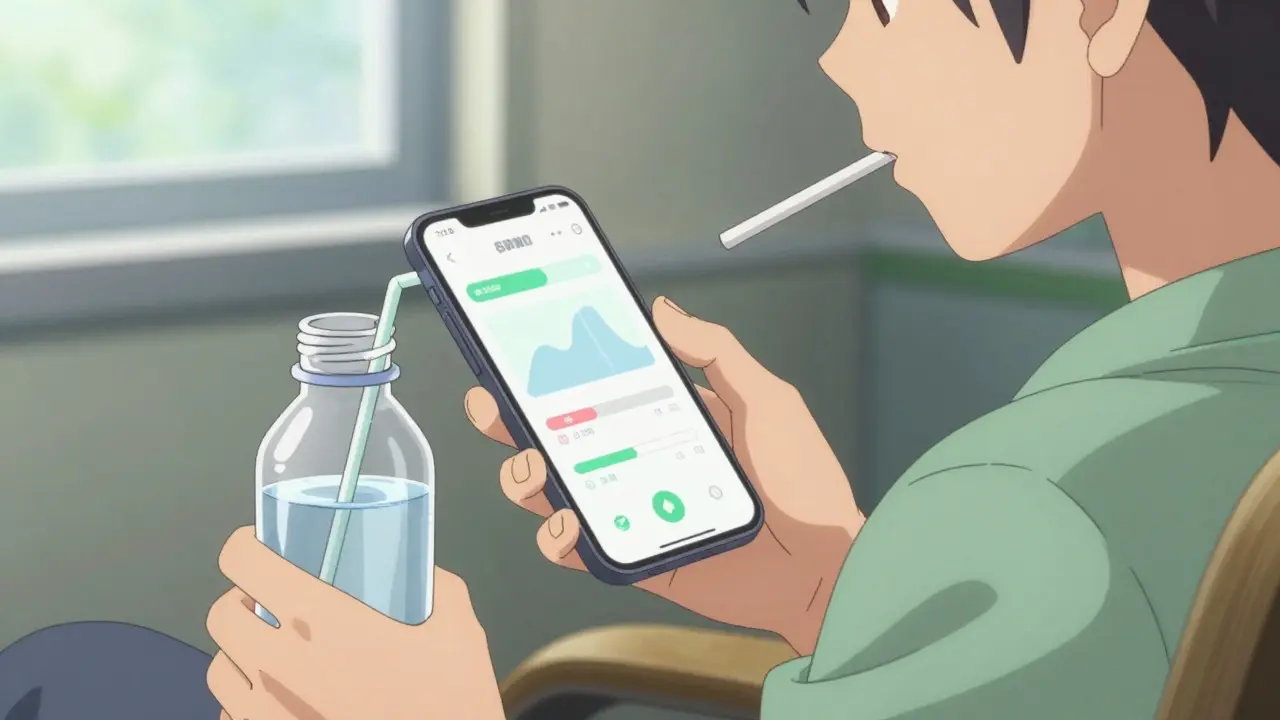
Knowing what to do is easy; doing it consistently is hard. Adherence is the biggest challenge. Only 35% of patients maintain adequate fluid intake after 12 months without support. To improve this, use technology. Mobile hydration tracking apps can remind you to drink water throughout the day and log your progress. Set alarms for every few hours to sip water, rather than trying to chug large amounts at once.
Monitor your urine color. It should be pale yellow or clear. Dark yellow indicates dehydration. Keep a simple food diary for the first month to identify patterns. Did you eat a large salad with spinach and forget your calcium source? Did you drink soda instead of water? Small adjustments make a big difference. Remember, prevention is a marathon, not a sprint. Regular follow-ups with your urologist or nephrologist, including periodic 24-hour urine tests, ensure your strategy is still working as your body changes.
How much water should I drink to prevent kidney stones?
You should aim to produce at least 2.5 liters of urine per day. This generally requires consuming 2.5 to 3.0 liters of total fluids daily. Adjust based on your activity level and climate, ensuring your urine stays pale yellow.
Should I avoid all calcium to prevent stones?
No. Avoiding calcium can actually increase stone risk. Aim for 1,000 to 1,200 mg of dietary calcium daily from food sources like dairy. Consume calcium at the same time as oxalate-rich foods to bind them in the gut.
Is lemon water really effective for kidney stones?
Yes. Lemon juice increases urine citrate levels, which inhibits stone formation. Adding the juice of two lemons to your daily water intake can raise citrate by 120 mg/day, providing significant protection.
What is the best medication for calcium oxalate stones?
Treatment depends on your 24-hour urine results. Thiazide diuretics are used for high urine calcium, potassium citrate for low urine citrate, and allopurinol for high urine uric acid. Your doctor will tailor the prescription to your specific metabolic profile.
Do vitamin C supplements cause kidney stones?
High doses of vitamin C (over 1,000 mg/day) can increase oxalate production and potentially raise stone risk. Dietary vitamin C at normal levels (under 500 mg/day) is generally safe and does not show a significant association with stone formation.