

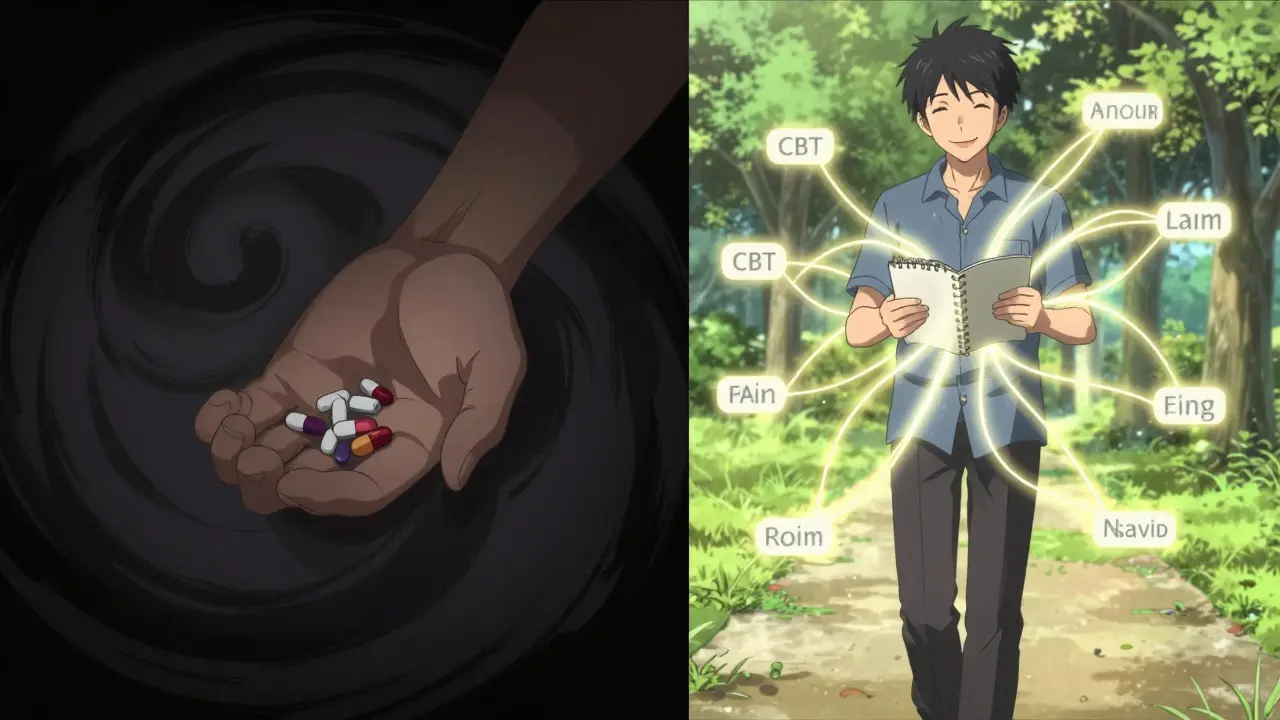
When you're in pain, especially long-term pain, it's easy to reach for the first thing your doctor suggests: opioids. But here's the truth - opioids aren't the only answer, and for many people, they're not even the best one. Every year, millions of people in the U.S. are prescribed opioids for chronic pain, even though the risks - addiction, breathing problems, constipation, tolerance - are well known. The good news? There's a smarter, safer way. Non-opioid alternatives aren't just backups anymore. They're the new first line of defense, backed by science, clinical guidelines, and real-world results.
Why Move Away from Opioids?
Opioids work by binding to receptors in your brain and spinal cord, blocking pain signals. But they also trigger reward pathways, which is why they're so addictive. The CDC reports that about 0.7% of people with chronic pain develop an opioid use disorder each year. That might sound small, but multiply that by millions of patients, and you're looking at tens of thousands of new cases annually. Add in respiratory depression - which affects 50-80% of users - and constipation, which hits 40-95%, and you start to see why doctors are shifting away.
There's also the issue of tolerance. Over time, your body needs higher doses to get the same effect. That leads to a dangerous cycle: more pills, more side effects, more risk. And when the pills run out or the prescription ends, some people turn to street drugs. That’s not just a personal tragedy - it’s a public health crisis.
Non-opioid approaches don’t just avoid these risks. They often work better for certain types of pain. For example, if you have lower back pain or osteoarthritis, structured exercise and cognitive behavioral therapy (CBT) can reduce pain by 30-50% in most people. That’s not a guess. It’s what the CDC’s 2022 guidelines say.
What Is Multimodal Pain Management?
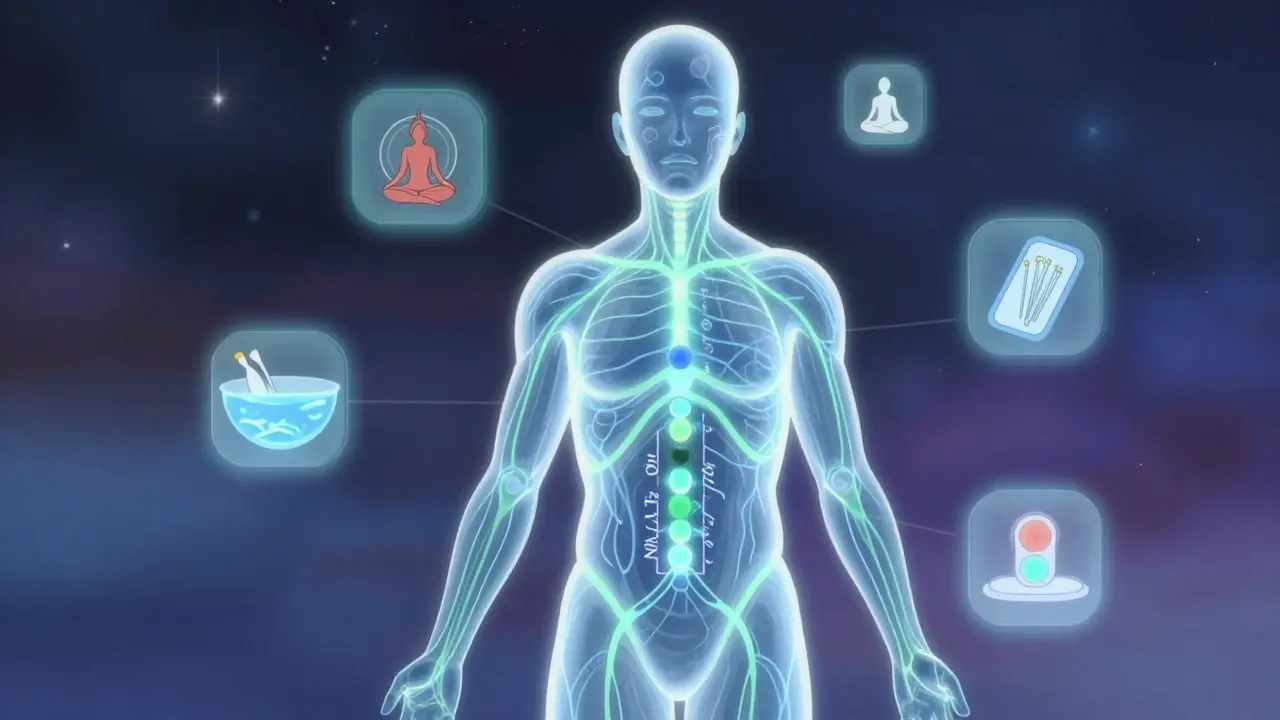
Multimodal pain management means using more than one method at the same time - not just one pill, but a mix of therapies that target pain from different angles. Think of it like fixing a leaky roof. You wouldn’t just patch one hole. You’d check the shingles, the gutters, the flashing. Pain is the same. It’s not just one thing going wrong. It’s nerves, muscles, inflammation, stress, movement patterns - all working together.
The CDC and other medical groups now recommend multimodal strategies as the first step for subacute and chronic pain. That means combining:
- Nonpharmacologic therapies - things like exercise, physical therapy, yoga, acupuncture
- Nonopioid medications - NSAIDs, acetaminophen, antidepressants, topical treatments
And here’s the key: using them together boosts their effect. One treatment alone might help a little. Two or three together? That’s when you see real, lasting improvement.
Nonpharmacologic Strategies That Actually Work
You don’t need a prescription for these. But you do need consistency.
Exercise - Not Just “Move More”
“Exercise” doesn’t mean running a marathon. For chronic pain, especially back or knee pain, it’s about smart, steady movement. The CDC recommends:
- Aerobic exercise: 30-45 minutes, 3-5 days a week (walking, cycling, swimming)
- Aquatic therapy: Water at 32-35°C, 3 times a week - the buoyancy reduces joint stress
- Resistance training: 2-3 sets of 8-12 reps at 60-80% of your one-rep max
Studies show group aerobics cost $10-20 per session, while one-on-one physical therapy runs $100-150. And guess what? Group sessions are just as effective for low back pain. You get movement, social support, and accountability - all at a fraction of the cost.
Mind-Body Practices
Stress doesn’t cause pain, but it makes it worse. That’s where yoga, tai chi, and mindfulness come in.
- Yoga: 60-90 minutes, 2-3 times a week. Improves flexibility, reduces muscle tension, and lowers stress hormones.
- Tai chi: 30-60 minutes daily. Slow, flowing movements improve balance and reduce pain perception.
- Cognitive Behavioral Therapy (CBT): 8-12 weekly sessions of 50-60 minutes. Teaches you how thoughts and emotions affect pain. One study found 70% of chronic pain patients had at least 30% pain reduction after CBT.
- Mindfulness-Based Stress Reduction (MBSR): An 8-week program with weekly 2.5-hour sessions and a full-day retreat. Proven to reduce pain intensity and improve quality of life.
Acupuncture and Spinal Manipulation
Acupuncture isn’t magic. It’s science. Needles stimulate nerves, release endorphins, and reduce inflammation. The CDC says 8-12 sessions over 4-8 weeks is the sweet spot. Each session lasts 20-30 minutes. Adverse events? Only 0.14 per 10,000 treatments - safer than most medications.
Spinal manipulation - often done by chiropractors - works best for lower back pain. Typically 6-12 sessions over 3-6 weeks. It doesn’t “pop” your spine back into place. It gently restores movement in stiff joints, reducing nerve irritation.
Nonopioid Medications: What’s Actually Effective
Not all pills are created equal. Here’s what works - and what to watch out for.
Topical NSAIDs
For joint pain - knees, hands, shoulders - topical diclofenac gel (1%) applied four times a day is as effective as oral NSAIDs but with far fewer stomach risks. It’s especially useful for older adults who can’t tolerate oral meds.
Oral NSAIDs and Acetaminophen
For short-term pain (like after an injury), ibuprofen (400-800 mg every 6-8 hours) or naproxen (375-500 mg twice daily) work well. But long-term? Risky. NSAIDs can cause gastrointestinal bleeding in 1-2% of users per year. Acetaminophen (up to 4,000 mg daily) is safer for the stomach but can damage your liver if you drink alcohol or take too much.
Antidepressants for Pain
Yes, antidepressants. Amitriptyline (10-100 mg at night) is a tricyclic antidepressant that’s been used for decades to treat nerve pain, fibromyalgia, and chronic headaches. It doesn’t make you “happy.” It blocks pain signals in the spinal cord. Side effects? Dry mouth, drowsiness - but they often fade after a few weeks.
The New Kid on the Block: Suzetrigine (Journavx)
In August 2023, the FDA approved Journavx (a new non-opioid analgesic that targets the NaV1.8 sodium channel). This is huge. It’s the first new non-opioid painkiller for acute pain in 25 years. Unlike opioids, it doesn’t slow your breathing, cause constipation, or trigger addiction. Clinical trials showed it worked as well as opioids for moderate to severe pain - without the risk. It’s not a magic bullet, but it’s a major step forward.
What Pain Conditions Do These Strategies Work Best For?
Not all pain is the same. Here’s where non-opioid methods shine:
- Chronic low back pain: Exercise + CBT = 30-50% pain reduction in 60-70% of people.
- Osteoarthritis: Topical NSAIDs reduce pain by 20-40%. Aquatic therapy helps with mobility.
- Migraine: Triptans (like sumatriptan) achieve pain freedom in 40-70% of patients within 2 hours. Anti-nausea meds and acupuncture help too.
- Neuropathic pain (nerve pain): Amitriptyline, gabapentin, and new compounds like CP612 (under research) are showing promise.
- Post-surgical pain: Multimodal protocols using NSAIDs, acetaminophen, and regional nerve blocks reduce opioid use by up to 70%.
For acute trauma - like a broken bone or severe laceration - opioids may still be needed initially. But even then, starting non-opioid meds right away can cut the total opioid dose you need.
The Downsides - And How to Avoid Them
Nothing’s perfect. Non-opioid approaches have limits.
- NSAIDs: Long-term use = stomach ulcers, kidney strain. Don’t take them daily without medical supervision.
- Acetaminophen: Over 4,000 mg/day = liver damage. Avoid if you drink alcohol.
- Nonpharmacologic therapies: They require effort. Only 40-60% of people stick with exercise programs long-term. If you’re not seeing results in 6-8 weeks, talk to your provider. Maybe you need a different approach.
- New drugs: Suzetrigine is promising, but long-term data isn’t available yet. Watch for side effects like dizziness or nausea.
The biggest risk? Thinking one treatment is enough. That’s why multimodal matters. One therapy alone might help 20%. Two together? 60%. Three? 80%.
What’s Next? The Future of Pain Care
Research is moving fast. At Duke University, scientists are developing ENT1 inhibitors - a new class of drugs that don’t just block pain, but actually get stronger with repeated use. Unlike opioids, where tolerance builds, these compounds accumulate their effect. Animal studies show improved pain control over time.
UT Health San Antonio is working on CP612, a compound that reduces chemotherapy nerve pain and eases opioid withdrawal - without being addictive. It’s not on the market yet, but human trials are coming.
The FDA is pushing for faster approval of non-opioid drugs. The NIH has invested $1.9 billion annually into the HEAL Initiative to fund this research. By 2028, experts predict non-opioid treatments will be the first choice in 65% of chronic pain cases - up from 45% in 2022.
And the numbers show it’s working. In 2023, 73% of pain specialists now use multimodal, non-opioid strategies as their first-line treatment. That’s up from 42% in 2018. People are waking up. Doctors are changing. The system is shifting.
How to Get Started
Don’t wait for a crisis. If you’re managing chronic pain:
- Ask your doctor: “What non-opioid options do you recommend for my type of pain?”
- Start with one nonpharmacologic approach: Pick one - walking, yoga, or CBT - and stick with it for 6 weeks.
- Add one nonopioid medication: If you’re on NSAIDs, ask about switching to topical. If you’re on acetaminophen, ask about amitriptyline for nerve pain.
- Track your progress: Use a simple pain diary. Rate your pain 1-10 daily. Note what helped.
- Reassess at 8 weeks: If you’re not better, it’s time to try a different combo.
You don’t need to quit opioids cold turkey. But you can start reducing them - safely - while building up your non-opioid toolkit. The goal isn’t to suffer. It’s to live better, with less risk.
Are non-opioid pain treatments really as effective as opioids?
For many types of chronic pain - like back pain, arthritis, or nerve pain - yes. Studies show multimodal non-opioid approaches reduce pain by 30-50% in most people, which is comparable to opioids - but without the addiction risk. For acute severe pain (like after surgery or trauma), opioids may still be needed short-term, but combining them with non-opioid drugs cuts the total opioid dose by up to 70%.
Can I use NSAIDs long-term for chronic pain?
Long-term daily use of oral NSAIDs increases the risk of stomach ulcers and kidney damage. For chronic pain, topical NSAIDs (like diclofenac gel) are much safer and just as effective for joint pain. If you need daily pain relief, talk to your doctor about alternatives like amitriptyline, gabapentin, or physical therapy instead of relying on pills.
Is acupuncture just a placebo?
No. Multiple high-quality studies show acupuncture reduces pain in conditions like chronic low back pain, osteoarthritis, and headaches. The mechanism isn’t fully understood, but it involves nerve signaling, endorphin release, and reduced inflammation. The CDC reports only 0.14 adverse events per 10,000 treatments - making it one of the safest pain therapies available.
What’s the difference between CBT and mindfulness for pain?
CBT teaches you to change how you think about pain - like identifying negative thoughts (“I’ll never get better”) and replacing them with realistic ones. Mindfulness is about observing pain without judgment - noticing sensations without reacting. Both reduce pain intensity, but CBT is more structured and often used for depression or anxiety linked to pain, while mindfulness helps with stress and emotional reactivity.
Why isn’t my doctor offering these options?
Many doctors still default to opioids because they’re fast and familiar. But guidelines have changed. The CDC’s 2022 guidelines say non-opioid therapies should come first. If your doctor doesn’t mention them, ask: “What non-opioid options do you recommend for my condition?” Bring up specific treatments like exercise, CBT, or topical NSAIDs. You’re your own best advocate.
Are these treatments covered by insurance?
Many are. Physical therapy, CBT, acupuncture, and some medications are often covered. Check your plan. Medicare and Medicaid increasingly cover non-opioid therapies for chronic pain. Group exercise programs (like water aerobics) are often low-cost or free through community centers. Don’t assume it’s not covered - ask.
Comments
Sanjana Rajan
I've been on opioids for 5 years. Tried yoga, acupuncture, even CBT. None of it worked. I'm not lazy, I'm just in constant pain. Don't tell me to 'move more' when I can barely get out of bed. This whole 'non-opioid revolution' feels like privilege talking.
On March 19, 2026 AT 09:07
Ryan Voeltner
The multimodal approach outlined here aligns with current clinical best practices. Evidence supports combining physical therapy with pharmacological agents such as topical NSAIDs and low-dose amitriptyline. This strategy reduces dependency while improving functional outcomes. A systematic review published in JAMA Internal Medicine in 2023 confirms these findings.
On March 20, 2026 AT 16:09
Amadi Kenneth
Wait... so now the government is pushing this because they want to control us? Suzetrigine? That's a new drug approved in 2023? But the FDA is rushing it out... and Big Pharma is behind it. They're replacing opioids with something else that's just as dangerous. They don't want us to feel pain... they want us to be docile. I read somewhere that the NIH funding is tied to military research. You think they're testing this on veterans? I think they're trying to create a population that doesn't complain...
On March 21, 2026 AT 08:41
Shameer Ahammad
The assertion that non-opioid interventions are 'as effective' as opioids is statistically misleading. While group aerobics may yield 30-50% pain reduction in a subset, this is not equivalent to opioid efficacy in acute or severe neuropathic pain. Moreover, CBT requires psychological resilience, which is not universally accessible. The data cherry-picks mild cases. For patients with fibromyalgia or CRPS, these methods are palliative at best.
On March 21, 2026 AT 12:17
Manish Singh
I'm from India and we've been doing this for ages. Ayurvedic massage, turmeric paste, yoga, meditation. No pills. No side effects. Just consistency. I know it sounds hippie but it works. My mom had knee pain for 12 years. She did water aerobics at the temple pond twice a week. Now she walks 5km. No drugs. Just time and patience.
On March 21, 2026 AT 19:19
Nilesh Khedekar
i just tried the topical diclofenac and wow it was like magic. no more stomach issues. but i still get my tramadol at night. i mean... if it aint broke dont fix it? i dont trust these new drugs like suzetrigine. what if they just make us sleep more? i heard they use it in prisons. idk man.
On March 22, 2026 AT 08:27
jared baker
If you have back pain, walk more. If you have knee pain, do water aerobics. If you're stressed, try yoga. These aren't fancy. They're simple. And they work if you stick with them. No magic pills. Just time and movement.
On March 23, 2026 AT 00:53
Michelle Jackson
Funny how everyone acts like this is new. My grandma used to rub camphor oil on her knees and drink ginger tea. She lived to 92. No opioids. No 'multimodal' nonsense. Just old-school stuff. Now we overcomplicate everything. Also, why is no one talking about how hard it is to find a therapist who takes insurance? CBT isn't magic if you can't afford it.
On March 23, 2026 AT 19:01
jerome Reverdy
The paradigm shift here is real. We're moving from a mono-modal, pharmacocentric model to a biopsychosocial framework. The data is overwhelming: when you integrate physical activity, neuromodulatory agents like amitriptyline, and psychosocial interventions like MBSR, you're not just managing pain-you're rewiring pain perception. The real barrier isn't efficacy. It's access. Insurance reimbursement lags behind evidence. Providers still default to scripts because it's faster. But the science? It's solid. We just need policy to catch up.
On March 24, 2026 AT 00:43