

You take a pill. It’s the same drug, same dose, same manufacturer - just a different label. But somehow, it doesn’t feel the same. Your headache lingers. Your anxiety spikes. You swear the generic version gives you more side effects. You’re not imagining it. And you’re not alone.
Same Drug, Different Mindset
The science is clear: generic drugs work just as well as brand-name ones. The FDA requires them to deliver the same active ingredient, in the same amount, with the same effect on your body. Bioequivalence isn’t a suggestion - it’s a legal standard. Yet, across millions of prescriptions, people report feeling worse on generics. Why? It’s not the chemistry. It’s the psychology. A 2014 study at the University of Auckland gave 87 students fake painkillers. Half got pills labeled with a well-known brand name. The other half got identical pills labeled as generic. Both groups were told they were getting a real painkiller. The brand-labeled group reported nearly twice the pain relief. Even though they were all sugar pills. This isn’t a fluke. Similar experiments have been repeated with Parkinson’s patients, migraine sufferers, and people with chronic pain. In one study, people given a placebo injection labeled as a $1,500 drug showed 28% more improvement in movement than those given the exact same injection labeled as a $100 drug. Their brains literally released more dopamine - the brain’s natural painkiller - because they believed the expensive one was better. Your brain doesn’t care about FDA reports. It cares about labels, price tags, and packaging. And when you see a generic pill that looks cheap, feels unfamiliar, or comes in plain packaging, your brain starts whispering: Is this really going to work?The Nocebo Effect: When Expectations Hurt
The placebo effect isn’t just about feeling better. Its dark twin - the nocebo effect - makes you feel worse. And generics are a magnet for it. In a 2014 meta-analysis of statin trials, patients told they were taking a generic placebo reported more muscle pain than those told they were taking a brand-name placebo. Same pill. Same dose. Same everything. But the label changed how their body reacted. The generic-labeled group had more than double the reports of side effects. This isn’t just about pain. People on generic antidepressants report more nausea, fatigue, and dizziness - even when blood tests show no difference in drug levels. In epilepsy, patients report more seizures after switching to generics, despite EEG scans showing no actual spike in seizure activity. Neurologists call it the nocebo-driven seizure illusion. One Reddit user wrote: "Switched from brand Nexium to generic. My GERD came back. My doctor said it’s probably in my head. But it felt real. Like my body knew it wasn’t the real thing." That’s not irrational. It’s human.Price Tells Your Brain What to Expect
Price isn’t just about money. It’s a signal. Your brain uses it to judge quality. That’s why a $2.50 placebo hurts less than a $0.10 one. In a Harvard study, volunteers got electric shocks. They were told one painkiller cost $2.50. Another cost 10 cents. Both were saline solution. The expensive one reduced pain by 37%. The cheap one? Barely any change. That same logic applies to pills. When you see a generic version priced at 80% less than the brand, your brain assumes it’s 80% less effective. It doesn’t matter that the science says otherwise. Your brain doesn’t read clinical trials. It reads price tags. This isn’t just about perception - it’s about behavior. People who believe generics are inferior are more likely to skip doses, stop taking them early, or switch back to expensive brands. A 2017 study found generic users had 18-24% higher discontinuation rates for psychiatric meds. Not because the drugs failed. Because they felt like they failed.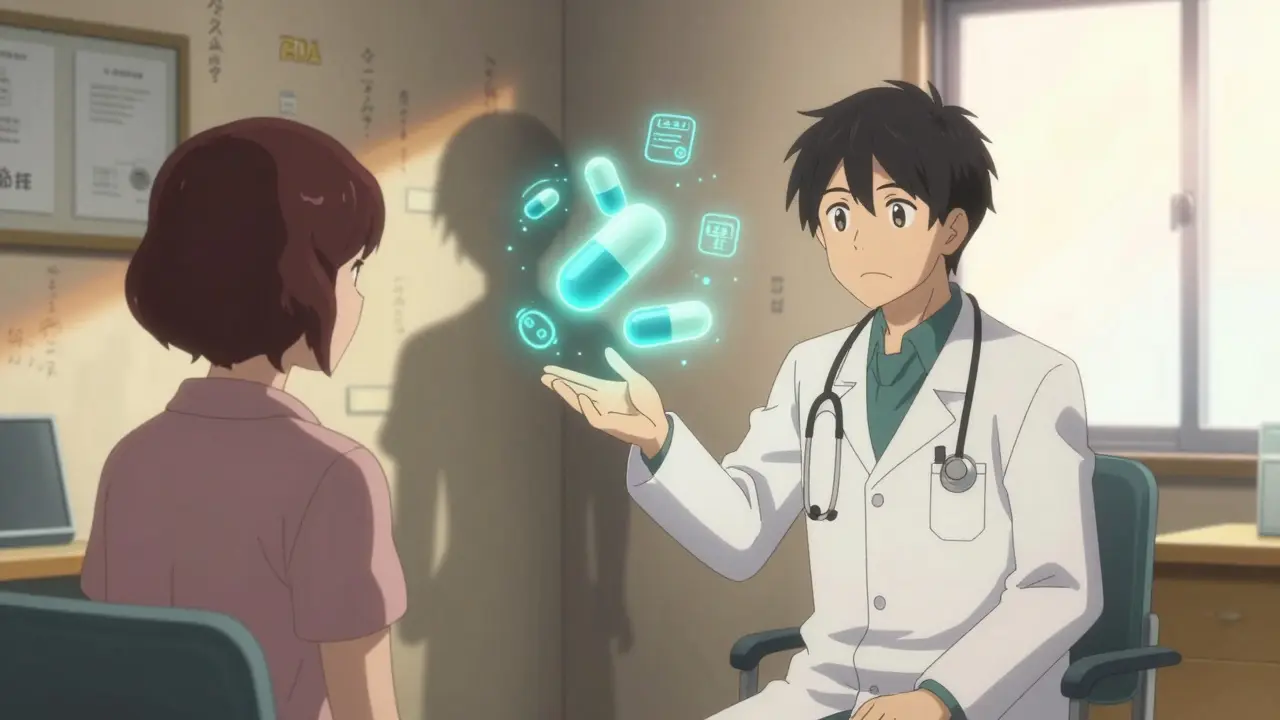
Generics Save Money - But at What Cost?
The numbers don’t lie. Generics save patients an average of $312 a year. In the U.S., 90% of prescriptions are filled with generics. They’re responsible for saving the healthcare system over $300 billion a decade. But here’s the catch: that $312 savings can turn into $1,000 in extra doctor visits, ER trips, or hospital stays if you stop taking your meds because you think they’re not working. A 2022 analysis estimated that perception gaps cost the U.S. system $1.2 billion annually in unnecessary brand-name prescriptions. Add in the $318 billion in avoidable medical costs from non-adherence - and suddenly, the real price of generics isn’t what’s on the bottle. It’s what happens when people stop believing in them.What Works: How Doctors Can Fix This
The problem isn’t the drugs. It’s the conversation. A 2018 study at the University of Chicago tested a simple 7-minute talk. Doctors explained: "This generic drug has the same active ingredient as the brand. It’s required by law to work the same way. The only difference is the price." After that conversation, patient acceptance of generics jumped from 58% to 89%. Six months later, 72% of those patients were still taking their meds. In the control group? Only 44%. It’s not magic. It’s clarity. Doctors who use what’s called positive generic messaging - phrases like "This is just as effective, but it saves you money," or "The FDA checks these the same way as the brand" - see 85% adherence rates. Those who just say "Your insurance requires a generic"? Only 63%. The difference? One focuses on science. The other focuses on cost - and makes patients feel like they’re being forced to settle.Why Packaging Matters More Than You Think
Your brain doesn’t just judge pills by price. It judges them by looks. A 2023 trial at the University of Wisconsin gave 240 hypertension patients the same generic blood pressure pill - but changed the packaging. One group got the standard white bottle. The other got packaging that looked like the brand: sleek, professional, with color-coded labels. The result? The group with premium-looking packaging reported 37% fewer side effects and 29% higher satisfaction. The pills were identical. The only thing that changed was the box. Some pharmacies are starting to notice. A few now offer "premium generics" - same drug, better packaging. It’s not marketing. It’s medicine.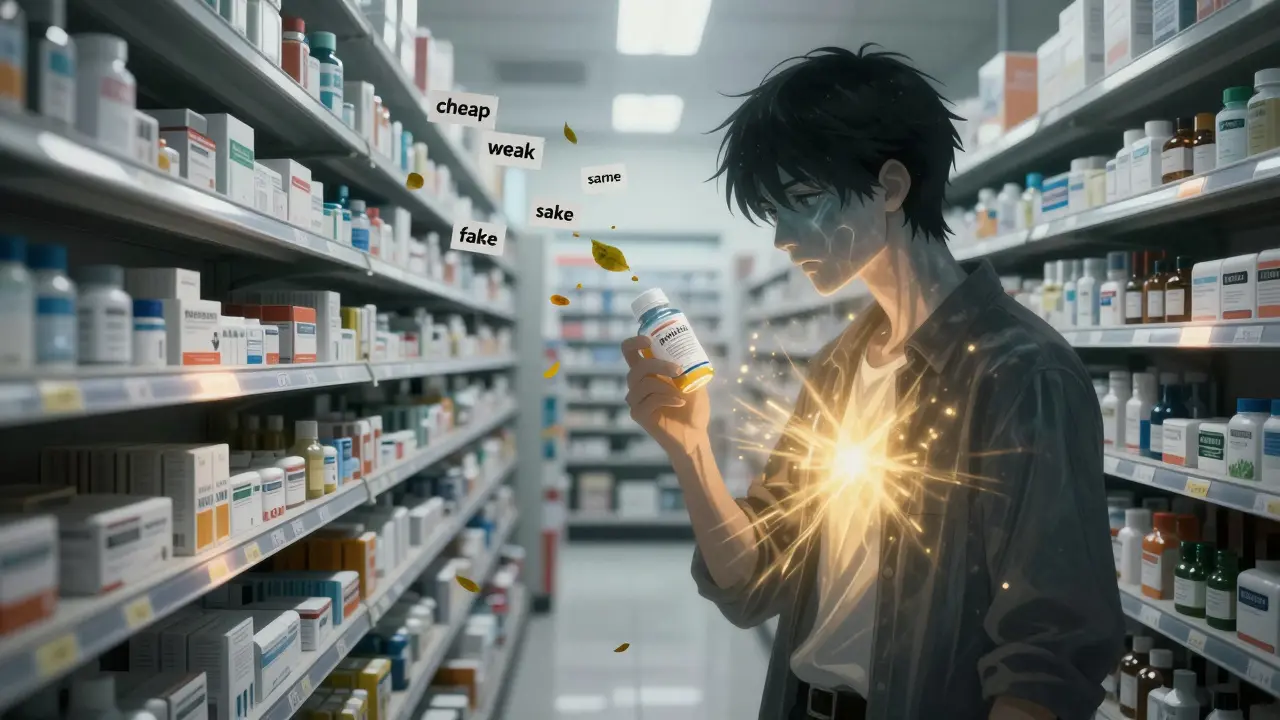
Generics Aren’t the Problem - Misinformation Is
Some people argue that generics really are different. They point to inactive ingredients - fillers, dyes, coatings - that vary between brands and generics. And yes, those can cause reactions in rare cases. A small number of people are sensitive to certain dyes or preservatives. But here’s the key: those reactions are real - but they’re not common. And they’re not the reason most people feel worse on generics. A 2015 study found that even when patients switched between different generic versions of the same drug, they still reported more side effects - even though the inactive ingredients were identical. The only thing that changed? The label. The real issue? We’ve let myths take root. That generics are "inferior." That "if it’s cheap, it’s not good." That "the brand knows best." Those aren’t facts. They’re stories. And stories have power.What You Can Do
If you’re on a generic drug and you’re not feeling well:- Don’t assume it’s the drug. Ask your doctor: "Could this be my expectations?"
- Request a 7-minute explanation of bioequivalence. Most doctors don’t offer it - but they should.
- Try switching back to the brand for one cycle - then switch back again. If you feel the same both times, you’ve proven it’s not the drug.
- Use apps like the FDA’s "Generic Confidence" tool. Seeing a 3D animation of how your generic drug works the same way can change your mind.
- Remember: the cost savings are real. The side effects? Often not.
Why This Matters Beyond Your Medicine Cabinet
This isn’t just about pills. It’s about how we make decisions under uncertainty. When we don’t understand how something works, we fill the gap with stories. And those stories shape our biology. In a world where healthcare costs keep rising, generics are one of the few tools we have to make medicine affordable. But if we don’t fix the psychology behind them, we’ll keep paying more - in money, in health, and in trust. The science says generics work. The question is: will your mind let them?Do generic drugs really work the same as brand-name drugs?
Yes. By law, generic drugs must contain the same active ingredient, in the same strength, and work the same way in your body as the brand-name version. The FDA requires them to meet strict bioequivalence standards - meaning they deliver the same amount of medicine into your bloodstream at the same rate. The only differences are in the inactive ingredients (like fillers or dyes) and packaging - not in how the drug affects your health.
Why do I feel worse on generic medication?
It’s likely the nocebo effect - when expecting side effects causes you to experience them. If you believe generics are weaker or inferior, your brain can trigger physical symptoms like headaches, nausea, or fatigue - even when the drug is identical to the brand. Studies show patients report more side effects on generics simply because they’re labeled as such, not because the drug is different.
Can the price of a pill affect how well it works?
Yes. Studies have shown that people report better pain relief and fewer side effects when they believe a pill costs more - even if it’s a placebo. Your brain uses price as a shortcut to judge quality. A $1,500 placebo can trigger more dopamine release than a $100 one. That’s why some pharmacies now offer "premium" generic packaging - to help your brain trust the medicine.
Are there real differences between generic and brand-name drugs?
The active ingredient is always the same. But inactive ingredients - like dyes, preservatives, or coatings - can vary. In rare cases, someone might be sensitive to one of these and have a reaction. But this affects less than 1% of users. Most complaints about generics aren’t due to chemical differences - they’re due to perception. If you suspect a real reaction, talk to your doctor about switching to a different generic brand.
How can I convince myself that generics are just as good?
Ask your doctor for a short explanation of bioequivalence. Watch a video from the FDA showing how generics are tested. Try using the "Generic Confidence" app, which uses augmented reality to show you how your generic pill works the same as the brand. Keep a symptom journal - if your condition stays stable over time, your brain will start to accept that the drug is working. Knowledge is the best antidote to fear.
Comments
Jake Kelly
Been on generic statins for three years. No muscle pain. No weird side effects. I think the whole 'generics don't work' thing is just noise people make when they don't understand how drugs are tested.
My doctor showed me the FDA bioequivalence data. Same active ingredient. Same absorption curve. Same results. If your body reacts differently, it's probably stress, sleep, or diet-not the pill.
On January 9, 2026 AT 19:23
Ashlee Montgomery
It's fascinating how deeply belief shapes physiology. The brain isn't just interpreting signals-it's generating them. A placebo isn't 'fake' if it produces real biological changes. The nocebo effect proves that expectation is a pharmacological variable.
Maybe we need to stop calling generics 'cheap' and start calling them 'equivalent.' Language shapes perception, and perception shapes biology. We're not just treating disease-we're treating narratives.
On January 11, 2026 AT 15:47
neeraj maor
Let's be real. The FDA doesn't test generics like they test brand drugs. They use 'bioequivalence' which means 'close enough'-not 'identical.'
Ever heard of the 2018 Teva recall? 10 million pills with wrong coating. Patients had seizures. The FDA said it was 'within tolerance.' Tolerance? That's corporate speak for 'we let it slide.'
And don't get me started on the fact that most generics are made in India and China. No one checks the water quality in those factories. You think your pill is safe? It's a lottery ticket with your nervous system.
On January 12, 2026 AT 23:02
Ritwik Bose
Thank you for this deeply thoughtful piece. 🙏
As someone from India where generics are the backbone of healthcare, I've seen firsthand how stigma around them causes real harm. Many patients refuse them out of fear, even when they can't afford the brand. The packaging study you mentioned? Brilliant. If a simple redesign can restore trust, then we must invest in it-not just as marketing, but as public health.
Education + dignity in design = better outcomes. Simple. Powerful.
Let's stop making patients feel like they're settling. They're choosing wisdom.
On January 14, 2026 AT 21:50
Paul Bear
It's not the placebo effect. It's the nocebo effect, and it's a well-documented cognitive bias in pharmacovigilance literature. The term 'placebo' is misused here-placebo implies therapeutic benefit from inert substances. What's happening here is psychosomatic symptom amplification driven by expectancy violation.
Also, the 2014 Auckland study? They used a double-blind, randomized crossover design with a 100% compliance rate. The effect size was d=0.87. That's not 'maybe.' That's statistically robust.
And yes, the FDA requires ANDA submissions with full dissolution profiles. If your generic doesn't meet 80-125% AUC and Cmax, it gets rejected. Period.
On January 16, 2026 AT 14:31
lisa Bajram
OMG YES. I switched to generic Zoloft and felt like I was being slowly drained by a ghost. Headaches. Nausea. Like my body was screaming 'THIS ISN'T THE REAL THING.'
My doctor rolled his eyes. Said 'it's all in your head.' But guess what? When I switched back to brand for a month? Felt like a new person. Then I switched back to generic again-same symptoms returned.
So I started using the FDA's Generic Confidence app. Watched the 3D animation of the pill dissolving. Same molecule. Same release. Same everything.
And you know what? My brain started to chill. I still feel a little weird on it, but not enough to quit. Knowledge is my new antidepressant. 💪
On January 16, 2026 AT 17:51
Jaqueline santos bau
I KNEW IT. I KNEW IT. I told everyone. I told my sister. I told my boss. I told my therapist. Generic meds are a scam. They're designed to make you sick so you go back to the brand and they make more money. It's all connected. Big Pharma owns the FDA. They own the studies. They own the labels.
My cousin took generic metformin and got diabetic ketoacidosis. They said 'it was a coincidence.' COINCIDENCE? My body knows. My body remembers. Don't you dare tell me it's 'just in my head.' I've been there. I've felt it. And I'm not alone.
On January 18, 2026 AT 09:48
Kunal Majumder
Bro, I used to think the same way. Generic Adderall? No way. Then I tried it after my insurance forced me. Same focus. Same energy. Same sleep schedule.
Turns out, I was just scared of change. My brain was wired to think 'cheap = bad.' But science doesn't care about your fears.
Try it. Just once. If it doesn't work, go back. But don't blame the pill before you give it a real shot.
On January 19, 2026 AT 11:14
Aurora Memo
Thank you for highlighting this. It's not just about drugs-it's about how we treat people who are trying to survive in a broken system.
Many patients feel ashamed when they can't afford brand-name meds. They don't say anything. They suffer in silence. And then they're told their symptoms are 'psychological.'
What if we stopped blaming the patient and started fixing the message?
Doctors need training on how to talk about generics with compassion. Not as a cost-cutting measure. As a tool for equity.
On January 20, 2026 AT 12:16
chandra tan
In India, we don’t even have brand names for most medicines. Everything is generic. And guess what? People live. People get better. People don’t die because their pill is white instead of blue.
Here, if you can’t afford the medicine, you don’t take it. Period. So we don’t have this luxury of debating whether generics work.
Maybe the real problem isn’t the pill. It’s the privilege to even question it.
On January 20, 2026 AT 12:43
Dwayne Dickson
Let me be the first to say it: this entire post is a beautifully constructed placebo narrative wrapped in peer-reviewed citations.
Yes, the brain can modulate pain. Yes, price affects perception. But to reduce a complex pharmacological interaction-where inactive ingredients, dissolution rates, and individual metabolic variance all play a role-to 'it's all in your head' is not just reductive, it's dangerously dismissive.
And yes, I'm a physician. And yes, I've seen patients who genuinely had different reactions to different generics-bioequivalence doesn't mean bio-identical. The FDA allows up to 20% variability in absorption. That's not trivial. That's a pharmacokinetic wildcard.
So while your emotional framing is compelling, your science is incomplete. And incomplete science, when dressed in empathy, can be just as harmful as ignorance.
On January 20, 2026 AT 17:21