
After a heart attack, life doesn’t go back to normal right away. It doesn’t even go back to the way it was a few weeks before. Recovery takes time, patience, and a clear plan. You’re not alone in this. Thousands of people in the UK and around the world go through the same process every year. The good news? With the right steps, you can live a full, active life again - and reduce the chance of another heart attack.
Medications: Your Daily Shield
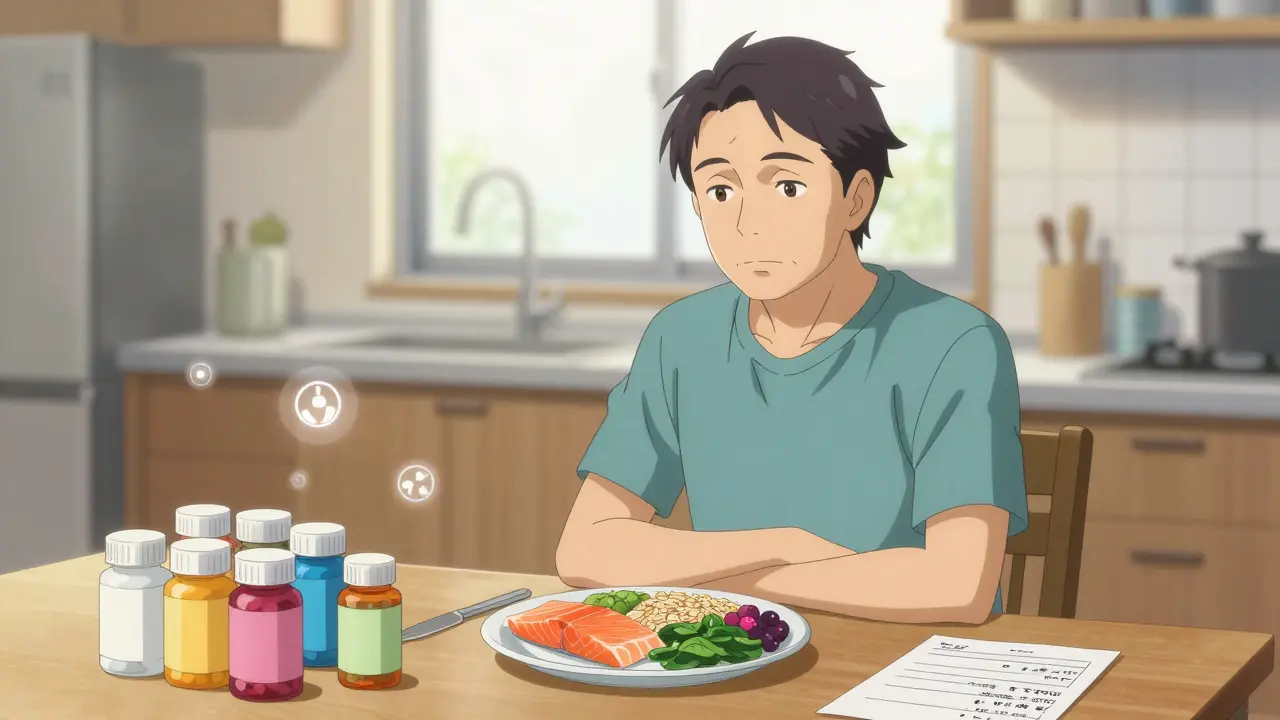
You’ll leave the hospital on a list of new medicines. Some you’ve never heard of. Others you might have taken before, but now they’re doing a different job. These aren’t optional. They’re your daily shield against another heart attack.
Common medications include aspirin to stop blood clots, statins to lower cholesterol, beta-blockers to reduce heart strain, and ACE inhibitors or ARBs to lower blood pressure and help your heart heal. Your doctor won’t just hand you a prescription. They’ll explain why each one matters. If you’re unsure, ask. Pharmacists are part of your recovery team too. They can break down what each pill does, how to take it, and what side effects to watch for.
Keep a written list of all your meds - names, doses, times. Carry it with you. If you end up in A&E or see a new doctor, this list could save your life. Don’t stop taking anything just because you feel better. The damage to your heart muscle doesn’t vanish just because the chest pain does. Missing doses increases your risk of another event. If you can’t afford your meds, talk to your GP or pharmacist. There are support programs in the UK.
Diet: Food as Medicine
What you eat matters more now than ever. A heart-healthy diet isn’t about strict rules or starving yourself. It’s about swapping out the bad for the good - slowly, steadily, and sustainably.
Focus on vegetables, fruits, whole grains like oats and brown rice, beans, nuts, and fatty fish like salmon or mackerel. These foods lower inflammation, improve cholesterol, and help control blood pressure. Cut back on processed foods, sugary drinks, white bread, and fried snacks. These are the hidden killers.
Salt is a big one. Most people eat way more than they think. Try to keep it under 6g a day - about a teaspoon. Read labels. Even bread and soups can be salty. Use herbs, garlic, lemon, or vinegar to add flavor instead. Butter and cream? Swap them for olive oil or avocado oil. They’re better for your arteries.
You don’t have to go vegan or give up all your favorite foods. But you do need to be smarter about portions and frequency. A small piece of cake once a week is fine. Daily? Not so much. A registered dietitian will work with you to build a plan that fits your taste, culture, and lifestyle. Don’t skip this step. Nutrition isn’t a side note - it’s core to your recovery.
Activity: Moving Back to Life
You’ll feel tired. Weak. Maybe even scared to move. That’s normal. Your heart was injured. It needs rest to heal. But too much rest can make things worse.
Start small. Walk around your home. Go up and down the stairs once or twice a day. That’s enough for the first week. Then, slowly add a few more minutes. Walk to the end of your street. Then to the next. Use a pedometer or your phone to track steps. Aim for 10,000 a day - but don’t rush. It might take weeks to get there.
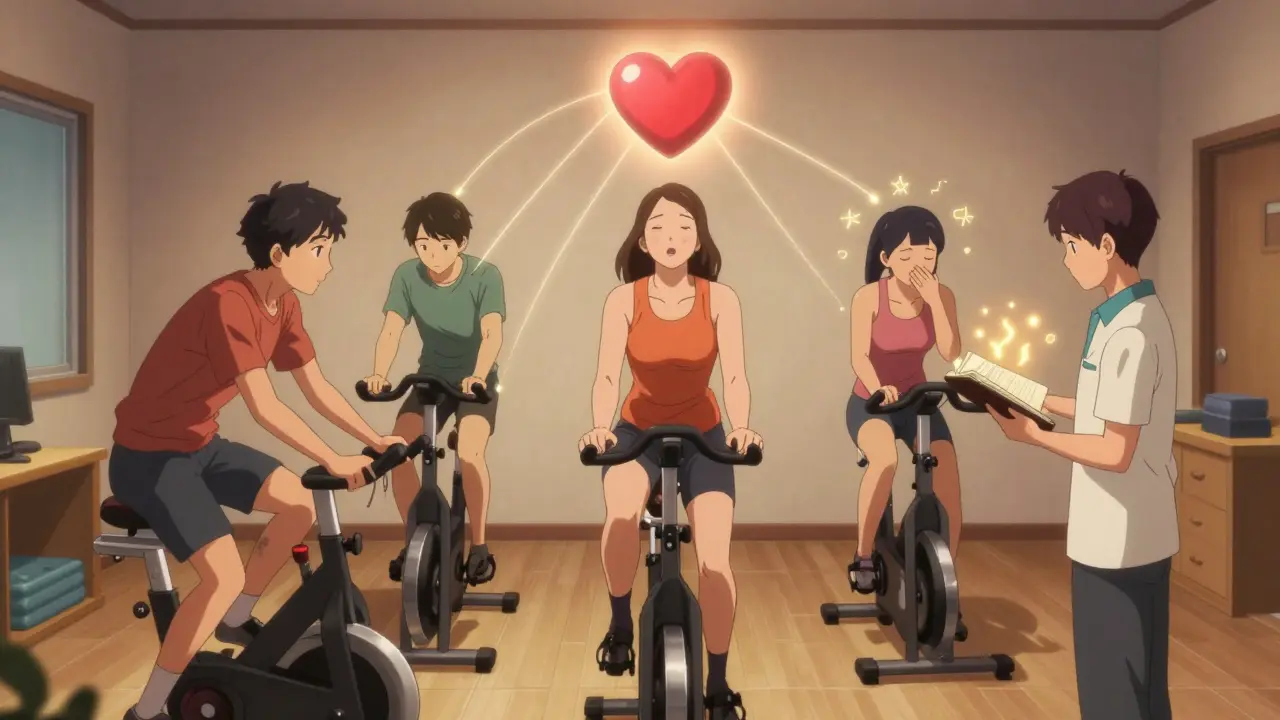
Cardiac rehabilitation is the gold standard. It’s not a gym class. It’s a medically supervised program that includes monitored exercise, education, and emotional support. You’ll work with physiotherapists, nurses, and exercise specialists who know exactly what your heart can handle. Exercises are usually aerobic - walking, cycling, swimming. These strengthen your heart muscle and improve circulation.
Don’t lift heavy things. Don’t push yourself to the point of breathlessness. If you feel chest pain, dizziness, or extreme fatigue, stop. Call your doctor. The goal isn’t to prove you’re strong. It’s to rebuild your heart’s endurance safely.

Cardiac Rehabilitation: Your Recovery Roadmap
Think of cardiac rehab as your personal recovery plan, built by a team of experts. It’s not just about exercise. It’s about learning how to manage your condition long-term.
Programs usually start in hospital and continue for 6 to 12 weeks after you go home. Sessions include:
- Safe, guided exercise tailored to your fitness level
- Education on medications, diet, and risk factors
- Stress management and breathing techniques
- Counseling for anxiety or depression - which is common after a heart attack
Studies show people who complete cardiac rehab are 25% less likely to have another heart attack or die from heart disease. That’s huge. And it’s not just for older people. All ages benefit. If you weren’t referred, ask your GP. You’re entitled to it.
Follow-Up and Long-Term Monitoring
You’ll have a check-up 4 to 6 weeks after leaving hospital. That’s when your doctor checks your progress - blood pressure, cholesterol, how you’re feeling, whether your meds are working. Don’t skip it.
After that, you’ll likely see your GP or cardiologist every few months. Blood tests, ECGs, and sometimes stress tests or scans will track how your heart is healing. Keep a journal of how you feel - energy levels, sleep, mood, any new symptoms. Bring it to appointments.
Long-term, your goal is to keep your heart strong. That means sticking with your meds, eating well, moving daily, and avoiding smoking. If you used to smoke, quit. If you still drink alcohol, limit it. Men should have no more than 2 units a day. Women: 1. One unit is half a pint of beer or a small glass of wine.
Emotional Health: It’s Part of Recovery Too
Many people feel anxious after a heart attack. You might worry about being active. Afraid to have sex. Scared it’ll happen again. That’s normal. But it’s not something you have to live with.
Cardiac rehab includes psychological support. Talking to a counselor helps. So does connecting with others who’ve been through it. Support groups exist in every major town in the UK. Ask your rehab team for details.
Don’t bottle it up. If you’re feeling low, irritable, or hopeless, tell someone. Depression after a heart attack is common - and treatable. Your mental health is just as important as your heart health.
What to Watch For
Know the warning signs of another heart attack:
- Chest pain or pressure that doesn’t go away
- Pain spreading to your arm, jaw, neck, or back
- Shortness of breath without exertion
- Sudden cold sweat, nausea, or dizziness
If you feel any of these, call 999. Don’t wait. Don’t drive yourself. Emergency care saves lives.
Final Thought: This Is a New Beginning
A heart attack isn’t the end of your life. It’s a wake-up call - and a chance to rebuild. You’re not defined by what happened to your heart. You’re defined by what you do next. Take your meds. Eat real food. Move every day. Ask for help when you need it. And remember: recovery isn’t about perfection. It’s about progress. One step. One meal. One day at a time.
How long does it take to recover from a heart attack?
Recovery varies by person, but most people take between 2 weeks and 3 months to heal enough to return to normal activities. Full recovery - including regaining strength and confidence - can take up to 6 months. The key is not to rush. Your cardiac rehab team will guide your pace based on your heart’s condition and overall health.
Can I drive after a heart attack?
You must stop driving for at least 1 week after a heart attack. If you drive a car or motorcycle, you can usually resume after 1 month if you’re symptom-free and your doctor approves. If you drive a heavy goods vehicle or passenger-carrying vehicle, you’ll need to notify the DVLA and may need to pass a medical assessment before returning to work.
Do I need to change my job after a heart attack?
Not necessarily. Most people return to work, often with adjustments. If your job is physically demanding - like construction or nursing - you may need lighter duties at first. If it’s stressful, talk to your employer about reducing pressure. Your cardiac rehab team can provide a letter to your employer outlining safe work limits. Many people find their work-life balance improves after a heart attack - and that’s a good thing.
Is it safe to have sex after a heart attack?
Yes, it’s usually safe to resume sexual activity after about 2 to 4 weeks, once you can climb two flights of stairs without chest pain or breathlessness. Sex is a moderate physical activity - similar to walking briskly. If you feel anxious, talk to your doctor or partner. Many people worry about this, but the risk of another heart attack during sex is extremely low.
What if I can’t afford my medications?
In the UK, prescription charges are waived for people with certain long-term conditions, including heart disease. Ask your GP for a medical exemption certificate - it’s free to apply for. You can also ask your pharmacist about generic versions of your meds, which cost less. Never skip doses because of cost. There are support systems in place. Use them.
Comments
Gregory Parschauer
Let me just say this: if you’re not on a statin and aspirin daily after a heart attack, you’re playing Russian roulette with your own corpse. I’ve seen too many people ‘feel fine’ and quit meds-then end up in the ER with a second MI. It’s not a suggestion. It’s a lifeline. And if you think ‘natural remedies’ replace beta-blockers, you’re not just wrong-you’re dangerous.
On January 14, 2026 AT 03:19
Rosalee Vanness
I remember the first week after my stent-walking from the kitchen to the living room made me feel like I’d run a marathon. I cried. I felt like a failure. But slowly, with the help of cardiac rehab, I started noticing tiny victories: climbing one extra step without gasping, tasting the lemon on my salmon without guilt, sleeping through the night without panic. It’s not about becoming a fitness guru. It’s about reclaiming the quiet joy of breathing without fear. One day, I realized I hadn’t checked my pulse in three hours. That was the day I knew I was healing.
On January 16, 2026 AT 02:09
lucy cooke
Oh, how quaint-the Western medical-industrial complex’s latest sacrament: pills, peas, and pedaling. How deeply existential, to reduce the soul’s awakening after near-death to a checklist of pharmaceuticals and pedometers. The heart doesn’t heal with oatmeal and oxygen saturation graphs-it heals through surrender, through the metaphysical recalibration that comes when mortality stops being an abstraction and becomes your roommate. Cardiac rehab? A beautiful charade. True recovery is silent. It’s in the way you no longer flinch at the sound of sirens. That’s not medicine. That’s poetry.
On January 17, 2026 AT 09:00
Trevor Davis
Hey, just wanted to say I really appreciated this post. I had my first heart attack last year, and honestly, I was terrified. The meds scared me, the diet felt impossible, and I thought I’d never be able to play with my grandkids again. But I followed the rehab program, started walking every morning, and now I’m back to gardening. My BP is down, my cholesterol’s stable, and I even started cooking with olive oil instead of butter. It’s not perfect, but it’s progress. Thanks for writing this-it gave me hope.
On January 17, 2026 AT 19:22
mike swinchoski
Everyone’s talking about meds like they’re magic. But have you ever tried to afford them? I’m on three prescriptions. My pension doesn’t cover it. And now they want me to buy ‘heart-healthy’ organic kale at $8 a bunch? Meanwhile, my neighbor eats fried chicken every day and runs marathons. Maybe the real issue isn’t the food-it’s the system. Stop shaming people. Fix the cost of care first.
On January 18, 2026 AT 16:20
Damario Brown
lol the article says ‘walk to the end of your street’ like that’s progress. bro i walked 3 miles on day 10 and still had energy. you’re telling me to aim for 10k steps? that’s for toddlers. real recovery is lifting weights and doing HIIT under supervision. also, why is everyone obsessed with salmon? i eat chicken thighs and i’m fine. also, why is the author assuming everyone has access to ‘cardiac rehab’? what about rural folks? this post is so privileged it hurts.
On January 20, 2026 AT 06:06
sam abas
Okay but… has anyone considered that maybe the entire ‘heart attack recovery’ model is just capitalism repackaging fear? Like, we’re told to take statins because Big Pharma profits. We’re told to eat kale because Whole Foods wants us to spend more. And cardiac rehab? It’s a 12-week subscription service. What if the real solution is just… not having a toxic job, not living in a food desert, and not being stressed out 24/7? The system broke us. Now they want us to buy our way back to health. That’s not recovery. That’s exploitation dressed in yoga pants.
On January 20, 2026 AT 13:42
Clay .Haeber
Oh wow. ‘Eat real food.’ How original. Did you get that tip from a Pinterest board titled ‘Heart Attack Hacks for the Upper Middle Class’? Meanwhile, my aunt in Alabama eats fried catfish, biscuits, and sweet tea every day-and she’s 82 and still drives her pickup. Maybe your ‘science’ is just cultural bias with a lab coat. Also, ‘don’t lift heavy things’? I’m a roofer. You want me to retire at 52 because a cardiologist said so? Nah. I’ll take my chances. Thanks for the condescension though.
On January 21, 2026 AT 00:14
Priyanka Kumari
This post is a gift. I work as a community health worker in Delhi, and I’ve seen so many patients after heart attacks-some with no access to meds, no rehab, no support. But they still try. They walk to the market. They swap ghee for coconut oil. They teach their kids to eat vegetables. You’re right: recovery isn’t about perfection. It’s about showing up. Even if it’s one step. One meal. One day. I’ve shared this with my group of 40 women who’ve survived heart events. They’re printing it out. Thank you for speaking with such kindness.
On January 22, 2026 AT 19:03
Avneet Singh
Cardiac rehab is a Band-Aid on a systemic failure. The real issue is epigenetic dysregulation induced by chronic low-grade inflammation from ultra-processed food matrices and circadian misalignment exacerbated by sedentary occupational paradigms. Also, your ‘10,000 steps’ metric is a corporate marketing gimmick invented by a Japanese pedometer company in the 1960s. Real cardiac optimization requires VO2 max tracking, HRV monitoring, and personalized nutrigenomic protocols. If you’re not using a Whoop or Oura, you’re just guessing.
On January 23, 2026 AT 00:05