
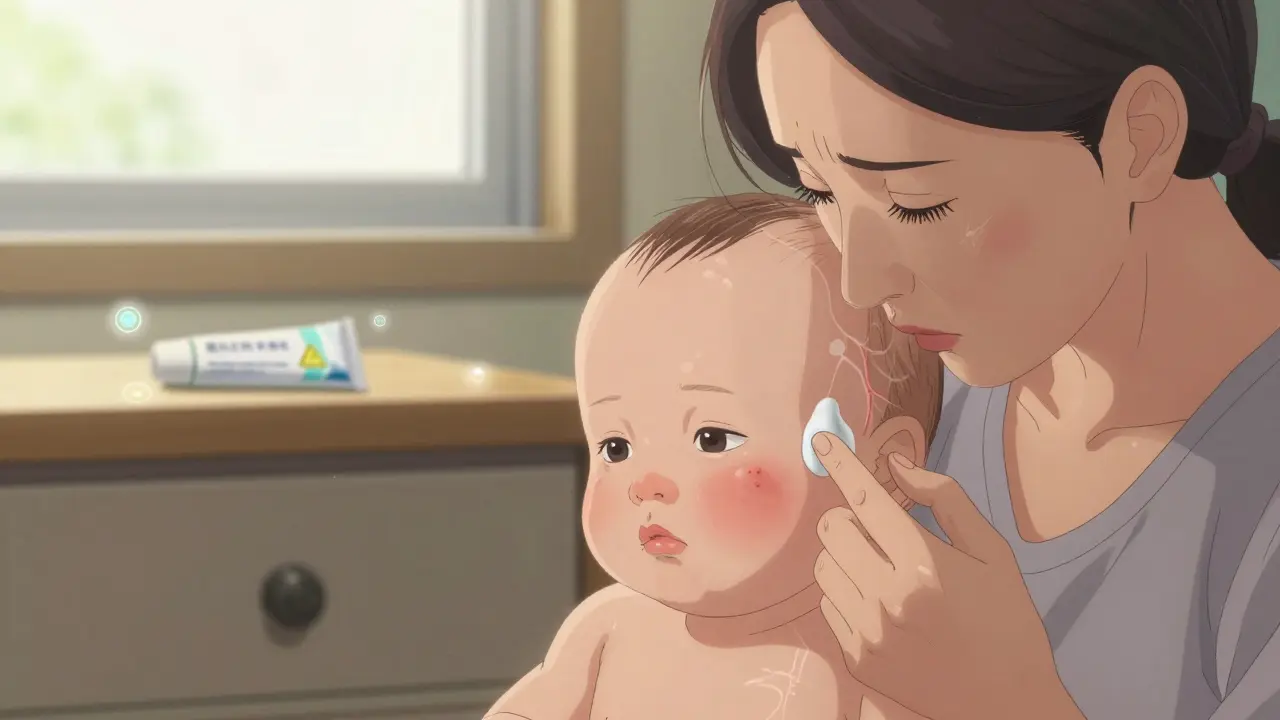
Every parent knows the frustration of a baby with eczema, a toddler with a diaper rash, or a child with a bug bite that won’t stop scratching. Topical creams and ointments seem like the easy fix-just rub it on and it’s gone. But what seems simple can be dangerous if you don’t know the rules. In the U.S. alone, topical medications send about 6,500 children under 5 to the emergency room every year. Most of these cases aren’t accidents caused by curiosity-they’re mistakes made by well-meaning parents who didn’t realize how powerful these little tubes really are.
Why Children’s Skin Is Different
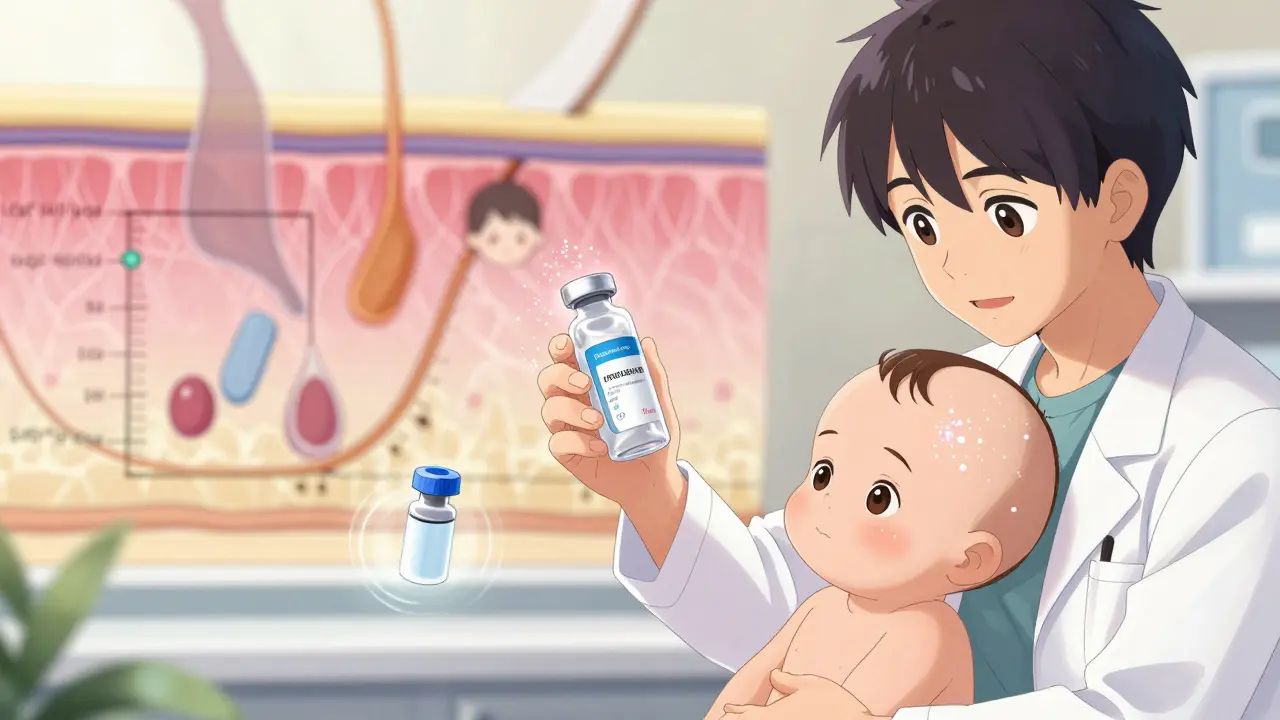
Children’s skin isn’t just smaller skin-it’s fundamentally different. Babies, especially those under one year old, have a skin barrier that’s still developing. Their stratum corneum (the outermost layer) is thinner, and their surface-area-to-body-weight ratio is much higher than adults’. This means a cream applied to their skin doesn’t just sit there. It gets absorbed into their bloodstream faster and in larger amounts. For a 10-pound infant, a dab of hydrocortisone cream meant for an adult’s elbow can be the same as swallowing a pill.Studies show that kids absorb topical medications 3 to 5 times more than adults. On broken or inflamed skin-like in eczema flare-ups-that absorption can jump to 10 or even 15 times higher. That’s why a treatment that’s safe for a grown-up can cause serious harm in a baby.
The Biggest Risks: What You Must Avoid
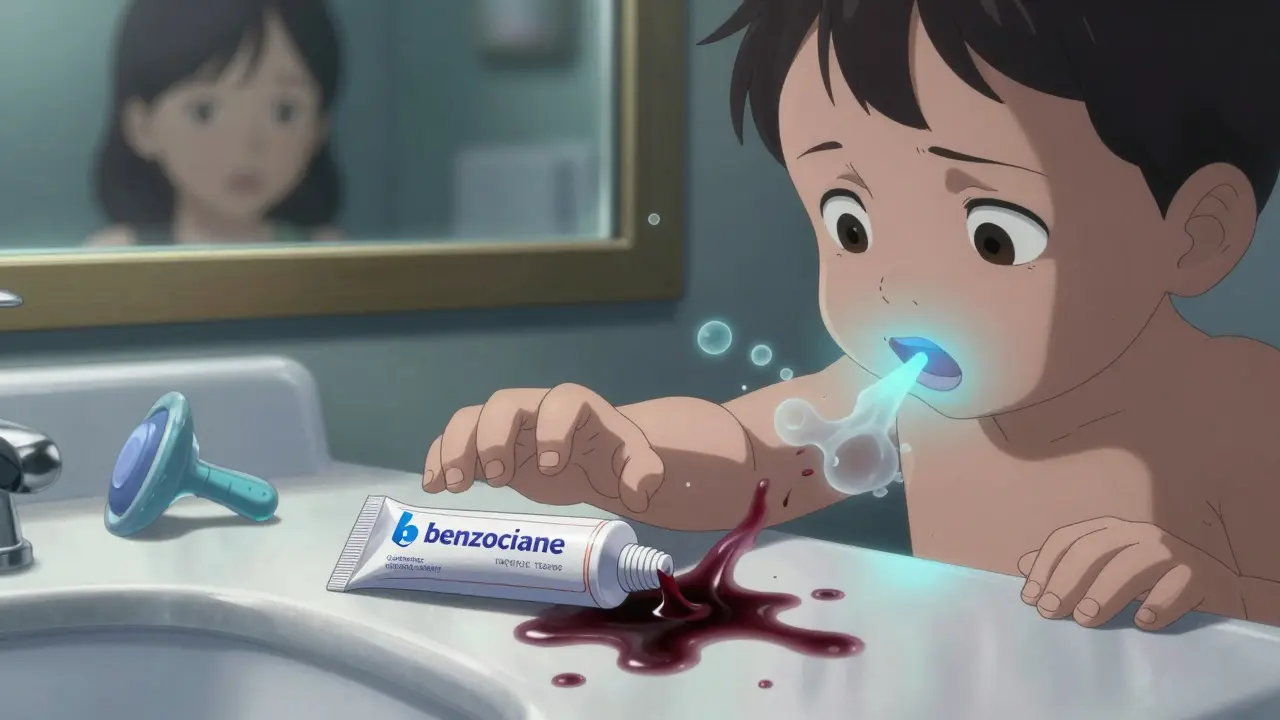
Not all topical products are created equal. Some carry hidden dangers that many parents don’t even know about.Benzocaine-commonly found in teething gels-is one of the most dangerous. The FDA banned its use in children under 2 because it can trigger methemoglobinemia, a condition where the blood can’t carry oxygen properly. Symptoms show up fast: blue lips, drowsiness, trouble breathing. In some cases, oxygen levels drop below 80% within 30 minutes. There are over 400 documented cases since 2006. And there’s no benefit worth the risk. Chilled (not frozen) rubber teethers work just as well-and safely.
Topical anesthetics like lidocaine and dibucaine are also risky. While they’re sometimes used in hospitals for procedures like IV insertions, they’re not safe for home use on babies. A child under 3 can develop seizures if more than 3 mg per kg of body weight is absorbed. That’s less than half a teaspoon of 4% lidocaine cream on a large area of skin.
Potent corticosteroids (like hydrocortisone 2.5%, betamethasone, or clobetasol) are the most commonly misused. Parents think stronger means faster results. But using a high-potency steroid on a child’s face, groin, or over large areas of skin can suppress their adrenal glands-the same way long-term oral steroids do. A 2022 review of 12,000 children found that 15.8% of those using strong steroids developed HPA axis suppression. That’s not rare. That’s common. And it can lead to fatigue, low blood pressure, and even life-threatening adrenal crisis during illness.
What’s Safe? Alternatives That Work
You don’t need harsh chemicals to treat common skin issues. Safer options exist.For eczema, the American Academy of Pediatrics now recommends topical calcineurin inhibitors like tacrolimus 0.03% or pimecrolimus as first-line for facial and sensitive areas in children over 3 months. These don’t suppress the adrenal system. They’re not steroids. And despite a black box warning about cancer risk, 15 years of real-world use have shown zero confirmed cases of skin cancer linked to them.
For diaper rash, zinc oxide paste is the gold standard. It’s physical, not chemical. It forms a barrier, doesn’t absorb, and is safe even for newborns. For bug bites, cool compresses and oral antihistamines (if approved by a doctor) are better than anti-itch creams.
For minor cuts or scrapes, plain petroleum jelly keeps the wound moist and protected. No antibiotics needed unless the skin is broken and infected.
Dosing: It’s Not About How Much You Apply
One of the biggest mistakes parents make? Applying too much. A pea-sized amount isn’t enough for a child’s whole back. But a tablespoon? That’s way too much.The standard is the fingertip unit (FTU). Squeeze a line of cream from the tube along the last joint of your index finger-that’s one FTU. One FTU covers an area about the size of two adult palms. For a child under 10 kg (about 22 lbs), the daily limit for topical steroids is 2 grams total (about 4 FTUs). Never treat more than 10% of their body surface at once.
Use a ruler or your hand to estimate. If you’re covering more than the size of their hand, you’re likely overdoing it. Less is more. Always use the lowest strength that works. A class VII steroid (like 0.5% hydrocortisone) is often enough. You don’t need a class I.
Occlusion: The Silent Danger
Many parents think wrapping a child’s arm in plastic wrap or Tegaderm will help the cream work better. It does-but not in the way you want.Occlusion increases absorption by 300% to 500%. That turns a safe dose into a toxic one. A baby with eczema already has damaged skin. Add plastic wrap? You’re basically giving them a drug infusion. That’s how HPA suppression happens. That’s how seizures from lidocaine occur. Never cover topical medications with plastic unless your doctor specifically tells you to-and even then, only for a few days at most.
Storage and Access: Keep It Out of Reach
Most pediatric exposures happen not because a child crawled to the medicine cabinet-but because a parent left the tube on the bathroom counter after applying cream.According to the American Association of Poison Control Centers, 78% of accidental ingestions occur when topical medications are left out during use. One parent applies cream to their child’s rash, puts the tube down to wipe their hands, and turns away for 30 seconds. The toddler grabs it. Sucks on the nozzle. Swallows a mouthful. That’s all it takes.
Always store topical medications in child-resistant packaging, locked away, and never leave them on counters, nightstands, or in diaper bags. Treat them like you would oral medications-because they are just as dangerous if ingested.
What to Do If Something Goes Wrong
If your child shows any of these signs after using a topical medication:- Blue or gray skin (especially lips or fingernails)
- Unusual drowsiness or lethargy
- Difficulty breathing
- Seizures or unresponsiveness
Call 911 or your local poison control center immediately. For benzocaine toxicity, the antidote is methylene blue, given intravenously. Time matters. Don’t wait to see if it gets better.
What’s Changing? What’s Coming
Regulations are catching up. The FDA’s 2023 draft guidance now requires all topical medications to include clear pediatric labeling: age limits, maximum body surface area, and duration of use. New products are starting to come with dosing devices-like pumps or pre-measured applicators-that make it harder to overdose.Some companies are even testing nanoparticle formulations that deliver the drug only to the skin’s surface, reducing absorption by 70-80%. These could be a game-changer for eczema treatment in babies.
But the biggest change needed isn’t in the lab-it’s in the home. Parents need to stop thinking of topical creams as harmless lotions. They’re medicines. And like all medicines, they need respect, precision, and caution.
Bottom Line: Simple Rules to Follow
- Never use benzocaine or lidocaine on babies under 2.
- Use the lowest-strength steroid that works-and only for a few days.
- Measure with fingertip units, not guesses.
- No plastic wrap unless your doctor says so.
- Always lock away after use.
- When in doubt, call your pediatrician or pharmacist. Don’t rely on OTC labels-they often don’t include pediatric safety info.
Topical medications can be lifesavers when used right. But used wrong, they can be deadly. Your child’s skin is delicate. Treat it like the sensitive, absorbing organ it is. Less is more. Safety isn’t optional-it’s essential.
Can I use hydrocortisone cream on my baby’s face?
You can use low-potency hydrocortisone (0.5% or 1%) on your baby’s face-but only for a few days and only if recommended by a doctor. Avoid strong steroids. For eczema on the face, topical calcineurin inhibitors like tacrolimus 0.03% are safer and just as effective. Never use it daily or for weeks without supervision.
Is it safe to use Neosporin on my child’s cut?
Neosporin and other antibiotic ointments are not necessary for most minor cuts. Plain petroleum jelly works just as well to keep the wound moist and prevent infection. Antibiotic creams increase the risk of allergic reactions and contribute to antibiotic resistance. Use them only if the wound is visibly infected and your doctor prescribes them.
Why do some creams say ‘for children over 2’ but I’ve seen babies use them?
Many OTC products are labeled for older children because they haven’t been tested for safety in babies. Just because a product is sold in stores doesn’t mean it’s safe for infants. The FDA banned benzocaine for under-2s because it was being used off-label-and causing deaths. Always check the label for age restrictions, and if it doesn’t say ‘infant-safe,’ assume it’s not.
What should I do if my child swallows a bit of cream?
Call Poison Control immediately at 1-800-222-1222 (U.S.) or your local emergency number. Don’t wait for symptoms. Even small amounts of lidocaine, benzocaine, or potent steroids can be dangerous. Keep the product container handy-poison control will need to know the exact ingredients and concentration.
Are natural or organic topical creams safer for kids?
Not necessarily. ‘Natural’ doesn’t mean safe. Essential oils, tea tree oil, or coconut oil applied to broken skin can cause allergic reactions or even toxicity in babies. Some ‘organic’ creams still contain corticosteroids not listed on the label. Always check the active ingredients. Just because it’s labeled ‘gentle’ doesn’t mean it’s safe for infants.
Comments
evelyn wellding
OMG this is SUCH a wake-up call! 🙌 I had no idea a tiny dab of hydrocortisone could be like giving my baby a pill. I used to slap that stuff on like it was lotion. Time to throw out the big tubes and stick to the 0.5% only. Thanks for saving my kid’s adrenal glands 💕
On January 17, 2026 AT 10:13
Chelsea Harton
topical meds are not lotion. they’re drugs. stop treating them like moisturizer. its not rocket science. but apparently its hard.
On January 19, 2026 AT 06:55
Corey Chrisinger
It’s wild how we treat skin like a wall when it’s actually a gate. 🧠 Every cream we slap on is a key. And kids’ skin? It’s got the lock picked. I used to think ‘natural’ meant safe-turns out, tea tree oil on broken skin is like handing a toddler a bottle of vodka. The body doesn’t care if it’s organic or synthetic-it just absorbs. We’re not applying creams. We’re dosing. And we’re bad at it.
On January 20, 2026 AT 18:18
Christina Bilotti
Oh sweetie, you mean you didn’t know benzocaine can kill babies? 🙄 I mean, the FDA banned it in 2018. Did you just wake up from a 6-year coma? Or did you just Google ‘baby rash remedies’ and pick the one with the prettiest packaging? 🤦♀️ Next time, read the label. Or better yet-don’t use anything at all. Let the rash run its course. It’s called ‘nature’.
On January 21, 2026 AT 05:22
brooke wright
Wait, so if I use a pea-sized amount for my 18-month-old, how much do I use for my 2-year-old? And what if they have eczema on their legs AND face? Do I split the FTU? And what about the cream I used last week that didn’t say ‘for under 2’ but my pediatrician said it was fine? Also, I left the tube on the counter because I was in a rush-should I be terrified? I’m just trying to help my kid, not poison them. 😭
On January 22, 2026 AT 08:46
vivek kumar
As a father of two and a medical researcher, I can confirm the absorption rates cited here are accurate. However, the article omits one critical point: cultural practices. In many South Asian households, parents apply mustard oil or turmeric paste for rashes-these can cause chemical burns or systemic toxicity too. The problem isn’t just OTC creams-it’s the global normalization of unregulated topical remedies. We need public health campaigns in non-Western languages too. This isn’t just an American issue.
On January 23, 2026 AT 18:47
Nick Cole
I read this whole thing and felt like someone finally spoke my language. I’ve been terrified to use anything on my daughter’s eczema since her last ER trip. I’ve been using plain Vaseline and it’s working better than the steroid cream I was scared to use. This guide is the reason I’m not giving up. Thank you for not scaring me-just informing me. I’m printing this and putting it next to her diaper cream.
On January 25, 2026 AT 15:34
Henry Ip
FTU is the real MVP here. I used to think a finger smear was enough for a whole leg. Nope. Now I measure like a scientist. Also-no plastic wrap. Ever. I used to think it was helping. Turns out I was basically giving her a steroid IV. Lesson learned. Also-Neosporin is useless. Vaseline wins. Always. And yes, I locked the cream away after reading this. No more counter chaos.
On January 26, 2026 AT 12:52