
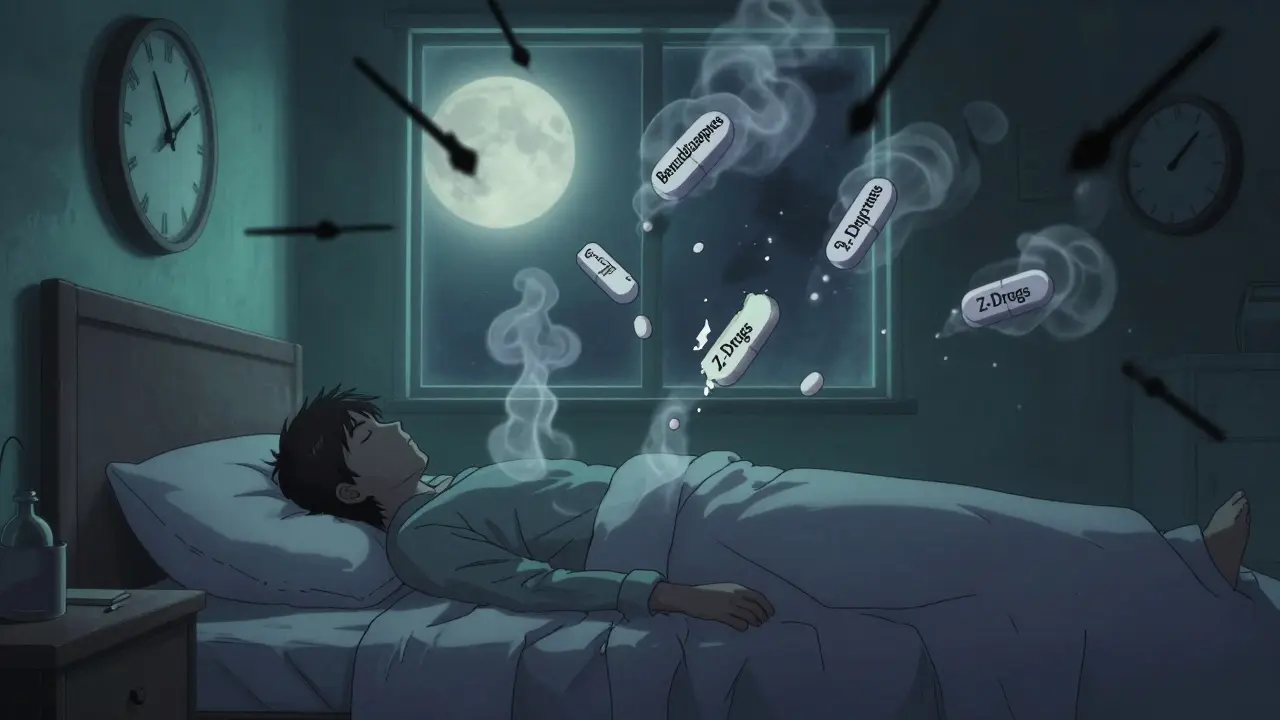
When sleep pills stop working - and start hurting
You’ve tried counting sheep. You’ve cut out caffeine after noon. You’ve even tried melatonin. But nothing helps. So your doctor gives you a prescription - maybe benzodiazepines like temazepam, or one of the non-benzodiazepines like zolpidem (Ambien). It works. For a while. Then you wake up groggy. Or you can’t remember half the night. Or you’re scared to stop taking it because you know you’ll be back to staring at the ceiling. You’re not alone. In 2022, over 10 million prescriptions for these drugs were filled in the U.S. alone. But here’s the truth most doctors don’t tell you: these medications aren’t solving your insomnia - they’re making it worse.
How these drugs actually work
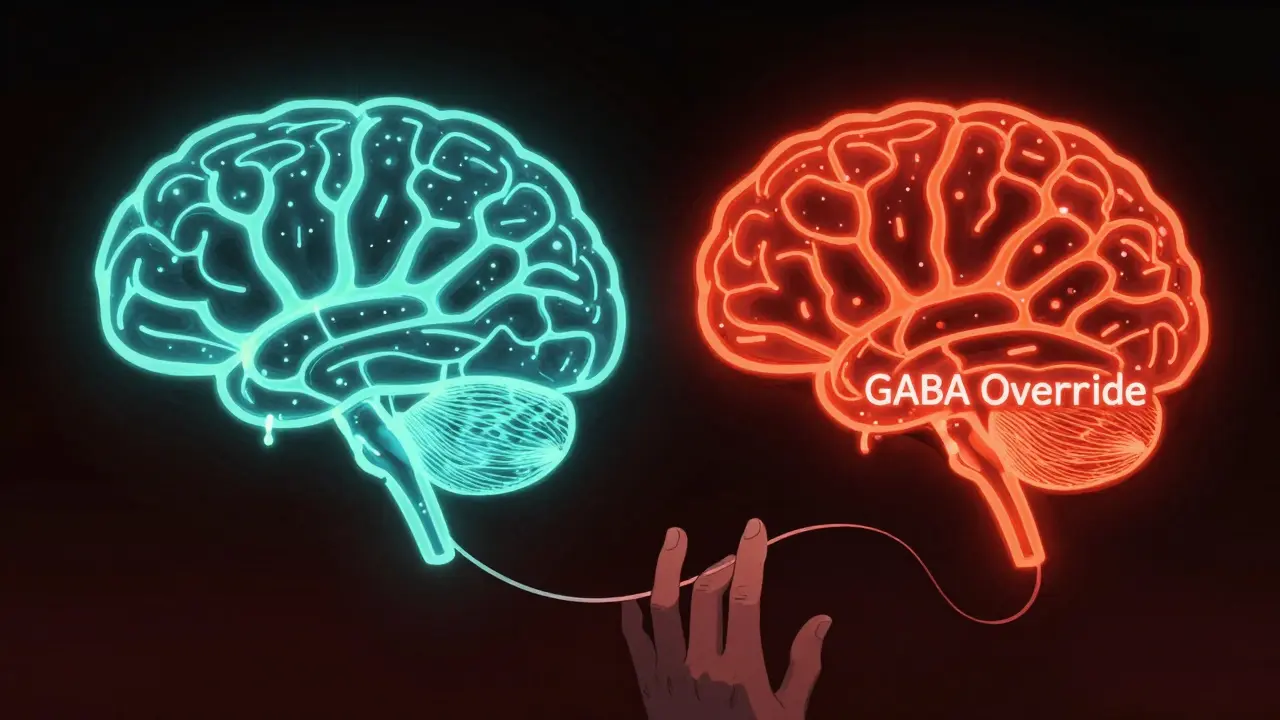
Both benzodiazepines and non-benzodiazepines (often called Z-drugs) work the same way: they boost GABA, the brain’s main calming chemical. But that’s where the similarity ends. Benzodiazepines - like diazepam, lorazepam, and triazolam - bind to several parts of the GABA receptor. That’s why they’re used for anxiety, seizures, and muscle spasms, not just sleep. Non-benzodiazepines - like zolpidem (Ambien), eszopiclone (Lunesta), and zaleplon (Sonata) - were designed to be pickier. They mostly target just one receptor subtype, called omega-1, which is thought to control sleep. That’s why they’re marketed as "sleep-specific." But here’s the catch: even if they’re more targeted, they still mess with your brain’s natural sleep rhythm.
Half-life matters more than you think
Not all sleep meds are created equal. The length of time a drug stays in your body - its half-life - makes a huge difference in how you feel the next day. Long-acting benzodiazepines like flurazepam have a half-life of up to 250 hours. That means traces of the drug are still in your system three days later. No wonder people report feeling foggy, clumsy, or dizzy the next morning. Shorter-acting ones like triazolam (half-life under 6 hours) leave your system faster, but they’re more likely to cause rebound insomnia - meaning you sleep worse the night after you skip a dose. Non-benzodiazepines are better here. Zaleplon (Sonata) lasts just 1-1.5 hours, so it’s good for people who wake up in the middle of the night. Zolpidem (Ambien) lasts 1.6-4.5 hours, which is why the FDA lowered the dose for women in 2013 - too many were still drowsy the next morning. Eszopiclone (Lunesta) lasts longer (5-7 hours), so it’s better for staying asleep, but not for waking up alert.
The hidden dangers: memory, falls, and strange behaviors
Both classes carry serious risks - but they’re not the same. Benzodiazepines are linked to a 2.3 times higher risk of hip fractures in older adults. Why? They cause dizziness, muscle weakness, and slow reaction times. Non-benzodiazepines don’t cause as many falls, but they have their own scary side effects. The FDA has documented cases of people driving, cooking, or even having sex while asleep - with no memory of it afterward. Zolpidem alone was linked to 66% of all sleep-driving incidents reported to the FDA between 2005 and 2010. And it’s not rare. One study found 1 in 10 users had unusual sleep behaviors. Then there’s memory. People on these drugs report short-term forgetfulness, confusion, and even hallucinations. A 2023 VA report found users had a 5-fold higher risk of memory and concentration problems. That’s not just annoying - it’s dangerous.
Withdrawal: the silent trap
Here’s where things get worse. If you’ve been taking these for more than a few weeks, stopping isn’t as simple as skipping a pill. Benzodiazepines cause severe withdrawal - panic attacks, seizures, tremors, even psychosis. One user on Reddit described quitting temazepam after 8 months: "I had panic attacks for three straight weeks." Non-benzodiazepines are less brutal, but they still cause rebound insomnia. In fact, 68% of users on Reddit stopped Z-drugs within 3 months because they stopped working. And when they did, sleep got worse than before they started. That’s not coincidence. These drugs don’t fix sleep - they override it. Your brain forgets how to sleep on its own.
Who’s most at risk?
If you’re over 65, you’re already at higher risk for falls, memory loss, and breathing problems. The American Geriatrics Society says both classes should be avoided in older adults. But it’s not just seniors. People with sleep apnea - which affects 20-30% of chronic insomniacs - can have their breathing shut down even more by these drugs. Alcohol? Even one drink can turn a safe dose into a deadly mix. And if you’re on antidepressants, opioids, or antihistamines, the risk of slow breathing or death jumps dramatically. The CDC found that 1 in 5 overdose deaths involving sedative-hypnotics also involved opioids. These aren’t isolated risks - they’re predictable.
What’s the alternative?
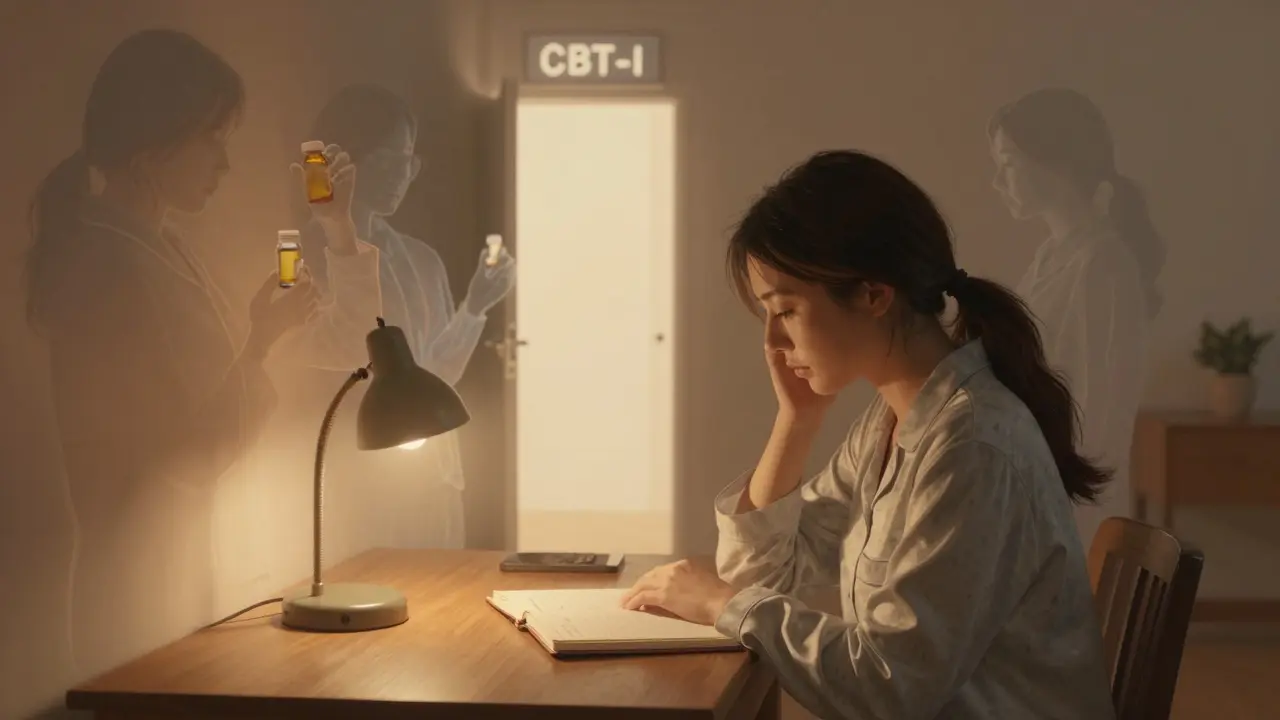
The American Academy of Sleep Medicine now says the first-line treatment for insomnia isn’t a pill - it’s cognitive behavioral therapy for insomnia (CBT-I). CBT-I helps you retrain your brain to associate bed with sleep, not stress. It works better than pills long-term, and it lasts. One study showed people who did CBT-I slept better five years later. No pills. No withdrawal. No next-day fog. But here’s the problem: most doctors don’t offer it. It’s harder to prescribe a 6-week therapy than a 30-day script. And insurance often won’t cover it. Still, if you’re serious about sleep, CBT-I is the only treatment that doesn’t come with a hidden cost.
Why prescriptions are still rising
Despite all this, non-benzodiazepine prescriptions went up from 2% to 2.5% of U.S. adults between 2013 and 2022. Why? Marketing. Drug companies sold Z-drugs as "safer," "non-addictive," and "natural sleep helpers." But a 2019 JAMA study found no real safety advantage over benzodiazepines. The VA, CDC, and FDA all now warn: these drugs don’t improve health. They make you tired, weak, and more likely to fall. The VA’s 2023 statement says it plainly: "It is no longer recommended to take a sedative-hypnotic drug to treat insomnia or anxiety." That’s not a suggestion. It’s a policy change.
What to do if you’re on one
If you’re currently taking a benzodiazepine or Z-drug, don’t quit cold turkey. That can be dangerous. Talk to your doctor about a slow taper. For benzodiazepines, reduce by 10% every 1-2 weeks. For Z-drugs, a 2-4 week taper is often enough. Track your sleep with a journal. Notice if you’re waking up less tired. If you’re not sleeping well after stopping - that’s normal. Your brain is relearning. Give it time. And ask about CBT-I. It’s not magic. But it’s the only thing that actually fixes insomnia - without the side effects.
Are benzodiazepines more addictive than non-benzodiazepines?
Yes, benzodiazepines have a higher risk of physical dependence and more severe withdrawal symptoms, including seizures and panic attacks. Non-benzodiazepines (Z-drugs) are less likely to cause life-threatening withdrawal, but they still lead to tolerance and rebound insomnia. Both can be habit-forming, especially with regular use beyond 2-4 weeks.
Can I take these drugs with alcohol?
Never. Mixing sedative-hypnotics with alcohol - even one drink - can slow your breathing to dangerous levels, cause unconsciousness, or even death. This interaction is why the FDA and CDC warn against combining these drugs with any depressants, including opioids, antihistamines, and some antidepressants.
Do non-benzodiazepines really have fewer side effects?
Not really. While Z-drugs were designed to be more targeted, studies show they cause nearly the same risks: next-day drowsiness, memory issues, falls, and complex sleep behaviors like sleep-driving. The FDA had to lower zolpidem doses in 2013 because women were still impaired in the morning. There’s no clear safety advantage over benzodiazepines in long-term use.
Why do these drugs stop working after a few weeks?
Your brain adapts. These drugs override your natural sleep system. Over time, your body builds tolerance - you need more to get the same effect. This is why 68% of users on Reddit stopped Z-drugs within 3 months. The drug doesn’t fix insomnia - it masks it. Once you stop, your brain struggles to return to normal sleep patterns.
Is CBT-I really better than sleeping pills?
Yes - and the evidence is clear. CBT-I improves sleep quality long-term, without side effects, dependence, or withdrawal. Studies show people who complete CBT-I sleep better five years later. Sleeping pills may help for a few nights, but they don’t teach your brain how to sleep. CBT-I does. It’s the only treatment recommended as first-line by the American Academy of Sleep Medicine.
What should I do if I want to stop taking my sleep medication?
Talk to your doctor first. Quitting suddenly can cause seizures (with benzodiazepines) or severe rebound insomnia. A slow taper - reducing your dose by 10% every 1-2 weeks - is safest. Keep a sleep journal. Track how you feel each morning. Consider starting CBT-I during the taper. Most people find their sleep improves after 4-8 weeks off the medication, even if it’s hard at first.
Comments
SNEHA GUPTA
This post cuts to the core of a systemic failure in modern medicine. We treat symptoms like bugs to be eradicated, not signals to be understood. Sleep isn't a broken machine-it's a rhythm disrupted by stress, environment, and learned associations. The fact that we've normalized chemical sedation as a first-line solution says more about our healthcare economics than our biological needs. CBT-I isn't just 'better'-it's the only approach that restores autonomy. The brain doesn't need a crutch; it needs a map.
On March 16, 2026 AT 15:05
Gaurav Kumar
Americans are so lazy they'd rather pop a pill than change their lifestyle. In India, we still respect natural rhythms. No one here takes Ambien. We do yoga, eat light dinners, and sleep when tired. This whole pharmaceutical industry is a scam built on Western entitlement. Wake up. Your brain doesn't need a chemical leash.
On March 18, 2026 AT 05:14
David Robinson
I’ve been on zolpidem for 3 years. Stopped cold turkey last month. Had a seizure. My neurologist said I was lucky to be alive. Don’t listen to these 'just do CBT-I' people. They’ve never been through withdrawal. The system is broken. Doctors don’t warn you. Pharma hides the risks. I’m not blaming the patient. I’m blaming the industry. And yes, I still can’t sleep without a tiny dose. So sue me.
On March 20, 2026 AT 01:57
Jeremy Van Veelen
The tragedy isn’t just the drugs-it’s the silence. The medical establishment has turned sleep into a commodity. You don’t fix insomnia. You sell a temporary illusion. And then you profit from the dependency. It’s capitalism in its most insidious form: selling you the very thing you’re losing. Z-drugs? A placebo with a side of existential dread. CBT-I is the quiet revolution no one wants to fund-because it doesn’t have a patent.
On March 21, 2026 AT 21:54
Laura Gabel
I took Lunesta for 6 months. Woke up walking to the kitchen once. Had no memory of it. Called my doctor. She said 'oh that's rare' like I was lying. Then she renewed the script. I quit cold. Now I sleep worse than ever. No one cares. This system is designed to keep you dependent. CBT-I? Yeah right. I can't afford it. Insurance won't cover it. So I'm stuck. Thanks America.
On March 22, 2026 AT 19:57
jerome Reverdy
Let’s get real: the pharmacology is clear. GABA modulation = temporary suppression of hyperarousal. But the real issue is neuroplasticity. These drugs hijack the sleep-wake circuitry. The brain doesn’t 'learn' to sleep-it learns to rely. CBT-I works because it rebuilds the neural pathways. It’s not magic. It’s neuroscience. And yes, access is a joke. But if you're serious, there are online CBT-I programs under $100. You don’t need a therapist. You need a schedule. And discipline. Not a pill.
On March 23, 2026 AT 22:07
Stephen Habegger
I was skeptical about CBT-I until I tried it. Took 8 weeks. Felt worse at week 3. But now? I sleep deeper than I have in 15 years. No meds. No fog. No fear. It’s not easy. But it’s worth it. You’re not broken. Your habits are. Fix those, and the sleep comes back.
On March 25, 2026 AT 16:01
Justin Archuletta
I quit my benzo after 2 years. It was the hardest thing I’ve ever done. I cried for a week. My anxiety spiked. I thought I was dying. But I did it. And now? I sleep 7 hours straight. I don’t need a pill. I need routine. And patience. And a damn journal. Start tracking. You’ll be shocked what you find.
On March 26, 2026 AT 17:34
Sanjana Rajan
This is why the West is collapsing. People think they can outsource their biology to a pill. You want sleep? Stop scrolling at 1am. Stop eating sugar. Stop lying in bed watching Netflix. You’re not sick. You’re lazy. And now you’re addicted to a drug that makes you dumber. No sympathy. Do the work.
On March 27, 2026 AT 06:07
Kyle Young
An interesting paradox: the more we understand the neurobiology of sleep, the more we rely on pharmacological intervention. Why? Because biological understanding doesn’t translate into scalable solutions. CBT-I requires time, attention, and human connection-resources we’ve systematically devalued. The drug industry offers efficiency. But efficiency without wisdom is just control. We’ve mistaken control for cure.
On March 28, 2026 AT 13:29
Aileen Nasywa Shabira
Oh wow. A 10,000-word manifesto on why pills are bad. Did you also write a 300-page book on why breathing is underrated? Congrats. You’ve just described the obvious. The real question: why do 10 million people still take these? Because they’re tired. And broke. And their boss won’t let them nap. And their kid won’t stop crying. And their therapist is booked for 6 months. So yeah, I’ll take the Ambien. Thanks for the lecture, Doctor.
On March 29, 2026 AT 09:43
lawanna major
I’ve been through both. The drugs gave me 3 months of false peace. CBT-I gave me 5 years of real rest. The difference? One made me feel like a patient. The other made me feel like a person. The brain is not a machine. It’s a garden. Pills are weedkiller. CBT-I is compost. You don’t spray the garden and expect it to thrive. You tend it. Slowly. With care. And yes-it’s harder. But it’s the only thing that lasts.
On March 29, 2026 AT 22:03
Ryan Voeltner
The ethical imperative here is clear. Medical practice must evolve beyond transactional interventions. The commodification of sleep represents a fundamental misalignment between clinical practice and human flourishing. While pharmacological management may offer short-term palliation, it fails to address the ontological dimensions of rest. CBT-I, by contrast, reintegrates the individual into their own circadian narrative. This is not merely therapeutic-it is restorative. We must advocate for structural change in healthcare delivery, not merely individual substitution.
On March 30, 2026 AT 14:39