
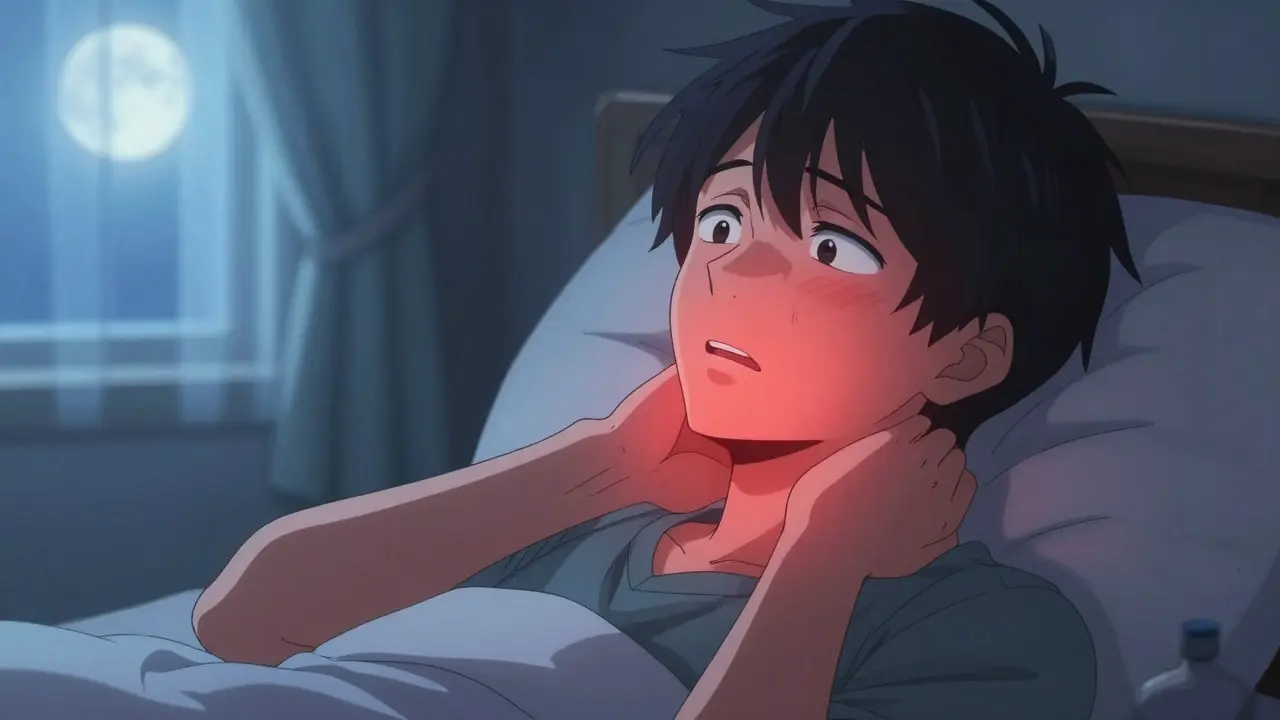
Understanding the Sudden Onset of Strep Throat
If you wake up with a throat that feels like it’s on fire, a fever that spikes above 38°C (100.4°F), and swollen glands in your neck, you might be dealing with strep throat, a bacterial infection caused by Group A Streptococcus. Unlike the common cold, which usually comes with a runny nose or cough, strep throat hits suddenly and hard. It is most common in children aged 3 to 9, but adults get it too. The key difference? Strep throat doesn’t cause congestion. If you have a cough, it’s likely viral. If you don’t, and your throat is red with white patches, it could be bacterial.
How Doctors Diagnose Strep Throat
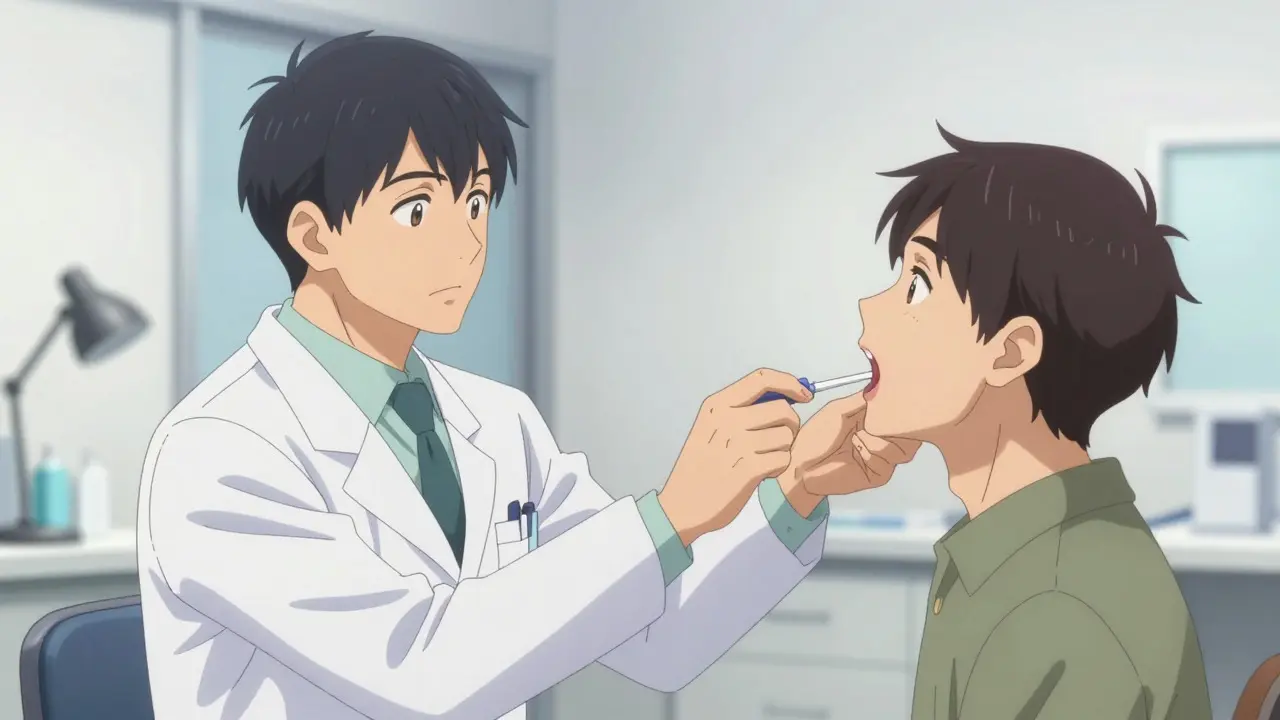
Diagnosis isn’t just about looking at your throat. Doctors use a scoring system called the Centor criteria to assess risk. You get one point for each of these: no cough, tender lymph nodes, fever over 38°C, and tonsillar swelling. A score of 3 or higher suggests a high probability of strep. But clinical signs aren’t enough. That’s where testing comes in.
- Rapid Antigen Detection Test (RADT): This is the quick swab test done in the office. Results come out in 10 to 30 minutes. It’s highly specific (over 95%), meaning if it’s positive, it’s almost certainly strep. However, it can miss cases (false negatives) in up to 15% of situations, especially in young children.
- Throat Culture: This is the gold standard. A sample is sent to a lab and grows bacteria over 24 to 48 hours. It’s more sensitive than the rapid test but slower.
- PCR Testing: Newer molecular tests are extremely accurate (95-98% sensitivity) and are becoming more common in urgent care settings.
For adults with a low Centor score and a negative rapid test, doctors often stop there. For children, a negative rapid test usually triggers a follow-up culture to be safe, given the higher risk of complications in kids.
Antibiotic Treatment Protocols
Once diagnosed, treatment starts immediately. The goal is twofold: relieve symptoms and prevent serious complications like rheumatic fever. The first-line treatment is penicillin-based antibiotics.
| Medication | Dosage (Adults) | Duration | Eradication Rate | Notes |
|---|---|---|---|---|
| Penicillin V | 500 mg twice daily | 10 days | 95% | First-line choice; cheap and effective. |
| Amoxicillin | 1000 mg once daily | 10 days | 95% | Tastes better for kids; same efficacy as penicillin. |
| Cephalexin | 500 mg twice daily | 10 days | 90% | Used for mild penicillin allergies. |
| Azithromycin | 500 mg once daily | 5 days | 85-90% | Shorter course; higher resistance rates in some areas. |
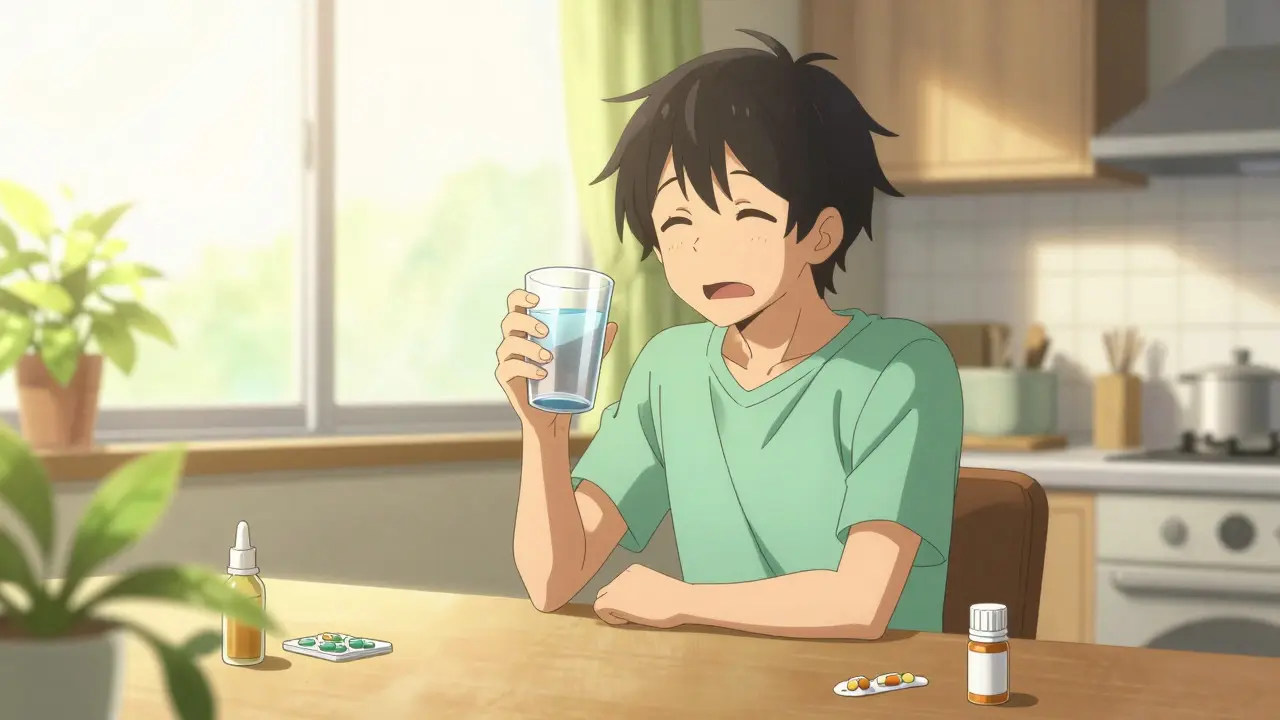
It’s crucial to finish the full course. About 40% of parents stop giving antibiotics early when their child feels better. This increases the risk of relapse and contributes to antibiotic resistance. Penicillin remains highly effective because resistance rates are very low (around 0.5%). However, macrolides like azithromycin face higher resistance (up to 15% in some regions), so they’re reserved for allergic patients.
Recovery Timeline and Contagion Risks
You don’t have to suffer through the whole week. With antibiotics, symptoms typically improve within 24 to 48 hours. Fever drops quickly, and throat pain eases. Complete resolution takes about 7 to 10 days. Without treatment, symptoms can linger for a similar duration, but you remain contagious much longer.
Here’s what to expect during recovery:
- Day 1-2: Start antibiotics. Fever should break within 24 hours. You are still contagious until 24 hours after the first dose.
- Day 3-5: Pain significantly reduces. Most people can return to work or school after 24 hours of antibiotic therapy and fever resolution.
- Day 6-10: Complete the antibiotic course. Even if you feel 100% fine, take the last pills. This prevents relapse, which occurs in 5-15% of incompletely treated cases.
If symptoms don’t improve after 48 hours of antibiotics, see a doctor again. It could be a peritonsillar abscess, a rare but serious complication that requires drainage.
Preventing Complications and Resistance
Why treat it if it goes away anyway? Because untreated strep throat can lead to acute rheumatic fever, which damages the heart valves. This affects about 3% of untreated cases. Early treatment prevents this. Also, sharing leftover antibiotics or using them without a prescription fuels resistance. Stick to the prescribed regimen. If you suspect strep, get tested. Don’t guess based on how bad your throat hurts. Accurate diagnosis saves money, reduces unnecessary antibiotic use, and keeps you healthy faster.
Frequently Asked Questions
Can adults get strep throat?
Yes, although it is less common than in children. About 5-15% of adult sore throats are caused by strep bacteria. Adults often present with fever and swollen glands but rarely have a cough.
How long do I need to stay home from work or school?
You can return after 24 hours of starting antibiotics and once your fever has resolved. This ensures you are no longer highly contagious to others.
Is amoxicillin better than penicillin for strep?
They have similar effectiveness. Amoxicillin is often preferred for children because it tastes better and can be dosed once daily, improving compliance. For adults, either works well.
What if the rapid test is negative but I still feel sick?
If you are an adult with few other symptoms, it’s likely viral. If you are a child, doctors often order a throat culture to rule out false negatives. Viral sore throats usually resolve on their own with rest and fluids.
Can I catch strep throat twice?
Yes. Antibiotics cure the current infection but don’t provide long-term immunity. You can be re-infected if exposed to the bacteria again, especially in households or schools with multiple cases.