
When you need a tooth pulled, a cut stitched, or a minor surgery done without feeling a thing, local anesthetics, drugs that block nerve signals in a targeted area without affecting your consciousness. Also known as numbing agents, they let you stay awake while the pain disappears right where it matters. Unlike general anesthesia, which knocks you out, local anesthetics work like a silent switch—turning off pain in one spot while the rest of your body stays normal. You’ve probably felt them at the dentist’s office, the ER, or even during a simple skin biopsy. They’re fast, safe, and used millions of times a year.
Not all local anesthetics are the same. Lidocaine, the most common type used in dentistry and minor surgeries. Also known as Xylocaine, it’s the go-to for quick, reliable numbing. But in many dental procedures today, articaine, a stronger, faster-acting alternative. Also known as Septocaine, it’s often preferred for deeper nerve blocks and tougher cases. Then there’s bupivacaine for longer-lasting effects, and prilocaine for people with sensitivities. Each has its own timing, strength, and risk profile. What works best for a wisdom tooth extraction might not be the best for a finger cut. The choice depends on the procedure, your health, and even how fast you heal.
These drugs aren’t just about pain control—they’re about safety too. Too much can affect your heart or nerves. That’s why dentists and doctors measure doses carefully, especially for kids, older adults, or people with certain medical conditions. Even the way the anesthetic is delivered matters. A simple injection into the gum? That’s a local block. A shot near a major nerve bundle? That’s a nerve block—deeper, longer, and sometimes more precise. Understanding these differences helps you ask better questions and feel more in control when it’s your turn on the chair.
What you’ll find below are real, practical guides on how local anesthetics are used in everyday care—from dental work to minor surgeries. You’ll see how lidocaine stacks up against articaine, what to expect after the numbness wears off, and how to spot if something’s gone wrong. No fluff. No theory. Just clear, tested info from people who’ve been there.
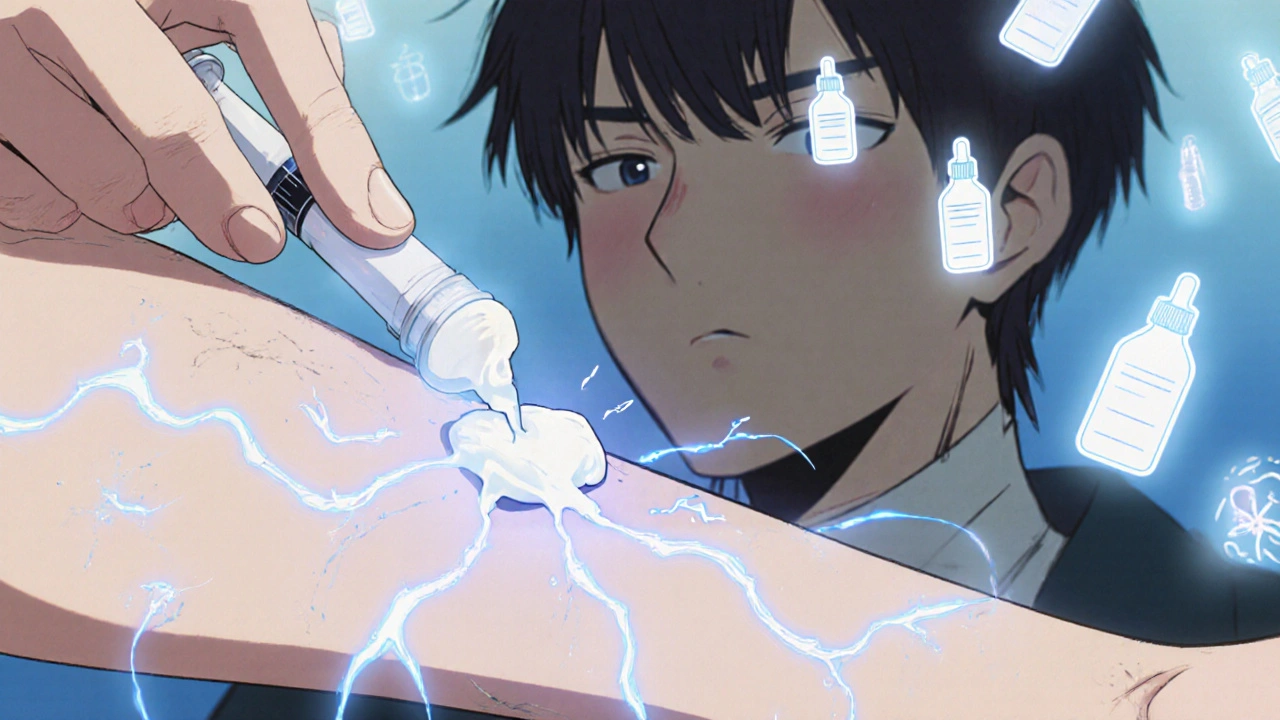
Compare lidocaine (Xylocaine) with benzocaine, prilocaine, tetracaine, and other numbing alternatives for pain relief. Learn which is best for tattoos, dental work, sensitive skin, and more.
Read More© 2026. All rights reserved.