

The VA formulary isn’t just a list of drugs-it’s the backbone of how millions of veterans get their prescriptions. If you’re a veteran relying on VA healthcare, understanding this system can save you hundreds of dollars a year. The VA doesn’t follow the same rules as private insurers. Instead, it uses a strict, government-backed approach that prioritizes generic medications and keeps out-of-pocket costs low. This isn’t theory-it’s real savings, backed by data and used by over 9 million veterans every year.
How the VA Formulary Works: Generic First, Always
The VA National Formulary operates on one clear rule: if a generic version of a drug exists, that’s what you get. No exceptions unless your doctor proves you need the brand-name version for medical reasons. This isn’t a suggestion-it’s policy. The VA’s Pharmacy Benefits Management Service enforces this across all 1,293 of its facilities, from VA clinics in rural towns to major medical centers in big cities.
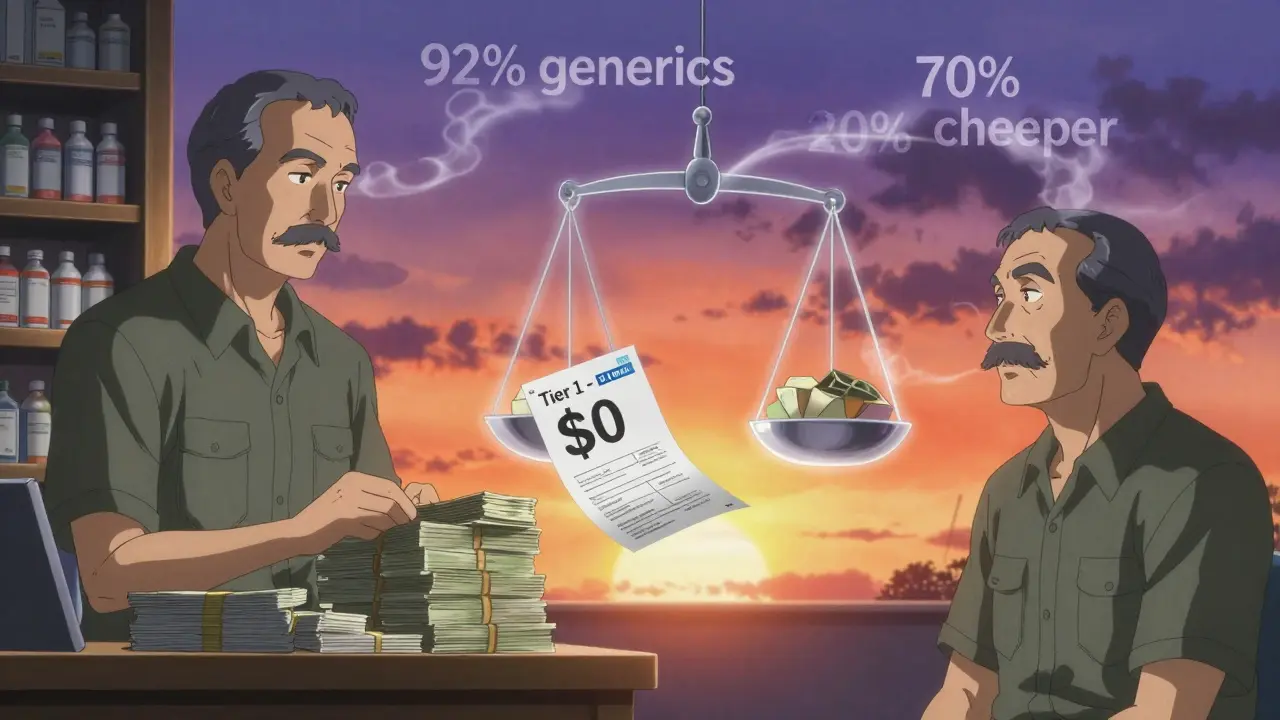
Why? Because generics work just as well. Studies show VA patients get the same health outcomes using generic versions of antidepressants, blood pressure meds, and cholesterol drugs. The VA’s own data confirms that 92% of all prescriptions filled through its system are generics-higher than any other major U.S. payer, including Medicare Part D and private insurers. That’s not luck. It’s design.
For example, if you’re on sertraline (the generic for Zoloft), you pay $0 or $5 a month through VA Mail Order. The brand-name version? It’s not even on the formulary unless you have a documented reason like an allergic reaction. Same goes for atorvastatin (Lipitor), furosemide (Lasix), and alendronate (Fosamax). The VA doesn’t pay for the brand unless it’s absolutely necessary.
The Three-Tier Copay System: What You Actually Pay
The VA doesn’t use confusing five-tier systems like Medicare Part D. It keeps it simple: three tiers. Your copay depends on which tier your medication falls into.
- Tier 1: Preferred generics. These are the most common and cheapest. Copays are usually $0-$5 for a 30-day supply. Examples: aspirin, ibuprofen, hydrochlorothiazide, fluoxetine, sertraline, pravastatin.
- Tier 2: Non-preferred generics or some brand-name drugs with generic alternatives. Copays are $10-$15.
- Tier 3: Brand-name drugs with no generic available, or specialty medications. Copays can be $20-$30, but even here, the VA negotiates prices far below what you’d pay elsewhere.
Compare that to commercial insurance. A 30-day supply of atorvastatin might cost $45 out-of-pocket with your private plan. With the VA? You pay $5. A month’s supply of fluoxetine? $0 at VA Mail Order. That’s why veterans using the VA spend about $1,850 per year on medications, while those on Medicare Part D pay $2,300 and privately insured patients pay $2,700.
VA Meds by Mail: The Hidden Advantage
If you take maintenance medications-drugs you use every day for chronic conditions-Meds by Mail is the smartest way to get them. It’s free for most veterans. No copay. No deductible. No trips to the pharmacy.
The VA partners with OptumRx to deliver your prescriptions directly to your door. You get 90-day supplies, which means fewer refills and lower shipping costs. For veterans on Tier 1 medications, this means paying nothing at all. A 2024 survey of 12,450 VA users found that 87% were satisfied with Meds by Mail. Why? Because it’s predictable, convenient, and cost-free.
Some medications can’t be mailed-like refrigerated biologics or those requiring special handling. But for the vast majority of prescriptions, this is the easiest, cheapest option available.
What’s Covered? Real Examples from the 2025 Formulary
The VA updates its formulary monthly. But the core structure stays the same. Here’s what’s covered in 2025:
- Arthritis & Pain: Allopurinol, ibuprofen, aspirin buffered, naproxen
- Heart & Blood Pressure: Furosemide, hydrochlorothiazide, metoprolol, lisinopril
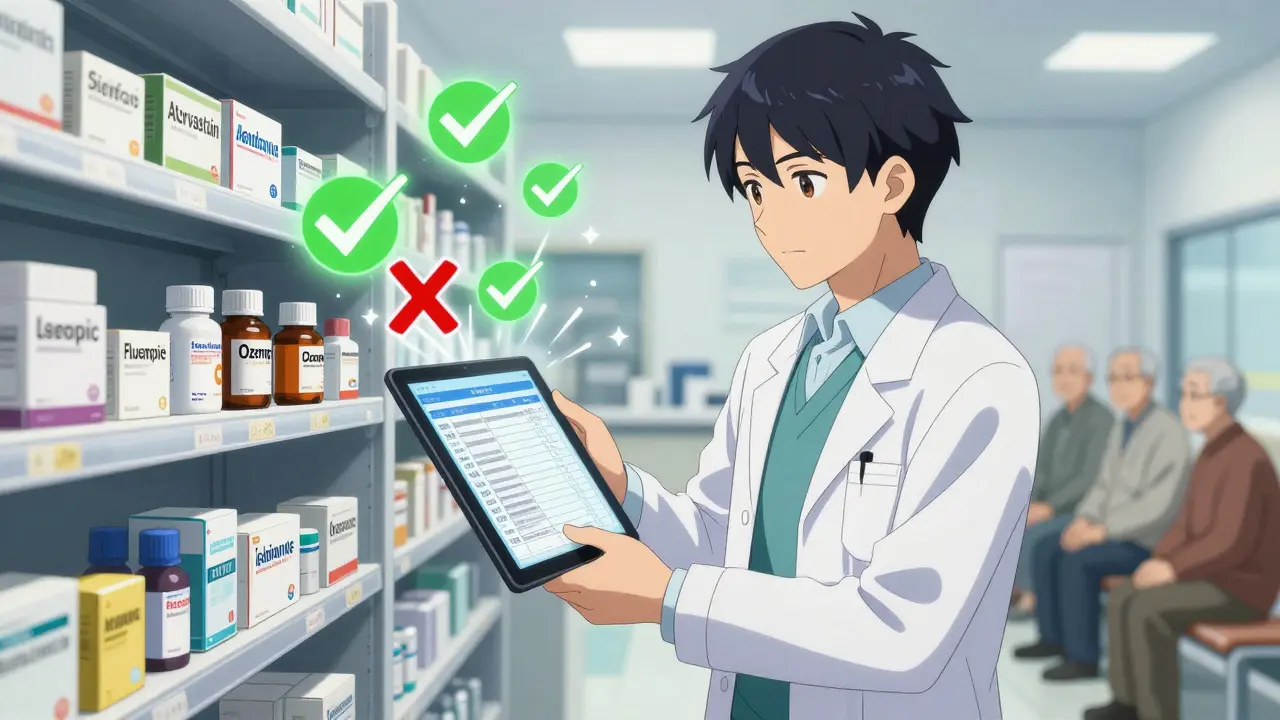
- Cholesterol: Atorvastatin, ezetimibe, pravastatin
- Mental Health: Fluoxetine, sertraline, trazodone, bupropion
- Diabetes: Metformin, glimepiride, insulin glargine
- Bone Health: Alendronate (added Jan 1, 2025)
Notice anything? No Ozempic. No Wegovy. Not because they don’t work-but because the VA only covers GLP-1 drugs for FDA-approved uses: type 2 diabetes, obesity with cardiovascular risk, or sleep apnea. Weight loss alone? Not covered under CHAMPVA or standard VA formulary rules. That’s a common point of confusion.
What’s Not Covered? The Limits and Workarounds
Some veterans get frustrated when their doctor recommends a newer drug that’s not on the formulary. That’s normal. The VA doesn’t rush to add every new medication. It waits for evidence.
For example, in 2025, Wegovy (semaglutide) is only covered for:
- Obesity with cardiovascular disease
- Type 2 diabetes
- Metabolic-associated steatohepatitis
If you need it for weight loss alone, you’re out of luck. But here’s the trick: your VA provider can request a prior authorization. If you have a documented condition like heart disease or diabetes, they can argue for coverage. Many requests are approved-especially if you’ve tried and failed other treatments.
Another common issue: specialty drugs for rare diseases or cancer. These are expensive. The VA has a separate review process for them. It’s slower, but it’s fair. The National Drug Formulary Committee reviews every new drug based on clinical data, cost, and whether it offers real improvement over existing options. In 2024, they denied 18% of new drug requests-not because they’re stingy, but because 82% didn’t meet the threshold for cost-effectiveness.
How to Check Your Medication: VA Formulary Advisor
Don’t guess. Use the official tool: the VA Formulary Advisor. It’s free, public, and updated monthly. You can search by drug name, brand, or generic. It tells you:
- Is it covered?
- Which tier?
- Do you need prior authorization?
- Can it be mailed?
You can also download the full formulary as an Excel file or CSV. It’s updated every month. Veterans who check this before their appointment save time and avoid surprises. It’s the most underused tool in the VA system.
How Veterans Navigate the System: Real Stories
A Reddit user named ArmyVet2010 wrote in September 2025: “Switched to generic sertraline through VA Mail Order last month-same effectiveness as Zoloft, but I pay $0 instead of $15 at my local pharmacy.” That’s the VA in a nutshell.
But not everyone has it easy. NavyDoc88 posted in November 2025: “My provider wanted me on Wegovy for weight loss. Had to jump through hoops for prior auth. Only covered if I have diabetes.” That’s the reality. The VA isn’t perfect. It’s strict. But it’s also consistent.
One study found that 12% of veterans initially worried their generic meds wouldn’t work. But after talking to their VA pharmacist, 94% stuck with the treatment-and saw no difference in how they felt. The fear of generics is real. The evidence? Not so much.
What’s Changing in 2026?
The VA is moving toward smarter prescribing. By Q3 2026, the electronic health record system will start suggesting generic alternatives automatically when a doctor tries to prescribe a brand-name drug. It’s called AI-driven therapeutic interchange. Think of it like a built-in pharmacist checking your prescription before it’s sent.
They’re also improving transparency. By 2026, you’ll be able to see real-time formulary status right in your e-prescription-no need to log into a separate tool. If a drug is about to be removed or restricted, you’ll get a heads-up.
And while specialty drug costs are rising, the VA is still outperforming the rest of the system. In 2024, specialty drug spending rose 12.3% for the VA-compared to 15.7% nationally. That’s because they’re holding the line on cost, not cutting care.
What You Need to Do Now
If you’re a veteran:
- Check your current prescriptions on the VA Formulary Advisor. Know your tier.
- Switch to Meds by Mail for maintenance drugs. It’s free and reliable.
- If your drug isn’t covered, ask your provider for prior authorization. Don’t assume it’s denied.
- Call the VA Pharmacy Benefits line: 1-800-877-8339. They handle 18,000 calls a day for a reason.
- Don’t trust private pharmacy prices. VA prices are often 70% lower.
The VA formulary isn’t perfect. But it’s the most cost-effective, evidence-based, veteran-focused pharmacy system in the country. You’re not just getting a prescription-you’re getting a system designed to keep you healthy without breaking your budget.
Are all generic medications covered by the VA?
Yes, if a generic version of a drug exists, the VA covers it by default. Brand-name versions are only covered if there’s a documented medical reason-like an allergy or intolerance to the generic. The VA’s policy is clear: generics are preferred unless proven otherwise.
How do I find out if my medication is on the VA formulary?
Use the VA Formulary Advisor tool on VA.gov. Search by drug name, brand, or generic. It tells you if the drug is covered, which tier it’s in, whether prior authorization is needed, and if it’s eligible for Meds by Mail. You can also download the full formulary as a spreadsheet.
Why isn’t my new medication covered?
The VA doesn’t add new drugs just because they’re new. They require proof of better effectiveness, safety, or cost savings over existing options. The National Drug Formulary Committee reviews each request using clinical data and cost analysis. If your drug was denied, your provider can request prior authorization or appeal the decision.
Can I get brand-name drugs like Ozempic or Wegovy through the VA?
Yes-but only for FDA-approved uses. Ozempic and Wegovy are covered for type 2 diabetes, cardiovascular risk reduction, or obesity with related health conditions. They’re not covered for weight loss alone. Prior authorization is required, and approval depends on your medical history and documentation.
Is Meds by Mail really free?
For most veterans, yes. If your medication is on Tier 1 or Tier 2 of the formulary, you pay $0 copay through Meds by Mail. There’s no deductible, no shipping fee, and no limit on how many times you can use it. It’s the easiest way to get your maintenance medications without leaving home.
Comments
APRIL HARRINGTON
I switched to VA mail order last year and never looked back. My sertraline used to cost $18 at CVS now I pay $0. No joke. My bank account thanks me. I even get it in 3 days. Perfect.
On March 11, 2026 AT 09:20
Tom Sanders
i just dont get why people make this such a big deal. its just pills. if the va says generic then use the generic. stop whining. i mean really.
On March 12, 2026 AT 17:18
Peter Kovac
The VA formulary represents a paradigm of evidence-based pharmaceutical allocation. Its structural prioritization of pharmacoeconomic efficiency over market-driven brand promotion constitutes a statistically significant improvement over commercial insurance models. The 92% generic utilization rate is not merely a policy outcome-it is a validation of public health economics.
On March 14, 2026 AT 03:08
Jazminn Jones
It is frankly appalling that anyone would consider the VA's formulary 'fair' when it systematically excludes newer agents like semaglutide for non-diabetic indications. This is not cost containment-it is institutionalized medical rationing disguised as fiscal responsibility. The ethical implications are profound.
On March 14, 2026 AT 17:57
Stephen Rudd
You think this is about savings? Think again. The VA is just another government machine that suppresses innovation. They don't want you to get the best drugs. They want you to stay alive on 1990s meds so they can keep the budget low. This isn't healthcare. It's social engineering.
On March 15, 2026 AT 07:32
Erica Santos
Oh wow. So we're supposed to be grateful that the VA won't pay for Wegovy unless you're diabetic? That's not a formulary. That's a eugenics program disguised as a pharmacy. You're lucky you're not getting your insulin from a vending machine.
On March 15, 2026 AT 11:33
George Vou
they say generics are the same but i heard from a guy on youtube that big pharma makes the generics with cheaper filler so they dont work right. and the va knows this. they just dont care. its all about control. dont trust the system.
On March 17, 2026 AT 09:46
Scott Easterling
I've been on VA for 12 years. I've had 3 different meds get pulled from the formulary. 2 of them? I had to beg my doctor for prior auth. One? Took 6 months. And when I finally got it? They only gave me 15 pills. Then they changed the rules again. This isn't healthcare. It's a bureaucratic nightmare with a side of $5 copays.
On March 18, 2026 AT 11:56
Mantooth Lehto
I love the VA!! Seriously!! My blood pressure med is free and they send it to my door!! I don't have to go anywhere!! And the pharmacist called me last week to ask if I was okay!! I cried!! <3
On March 19, 2026 AT 23:44
Melba Miller
I'm not saying the VA is bad. I'm saying it's a reflection of what this country has become. We don't care about health-we care about cost. We don't want veterans to get the best care. We want them to get the cheapest. And if that means denying Wegovy to someone who needs it? Fine. That's America now. Sad.
On March 21, 2026 AT 05:20
Katy Shamitz
I just want to say thank you to the VA pharmacists. They took the time to explain everything to me when I was scared about switching from Zoloft to sertraline. I was convinced it wouldn't work. But it did. And now I'm stable, sleeping better, and I don't have to worry about my co-pay. You guys are heroes. Seriously. <3
On March 21, 2026 AT 18:43