
When you pick up a prescription, the tiny print on the label isn’t just bureaucracy—it’s EMA labeling, the official safety and usage guidelines set by the European Medicines Agency for all medicines sold in the EU. Also known as EU drug labeling, it tells doctors and patients exactly how to use a drug, what side effects to watch for, and when not to take it. This isn’t optional. Every pill, injection, or patch approved in Europe must follow these rules, and those labels directly affect your daily health choices.
EMA labeling doesn’t exist in a vacuum. It’s tied to drug safety, the ongoing process of monitoring how medications behave once millions of people start using them. You’ll see this in action when a boxed warning gets added to a drug’s label after real-world reports show unexpected risks—like liver damage or dangerous interactions. It’s also connected to prescription labels, the physical or digital instructions you get from your pharmacy that must mirror the EMA’s official guidance. If the label on your bottle says "avoid alcohol," that’s not the pharmacist’s opinion—it’s a legal requirement based on EMA data.
These labels aren’t static. They change when new evidence shows a drug is riskier or safer than first thought. That’s why you might see updates to medication guidelines, the official recommendations that doctors follow when prescribing—especially for older drugs or those used by seniors, pregnant women, or people with kidney or liver issues. The EMA doesn’t just approve drugs; it keeps watching them. And that watching shows up in your hands.
What you’ll find in the posts below isn’t just theory. It’s real examples: how boxed warnings evolve, how generic drugs match brand-name safety profiles, how side effects show up differently in clinics than in trials. You’ll see how EMA labeling influences what doctors know, what pharmacists warn you about, and why some drugs get pulled or restricted. This isn’t about paperwork—it’s about keeping you safe, one label at a time.
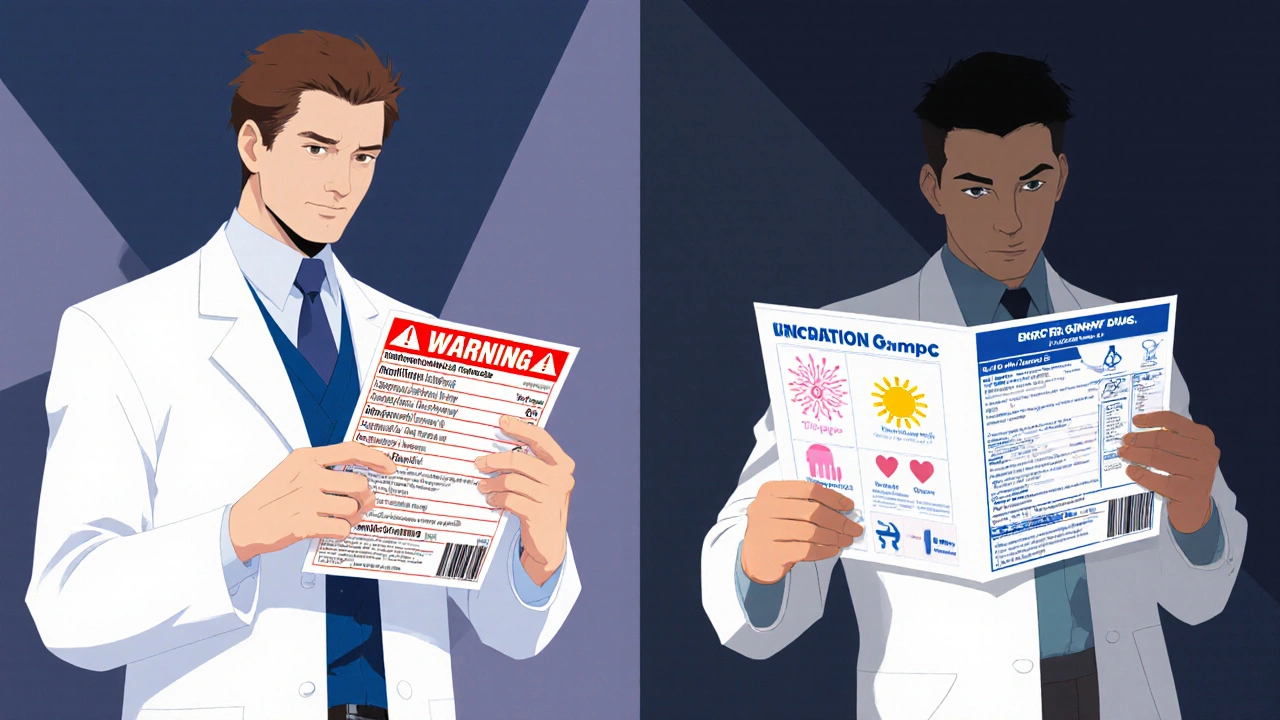
EMA and FDA drug labeling differ significantly in scope, wording, and requirements-impacting how drugs are prescribed, used, and approved across the U.S. and EU. Key differences include patient-reported outcomes, pregnancy warnings, language rules, and risk management systems.
Read More© 2026. All rights reserved.