
When you pick up a prescription, the FDA labeling, the official text approved by the U.S. Food and Drug Administration that explains how a drug should be used, its risks, and its limits. Also known as prescribing information, it's the legal guide doctors and pharmacists follow to keep you safe. This isn't just fine print—it's the backbone of drug safety in the U.S. Every boxed warning, interaction note, and contraindication starts here. If a drug can cause liver damage, trigger seizures, or interact badly with another medication, it's in the FDA labeling. And it doesn't stay the same. These labels change—sometimes quietly, sometimes with big alerts—because new risks show up after millions of people start using the drug.
One of the most important parts of FDA labeling is the boxed warning, the strongest safety alert the FDA can require, printed in a black border to grab attention. These aren't warnings about mild side effects like headaches. They're for life-threatening risks: sudden heart rhythm problems, suicidal thoughts, liver failure. Drugs like metoclopramide, fludrocortisone, and even some diabetes meds carry these. And they don't stay static. The FDA label updates, official changes to the prescribing information based on new safety data. happen all the time. A drug might get a new boxed warning after a study links it to a rare but deadly reaction. Or a warning might be removed if new evidence shows it's not as risky as once thought. Tracking these changes isn't just for doctors—it's something every patient should understand. If your medication's label changed last year, you need to know why.
What you won't find in the FDA labeling? Marketing hype. No promises of "miracle results." No vague claims like "supports overall wellness." Just facts, risks, dosing limits, and what to watch for. That's why posts on this site dive into how these labels affect real people: how a boxed warning change impacts someone taking atorvastatin, why a drug interaction warning matters if you're on metoprolol and melatonin, or how dissolution profiles tie into whether a generic version matches the brand. These aren't abstract rules—they're the reason you don't get an overdose from an early refill, why your pharmacist checks for duplicate therapy, and how the FDA fights counterfeit drugs through track-and-trace systems tied to labeling requirements. Below, you'll find clear, no-fluff guides on the drugs and safety issues that matter most to your family. Whether you're managing high blood pressure, kidney disease, or just trying to avoid dangerous mix-ups, the FDA labeling is your first line of defense. Know what it says. Know when it changes. And know how to use it to protect yourself.
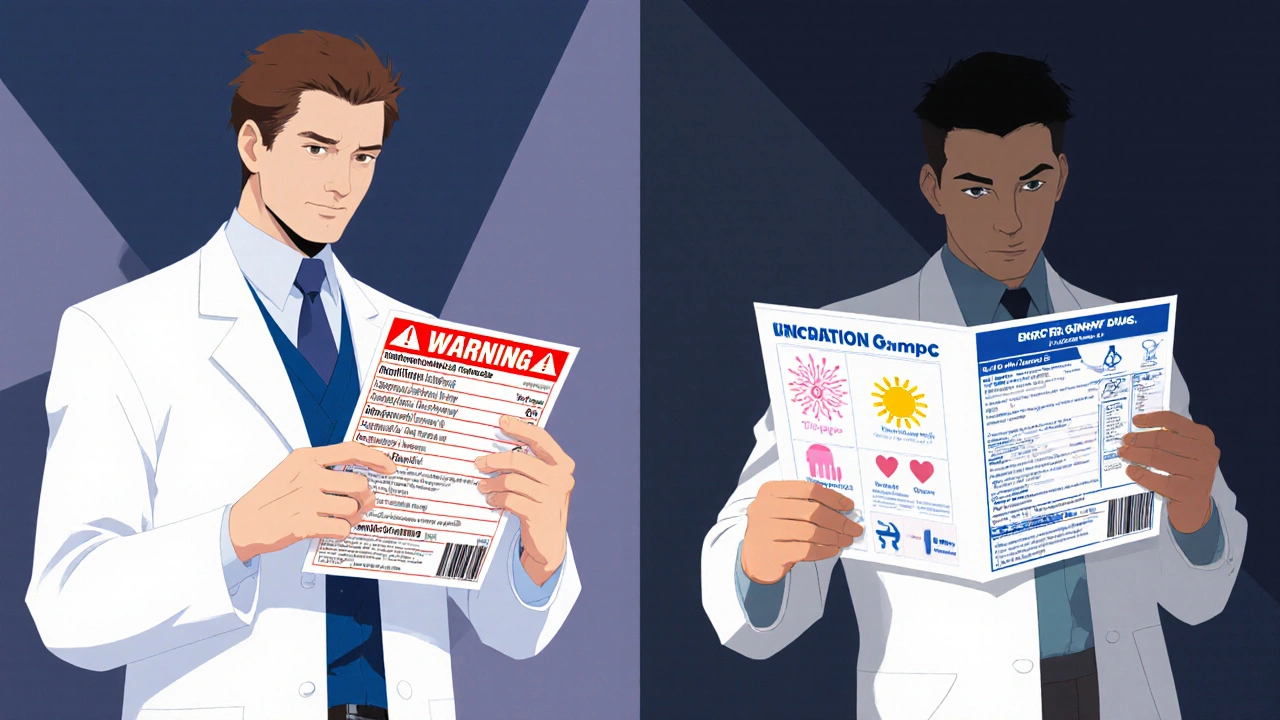
EMA and FDA drug labeling differ significantly in scope, wording, and requirements-impacting how drugs are prescribed, used, and approved across the U.S. and EU. Key differences include patient-reported outcomes, pregnancy warnings, language rules, and risk management systems.
Read More© 2026. All rights reserved.