
When you take your medicine exactly as your doctor ordered, that’s medication adherence, the practice of following a prescribed drug schedule to get the full benefit and avoid harm. Also known as drug compliance, it’s not about being perfect—it’s about being consistent enough to keep your condition under control. Missing even a few doses can undo weeks of progress. For someone on blood pressure meds, that might mean a spike in risk. For someone on thyroid medicine, it could mean fatigue, weight gain, or brain fog. And for drugs like warfarin or lithium—where tiny changes in blood levels cause big problems—skipping a dose or taking an extra one can land you in the ER.
Why does this happen? It’s rarely about being lazy. People forget. They get scared of side effects. They can’t afford the pills. Their schedule gets messy. Some think if they feel fine, they don’t need the drug anymore. Others mix up their meds because they’re taking five or six different ones. missed doses, the most common failure point in medication use aren’t random—they’re predictable. And they’re fixable. Studies show that when people use simple tools like pill organizers, phone alarms, or pharmacy refill reminders, adherence jumps by 30% or more. It’s not about willpower. It’s about design.
Medication adherence ties directly into the safety of prescription adherence, the broader system of following medical instructions for drugs. If you’re on a narrow therapeutic index drug like levothyroxine or warfarin, even a small deviation can be dangerous. That’s why pharmacists flag generic substitutions for these drugs. It’s also why providers ask about over-the-counter meds and supplements—you might be taking something that changes how your prescription works. And if you’re managing a chronic illness like asthma or diabetes, skipping your meds doesn’t just make you feel worse—it increases your chances of a life-threatening emergency.
What you’ll find in this collection isn’t a lecture on responsibility. It’s a toolkit. You’ll see how people track their peak flow for asthma, why a low-sodium diet helps Meniere’s disease, how to avoid dangerous interactions between lithium and common painkillers, and why NTI generics need special care. You’ll learn how to talk to your provider about supplements without sounding like you’re hiding something. You’ll find out why some people stop their meds after a few weeks—and what actually works to get them back on track. These aren’t abstract ideas. They’re real stories from people who’ve been there.
Medication adherence isn’t about guilt. It’s about control. It’s about knowing your body, your meds, and your limits—and having the right tools to make it all work. Whether you’re managing one condition or five, the goal is simple: take the right drug, at the right time, in the right dose. And if you’re struggling? You’re not alone. The solutions are here.
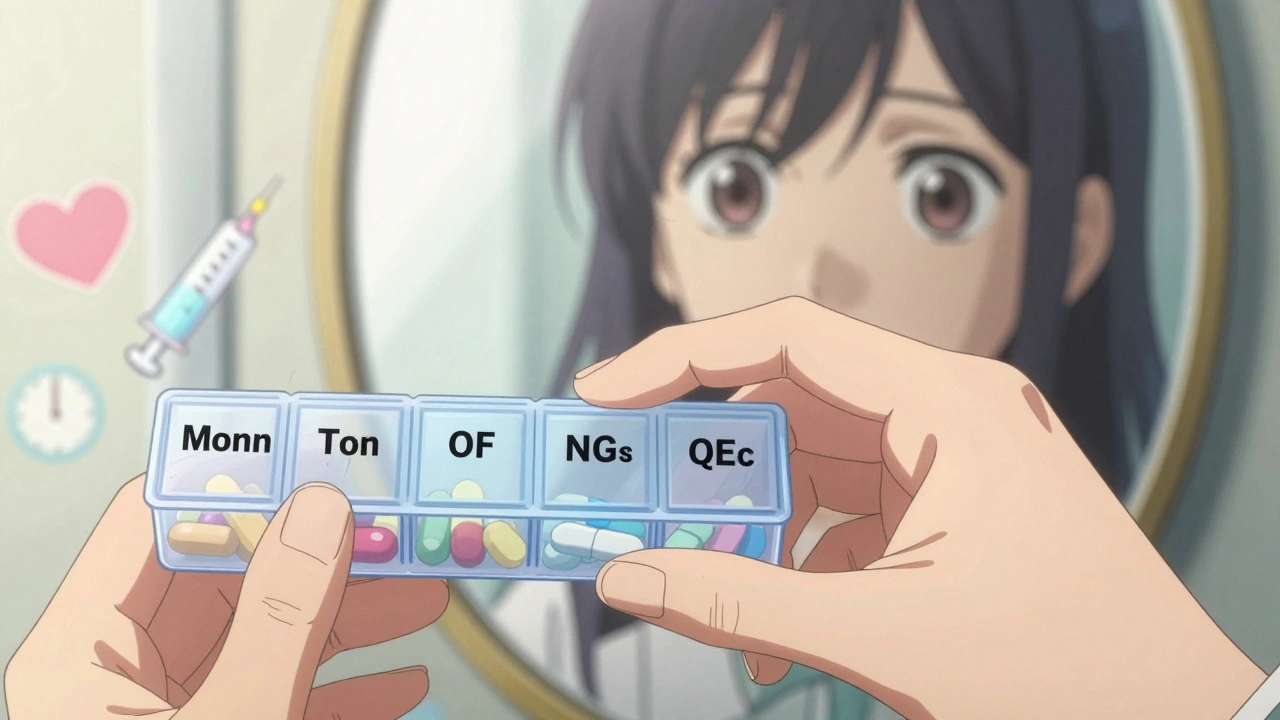
Skipping prescription doses can lead to serious health risks, from antibiotic resistance to life-threatening blood pressure spikes. Learn why timing matters, how to stay on track, and what to do if you miss a pill.
Read More© 2026. All rights reserved.