
When you pick up a prescription or grab an over-the-counter pill, pharmaceutical regulations, the rules that govern how drugs are made, tested, sold, and tracked. Also known as drug safety laws, these rules are the invisible shield between you and dangerous, fake, or mislabeled medicines. It’s not just paperwork—it’s what stops counterfeit heart pills from reaching your medicine cabinet and ensures that a generic version of your blood pressure drug works just like the brand name.
These regulations don’t work in a vacuum. They rely on systems like the DSCSA, a federal track-and-trace system that gives every prescription drug package a digital fingerprint, so pharmacies and distributors can trace a pill back to its manufacturer. If something goes wrong, they can pull it off shelves fast. Then there’s the boxed warning, the FDA’s strongest safety alert, printed in bold black borders on drug labels to warn of life-threatening risks. These warnings aren’t static—they change as new dangers show up in real-world use. A drug that seemed safe in clinical trials might later cause heart rhythm problems in older adults, and the FDA updates the label to match. That’s why tracking label changes matters as much as knowing your dosage.
Behind the scenes, pharmaceutical regulations also shape what you pay. The rules that let generic drugs enter the market aren’t just about cost—they’re about proving bioequivalence. That means a generic version must dissolve in your body at the same rate and in the same amount as the brand name. The science behind this—like dissolution profile comparison, a lab test that measures how quickly a pill breaks down—is what keeps generics safe and affordable. But these same rules also let insurance companies push you toward cheaper options through tiered formularies and mandatory substitutions. You might save hundreds a year, but you might not always know why your doctor’s original prescription got switched.
Pharmaceutical regulations touch every part of your health journey—from how a drug gets approved, to how it’s stored during shipping, to what warnings appear on the bottle. They’re why your pharmacist asks if you’re taking another medication before filling a new one. They’re why some drugs have black box warnings and others come with travel guides for people with kidney disease. And they’re why you can trust that the pill you take today was made under rules designed to protect you, not just profit.
Below, you’ll find real-world breakdowns of how these rules play out—whether it’s how menthol makes nicotine harder to quit, how diabetes meds can trigger emergencies, or why some generics cost 85% less without losing effectiveness. These aren’t abstract policies. They’re the reason your meds work, stay safe, and don’t cost a fortune.
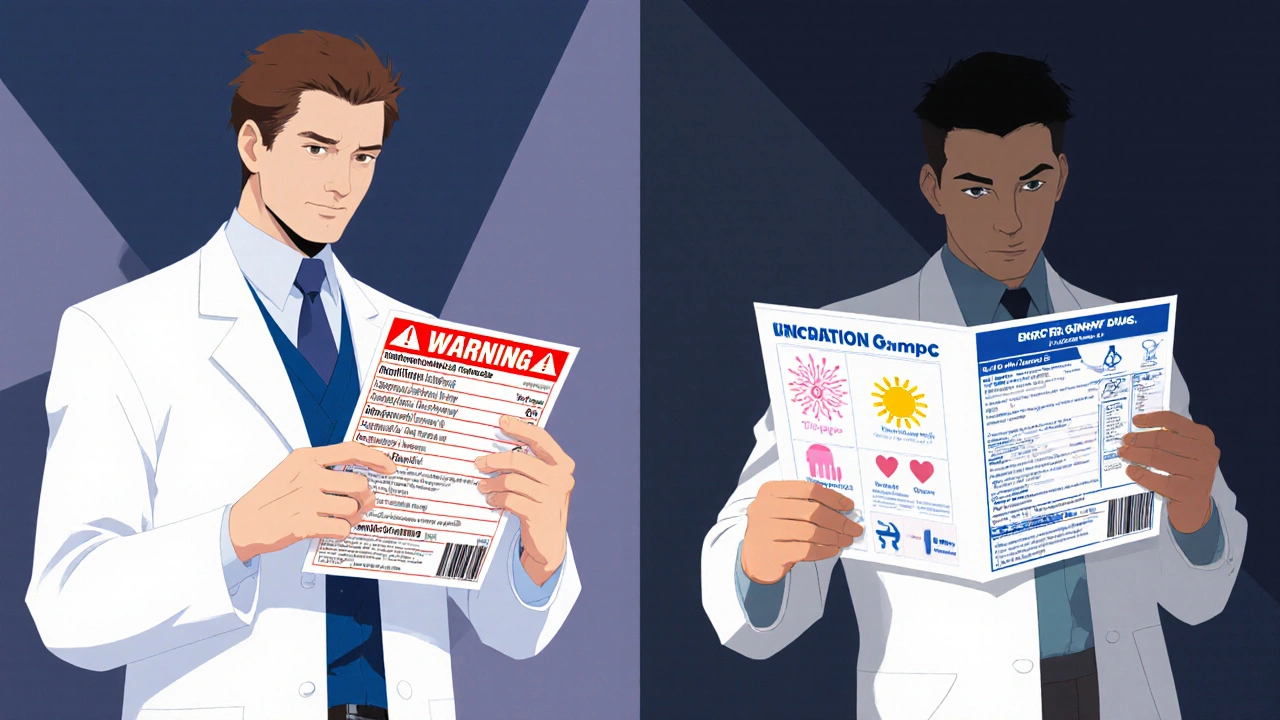
EMA and FDA drug labeling differ significantly in scope, wording, and requirements-impacting how drugs are prescribed, used, and approved across the U.S. and EU. Key differences include patient-reported outcomes, pregnancy warnings, language rules, and risk management systems.
Read More© 2026. All rights reserved.