
Side Effect Reporting Tool
Document Your Side Effects
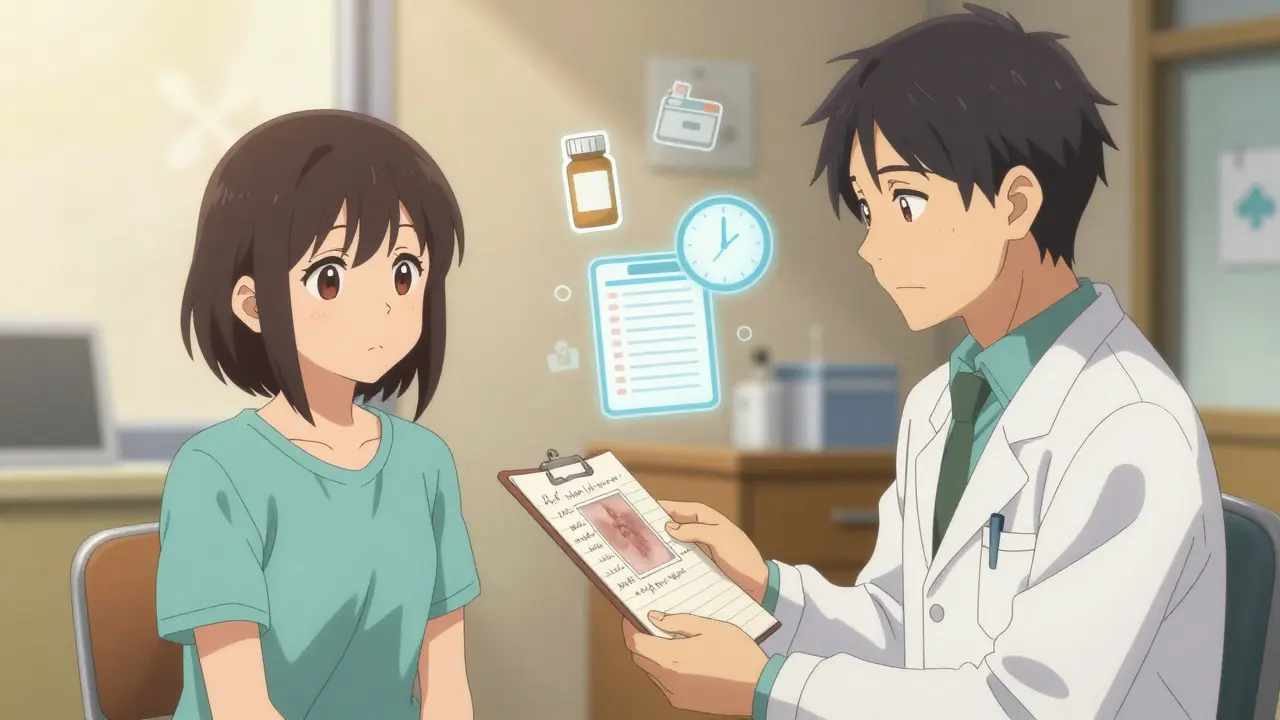
Use this tool to prepare for your healthcare visit. Following the FDA's "5 Ws" framework will improve how your provider can help you.
Your Prepared Report Summary
When you start a new medication, it’s not just about whether it works-it’s about whether it’s safe for you. Side effects aren’t always obvious, and they don’t always show up right away. Some hit within hours. Others creep in over days or weeks. The problem? Many people don’t know how to describe what they’re feeling, or worse, they assume their doctor already knows. That’s where things go wrong.
According to the FDA, only 8% of adverse drug events are reported directly by patients. The rest? They slip through. And when they do, it’s not just about discomfort-it’s about risk. A rash, dizziness, nausea, or even a change in mood could be a warning sign. But if you don’t report it clearly, your provider might miss it. And that’s dangerous.
What You Need to Know Before You Talk to Your Provider
Effective reporting isn’t about being dramatic. It’s about being specific. The FDA’s MedWatch guidelines say a complete report needs six key pieces of information. If you leave out even two, your report has a 73% lower chance of leading to any real action. That’s not a guess-it’s data from the Washington State Department of Health.
Here’s what you need to gather before your appointment:
- Exact medication name - Brand name (like Advil) and generic (ibuprofen). Include the dosage (e.g., 200mg) and how often you take it. If you have the pill bottle, note the lot number.
- When symptoms started - Not "a few days ago." Say: "Symptoms began 48 hours after I took my first 50mg dose of sertraline on March 3." Timing matters more than you think. The FDA says reports with exact timing are 5.2 times more likely to prove the reaction is drug-related.
- What happened - Describe the symptom in plain terms. "I felt dizzy" isn’t enough. Say: "I felt like the room was spinning when I stood up, lasting 15 minutes each time. It happened three times yesterday."
- What you did about it - Did you stop taking the pill? Did you take something else? Did you go to urgent care? These details help your provider understand severity.
- Other medications you’re on - Even over-the-counter stuff. Grapefruit juice can interfere with statins. St. John’s Wort can mess with antidepressants. List everything.
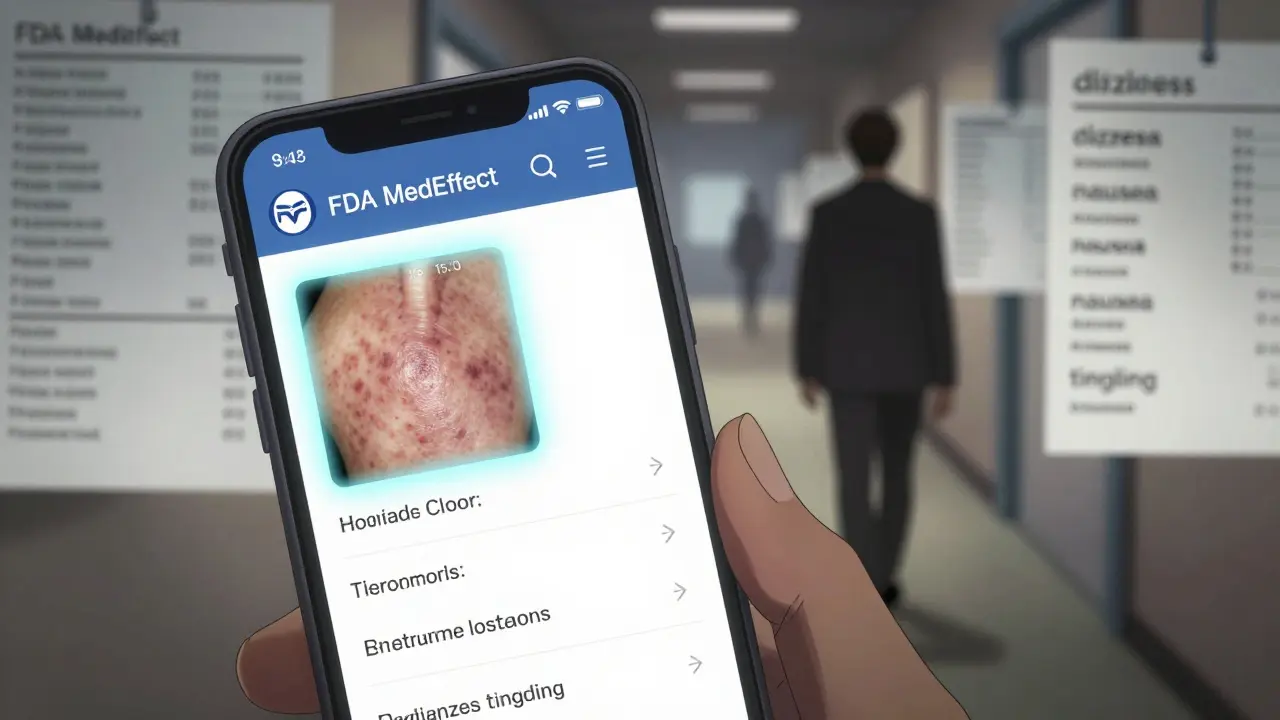
- Any lab results or photos - If you had a rash, take a clear photo. If you had blood work done, bring the numbers. A rash with a timestamped photo has a 42% higher chance of being validated.
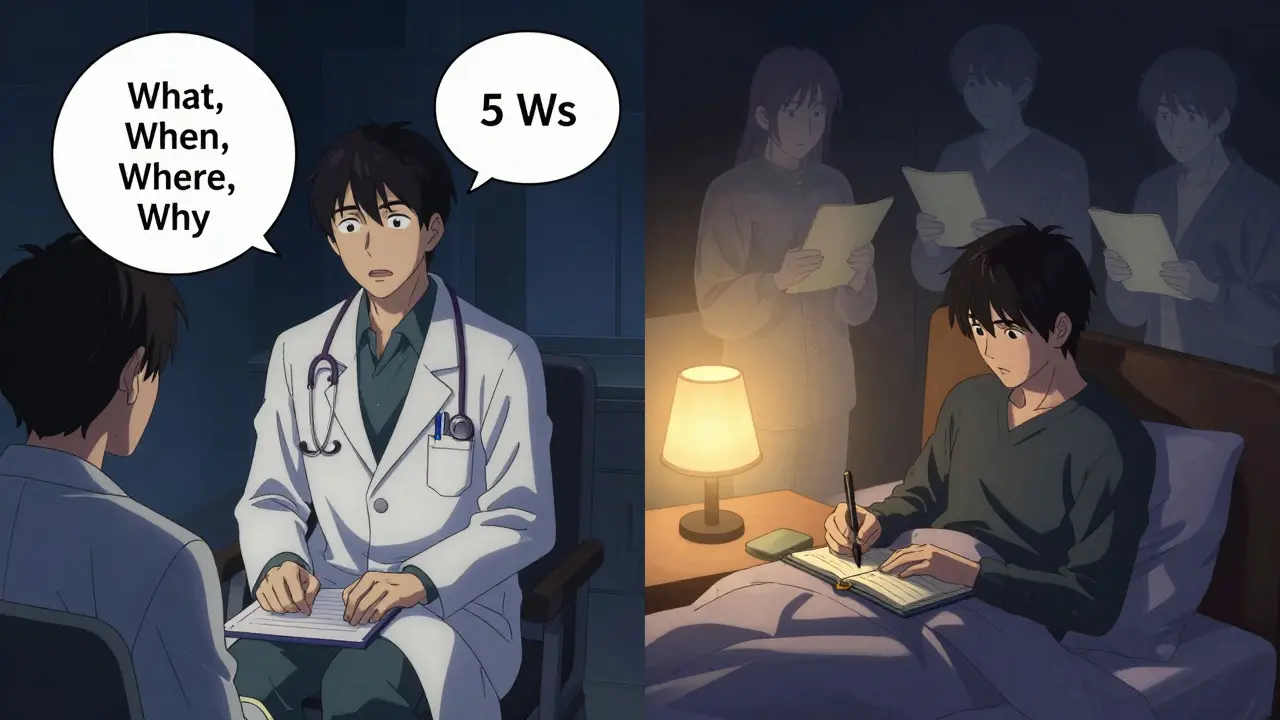
Patients who keep a simple daily log-just writing down what they took and how they felt-have a 63% better chance of having their side effects properly documented. That’s according to Dr. Jerry Avorn from Harvard Medical School. You don’t need an app. A notebook or even a notes app on your phone works.
How to Communicate: In Person, Online, or Over the Phone?
Not all ways of reporting are equal. A 2022 study of over 12,000 reports found clear winners:
- In-person visits - Best for complex symptoms. If you’re having chest pain, swelling, or confusion, face-to-face is still the gold standard. Mayo Clinic data shows it’s 37% more likely to trigger immediate action.
- Secure patient portal messages - Fastest and most efficient. 92% of portal reports are completed within 24 hours. You can attach photos, paste lab results, and even link to your medication log. But here’s the catch: 22% of portal reports are incomplete because providers can’t see your facial expression or body language.
- Phone calls - Often rushed. You’re talking to a nurse, not your doctor. Details get lost. Only 5.8 out of 10 key elements are typically captured.
- Mail or paper forms - Slow. Outdated. Only 4.3 elements get recorded on average.
Here’s the twist: Even though portals are faster and more efficient, 68% of doctors still prefer you talk to them in person. Why? Because they need context. A headache could be stress. Or it could be a sign of high blood pressure from a new medication. Only a doctor can tell the difference.
So what’s the smart move? Use the portal to send a quick summary: "I’ve had nausea every morning since starting lisinopril. Took a photo of my rash on Tuesday. Lab results attached." Then, schedule a 20-minute appointment to talk through it. That way, you get both speed and clarity.
Use the "5 Ws" Framework to Stay on Track
When you walk into the office, it’s easy to forget what you wanted to say. That’s why the FDA recommends the "5 Ws" method:
- What - What symptom are you having? Be specific: "I have tingling in my hands," not "I feel weird."
- When - When did it start? When does it happen? "Every time I take my pill at 8 a.m., it starts 90 minutes later."
- Where - Where on your body? "Only on my left forearm," or "All over my chest."
- Why - Why do you think it’s the medication? "It started the day after I began the new drug."
- What makes it better or worse - "It gets worse if I drink coffee. It improves if I lie down."
Using this structure cuts your appointment time by 37% and increases report completeness by 52%. That’s not magic-it’s structure.
What Happens After You Report It?
Once you report it, your provider doesn’t just file it away. They have to act. Under the American Medical Association’s 2023 ethics code, they’re required to report suspected adverse events to regulatory agencies like the FDA. That’s not optional.
Here’s what happens next:
- Your provider enters your report into your electronic health record (EHR). If they use Epic, Cerner, or another modern system, there’s now a built-in button to send it directly to the FDA’s MedWatch system.
- The report gets tagged with your details, medication, timing, and symptoms.
- It gets added to a national database. Between 2008 and 2022, 30% of drug label changes (like new warnings or dosage limits) came from reports like yours.
- If others report the same issue, it can trigger a safety review-maybe even a drug recall.
And yes, your report matters. The National Academy of Medicine says effective reporting prevents 130,000 serious drug events every year in the U.S. alone. That’s not a small number. That’s lives.
What to Do If Your Provider Dismisses Your Concerns
You’re not alone if this has happened. A patient on Reddit wrote: "I told my doctor about my dizziness from the new blood pressure med. He said, ‘That’s normal.’ Didn’t write it down. Took three visits before he listened."
That’s not okay. And you have options.
- Ask: "Can you document this in my chart? I want to make sure it’s tracked."
- Bring printed info from trusted sources like the FDA, NIH, or the American Pharmacists Association. Providers respond better when you show you’ve done your homework.
- Request a longer appointment. Most providers will agree to a 20-minute slot if you ask for medication-specific concerns. MGMA data shows 78% do.
- If you’re still ignored, ask for a referral to a pharmacist or a specialist. Pharmacists are trained to spot drug interactions and are often more patient-focused.
Also, check your medical record after your visit. You have the right to request a copy. Look for your side effect report. If it’s not there, say so. Documentation isn’t optional-it’s part of your care.
Tools and Resources to Help You
You don’t have to figure this out alone. Here are the best tools available right now:
- FDA’s MedEffect Mobile App - Launched in December 2023. Lets you create a structured report, attach photos, and send it directly to your provider’s EHR. Over 247,000 people downloaded it in the first month.
- MedWatch Checklist - Available at www.fda.gov/medwatch/howto.htm. 78% of patients who used it felt their concerns were taken more seriously.
- Common Terminology Criteria for Adverse Events (CTCAE) v5.0 - A simple scale doctors use to rate severity (mild, moderate, severe). Use it to describe your symptoms. "My nausea is moderate-it stops me from eating." That’s more helpful than "I feel sick."
- Know Your Meds Program - Run by the FDA. Free online modules that teach you how to read labels, track side effects, and ask the right questions. Users in a 2022 trial improved reporting effectiveness by 44%.
And keep an eye out-by 2025, all EHR systems in the U.S. will be required to include FDA-standardized side effect reporting fields. That means reporting will become even easier. But until then, you’re the most important part of the system.
Final Thought: Your Voice Is Your Power
Drug safety isn’t just about regulators and labs. It’s about you. You’re the one who takes the pill. You’re the one who feels the side effect. You’re the one who notices the pattern. No algorithm, no machine, no EHR can replace that.
Every time you report a side effect clearly and completely, you’re not just helping yourself. You’re helping thousands of others who might take the same drug tomorrow. You’re making the system better.
Don’t wait for symptoms to get worse. Don’t assume it’s "just a side effect." Write it down. Take a photo. Bring the details. Ask for it to be documented. And if you’re dismissed? Keep asking. Because your health isn’t a footnote-it’s the whole story.
Comments
Dylan Patrick
I had no idea reporting side effects was this structured. I used to just say 'I feel weird' and wonder why nothing changed. Now I write down the exact time, dosage, and what I ate that day. My doctor actually listened after I showed her my log. 🙌
On March 13, 2026 AT 10:11
Kathy Leslie
this made me realize i’ve been doing it wrong for years. just saying 'my head hurts' doesn’t cut it anymore. time to start keeping a little notebook 📒
On March 13, 2026 AT 15:23
Amisha Patel
i tried reporting a rash once but my doctor said it was 'probably stress'... i didn't push back because i didn't know how to explain it properly. now i have the 5 ws printed and taped to my fridge 😅
On March 15, 2026 AT 05:16
Elsa Rodriguez
my doctor told me my dizziness was 'just anxiety' and refused to document it. i went to three different appointments before someone took me seriously. if you're being dismissed, don't give up. your body is screaming - listen to it. 🚨
On March 15, 2026 AT 16:21
Serena Petrie
why is this such a big deal? i just take my pills and hope for the best.
On March 17, 2026 AT 13:25
Buddy Nataatmadja
in Indonesia, most people just stop taking meds if they feel weird. no reporting, no follow-up. this system is wild but honestly, it makes sense. i wish we had this back home.
On March 19, 2026 AT 12:10
mir yasir
The FDA’s MedWatch framework, while commendable, is fundamentally predicated on a Western biomedical paradigm that overlooks cultural variations in symptom perception. One cannot assume universal applicability of 'tingling' or 'dizziness' as discrete clinical entities across global populations.
On March 20, 2026 AT 03:25
Stephanie Paluch
i started using the medeffect app and it changed everything 🙏 i took a pic of my rash, tagged the time, and sent it to my dr. they called me back within 2 hours. i cried. i felt seen 💕
On March 21, 2026 AT 08:46
Hugh Breen
this is the kind of stuff that saves lives. i work in pharmacy and i’ve seen too many patients get ignored because they said 'it's just a headache.' if you report clearly, you're not being annoying - you're being a hero. 🏆
On March 21, 2026 AT 14:48
Kelsey Vonk
it’s wild to think that something as simple as writing down when you feel off could prevent thousands of events every year. we’re all just tiny cogs, but somehow, together, we move the machine.
On March 22, 2026 AT 15:44
Kandace Bennett
why are we even letting the FDA control this? America’s medical system is a mess. if you're not rich, you get ignored. this whole 'reporting' thing is just another way to make poor people jump through hoops while big pharma stays quiet.
On March 23, 2026 AT 22:43
Tim Schulz
so let me get this straight... i have to take a photo of my rash, write down the exact time i took my pill, and schedule a 20-minute appointment just to tell my doctor i feel kinda weird? 😂 i'm just gonna keep taking my meds and hope i don't turn into a zombie.
On March 24, 2026 AT 20:46
Jinesh Jain
in my village, we just use herbal remedies when pills make us sick. but i read this and i think... maybe we should document it too. knowledge is power, even if it's in a notebook.
On March 25, 2026 AT 06:04