
When H. pylori, a bacterium that lives in the stomach and can cause ulcers and chronic inflammation. Also known as Helicobacter pylori, it's one of the most common infections worldwide—but most people never know they have it until something goes wrong. The good news? It’s treatable. The bad news? Many treatments fail because they’re outdated, misused, or ignored. H. pylori doesn’t just cause stomach pain—it’s linked to ulcers, stomach cancer, and long-term digestive issues. And if you’ve been told to take a few pills and call it done, you might be missing the bigger picture.
Effective H. pylori treatment, a combination therapy typically involving antibiotics and acid-reducing drugs isn’t just about popping pills. It’s a three-part system: antibiotics to kill the bacteria, proton pump inhibitors, medications that shut down stomach acid production to help healing to create the right environment for antibiotics to work, and bismuth subsalicylate, an older but still useful agent that coats the stomach and blocks H. pylori in some regimens. The standard triple therapy—two antibiotics plus a PPI—isn’t working like it used to. Resistance to clarithromycin, one of the most common antibiotics, is now over 20% in many places. That means nearly 1 in 5 people are getting treated with a drug that won’t touch the bug.
What’s changing? Doctors are shifting to quadruple therapies—adding bismuth or using different antibiotic combos like amoxicillin and metronidazole. Some patients get tested first with a breath or stool test to confirm the infection, then retested after treatment to make sure it’s gone. Skipping the follow-up is a mistake. If H. pylori sticks around, you’re not just risking a return of pain—you’re increasing your chance of stomach cancer over time. And while you’re on treatment, watch for side effects: diarrhea, metallic taste, nausea. These are common, but if they’re severe, your provider might need to adjust your plan. You can’t just power through it. This isn’t a cold. It’s a bacterial infection that needs precision.
What you won’t find in most doctor’s offices? Advice on how to protect your gut flora while on antibiotics. Probiotics like Lactobacillus and Saccharomyces boulardii aren’t magic, but studies show they reduce side effects and may help treatment succeed. Don’t take them at the same time as your antibiotics—space them out by a few hours. And avoid alcohol. It doesn’t just upset your stomach—it interferes with how your body clears the drugs.
Below, you’ll find real-world advice from people who’ve been through this—how to handle missed doses, why some generics work better than others, how to talk to your pharmacist about drug interactions, and what to do when your symptoms don’t go away after treatment. This isn’t theory. These are the tools and warnings that actually help.
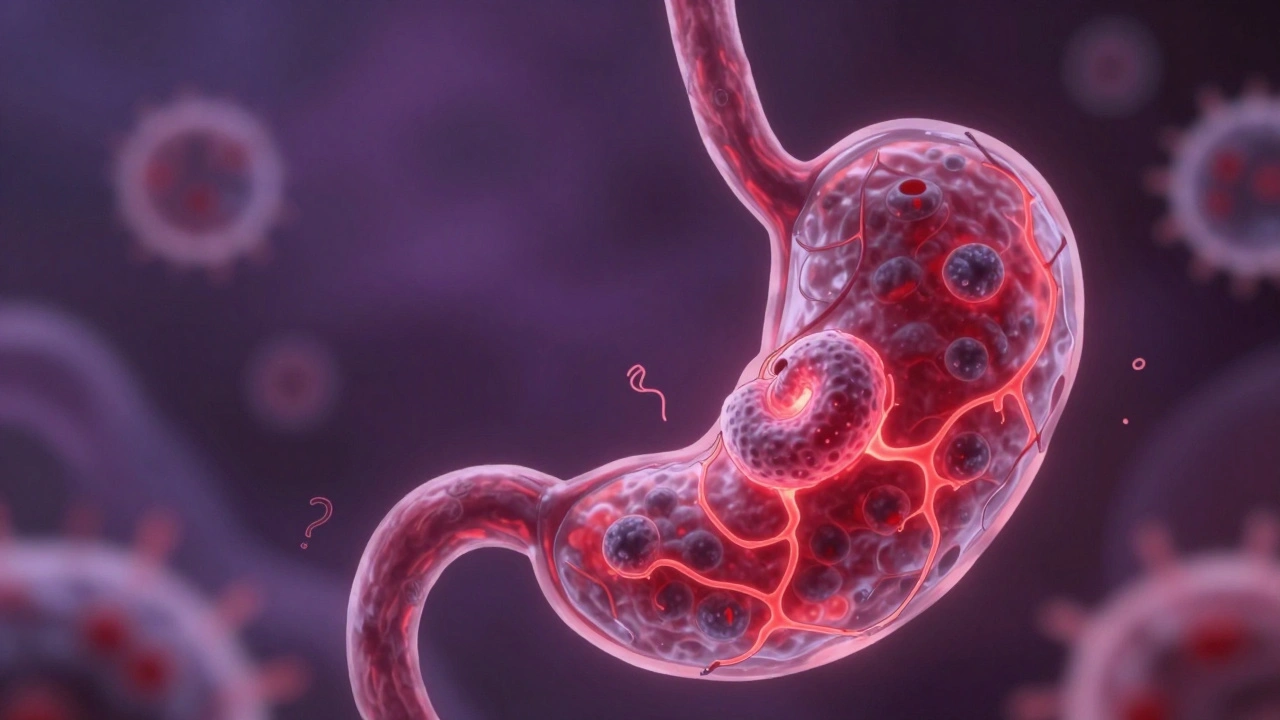
Gastritis is stomach lining inflammation, often caused by H. pylori bacteria. Learn how it’s diagnosed, treated with antibiotics and acid blockers, and why proper treatment prevents ulcers and cancer.
Read More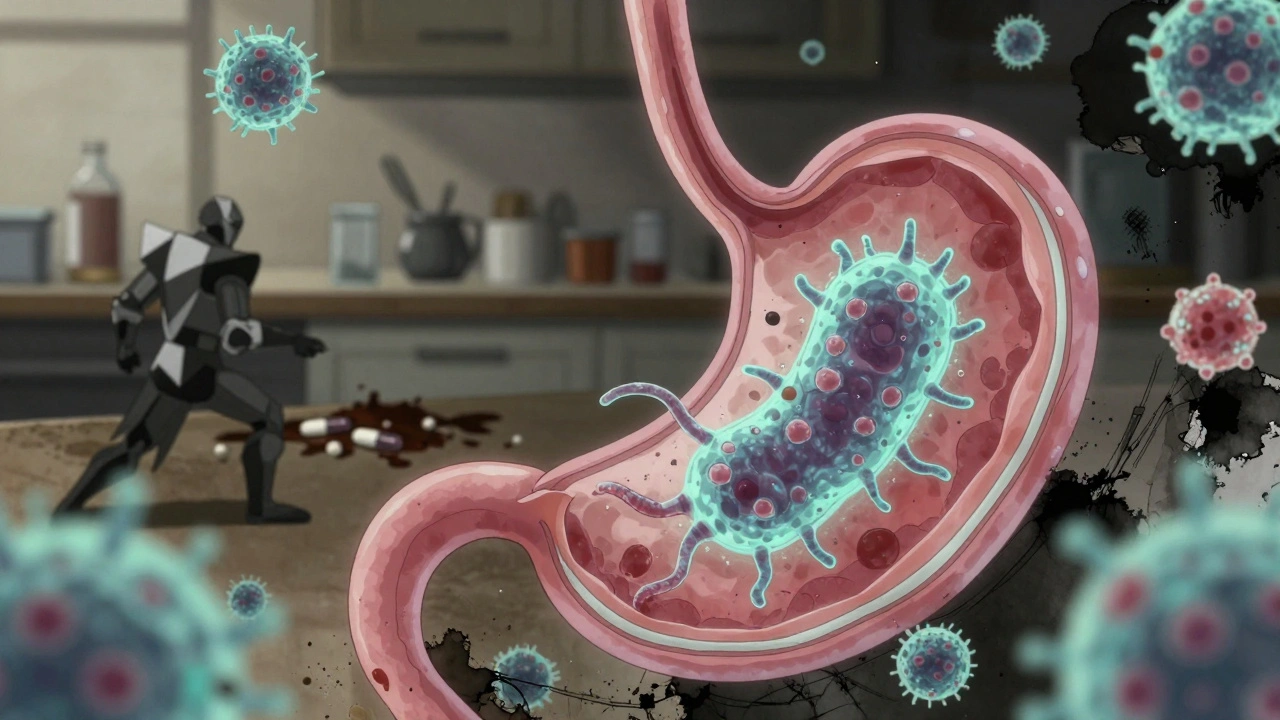
Gastritis is stomach lining inflammation, often caused by H. pylori bacteria. Learn how it's diagnosed, treated with antibiotics and acid blockers, and why lifestyle changes matter for long-term healing.
Read More© 2026. All rights reserved.